
As we hit the peak of the summer heat in July, your air conditioning system becomes the most important appliance in your home. It runs tirelessly, day and night, to keep your family cool. However, while your AC is battling the scorching temperatures outside, a quiet, biological threat is often breeding inside: toxic mold.
High summer humidity doesn’t just make the outdoors feel sticky; it creates the perfect storm for biological growth inside your central air system. When you combine non-stop air conditioner usage with thick summer moisture, your ductwork can quickly transform from a clean air delivery system into a high-speed mold distribution network.
At The Duct Pros, we provide comprehensive Air Duct Cleaning, HVAC Cleaning, and specialized Mold Treatment. While we do not handle new equipment installations, we are the experts in rescuing your existing system from severe summer contamination. If your home is feeling cooler but smelling worse, here is the technical breakdown of why peak summer weather causes HVAC mold, and how our specialized treatments stop it in its tracks.
1. The Condensation Crisis on Your Evaporator Coil
Your air conditioner doesn’t just lower the temperature; it actively pulls humidity out of the indoor air.
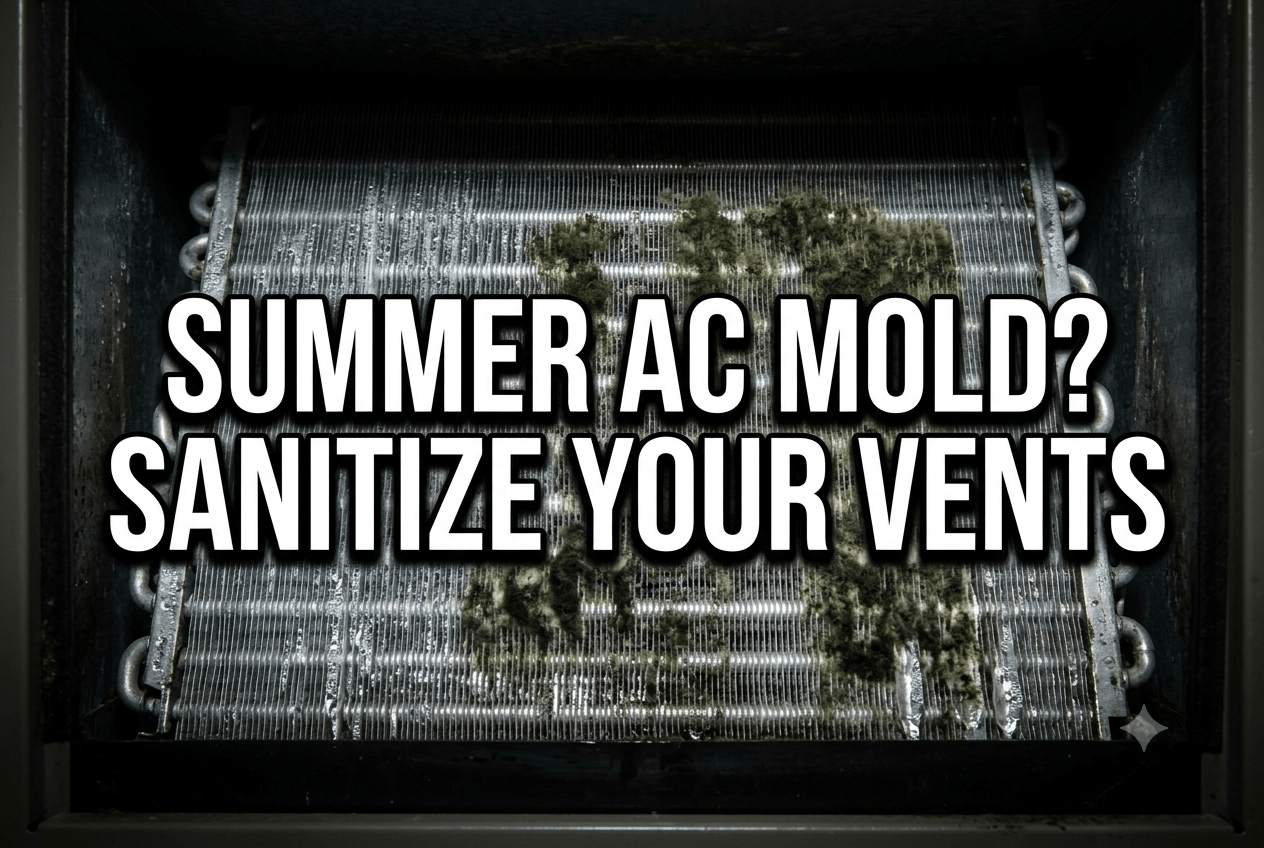
The Sweating Coil: Warm, moist summer air is sucked through your return vents and blown across the freezing-cold indoor evaporator coil. This causes massive amounts of water to condense on the metal fins—much like a glass of ice water sweating on a hot July afternoon.
The Moisture Trap: During peak summer months, this coil is almost permanently wet. If your system’s drain pan is slightly sluggish or if your filter has allowed fine dust to coat the coil, that dust turns into a wet, organic sludge. This dark, damp, 100% humidity environment is the exact breeding ground mold spores need to rapidly colonize.
2. Why Summer Worsens the Problem
Mold spores are always present in the ambient air, but they remain dormant until they find the right conditions. Summer provides everything they need.
Continuous Circulation: Because your AC runs significantly longer cycles in July and August, any mold growing on the coil or in the drain pan is constantly subjected to high-velocity airflow. The system acts as an aerosolizer, continuously blowing newly hatched mold spores and volatile organic compounds (VOCs) deep into your supply ducts and out into your living space.
Ductwork Condensation: If your ductwork runs through an unconditioned space like a blazing hot attic or a humid crawlspace, the extreme temperature difference between the cold air inside the duct and the hot air outside can cause the metal ducts themselves to sweat internally, spreading the mold problem throughout the entire house.
3. Recognizing the Signs of Summer HVAC Mold
You don’t always have to see mold to know it’s there. Your body and your nose will usually detect it first.
The “Wet Sock” Odor: The most obvious sign of an active mold or bacterial colony is a heavy, musty smell—often described as smelling like wet cardboard or dirty gym socks—that fills the room the moment the AC kicks on.
Unexplained Summer Allergies: If you are experiencing runny noses, itchy eyes, coughing, or asthma flare-ups inside your home during the middle of summer (when spring pollen has long passed), you are likely having an allergic reaction to aerosolized HVAC mold.
4. The Danger of Ignoring the Issue
Letting mold fester through the summer doesn’t just ruin your indoor air quality; it threatens your mechanical equipment.
Suffocating the System: As mold and bacterial slime thicken on the evaporator coil, they physically block the microscopic gaps between the aluminum fins. This restricts airflow, forces your compressor to work twice as hard, drastically increases your summer electric bill, and can eventually cause the AC to freeze into a solid block of ice.
5. Our Complete HVAC Cleaning & Mold Treatment Solution
Spraying air fresheners into your vents or swapping a filter will not kill an active summer mold colony. It requires professional extraction and chemical sanitization.
Deep HVAC Cleaning: At The Duct Pros, we start by fully cleaning the mechanical heart of the system. We safely remove the biological sludge from the evaporator coil, clear the drain pan, and utilize high-torque pneumatic tools to scour the interior walls of your air ducts, removing the dust that serves as mold food.
EPA-Registered Mold Treatment: Once the physical debris is extracted, we apply an advanced, EPA-registered antimicrobial treatment. We fog this hospital-grade sterilizer directly into the airflow, ensuring it coats the coil, the plenum, and every inch of the ductwork. This destroys the active mold roots and creates a hostile environment that prevents new spores from colonizing, even during the wettest summer months.
Don’t let summer humidity turn your air conditioner into a health hazard. Protect your family’s lungs and your HVAC efficiency by scheduling a comprehensive summer cleaning and mold treatment today.
📞 (866) 712-1122
🌐 www.theductpros.us
📧 Info@theductpros.us
🎯 Frequently Asked Questions About Summer AC Mold
Why does my AC smell musty in the summer? During the hot, humid summer months, your AC pulls massive amounts of moisture from the air, creating constant condensation on the indoor coil. If dirt and dust are present, this wet, dark environment becomes a breeding ground for mold and bacteria. The musty smell is the off-gassing of these biological colonies being blown into your home.
Can you just clean the mold, or do I need a special treatment? Physical HVAC and air duct cleaning is the mandatory first step to remove the bulk dirt and visible mold. However, to permanently stop the growth and neutralize the microscopic spores, a professional chemical Mold Treatment using an EPA-registered antimicrobial fogger is required to fully sanitize the system.
How do I stop mold from growing in my ducts during July and August? The best prevention is keeping the system clean and dry. Schedule professional Air Duct Cleaning to remove the organic dust that mold feeds on, change your air filters monthly, and ensure your AC drain lines are flowing freely so water doesn’t pool inside the unit during heavy summer usage