
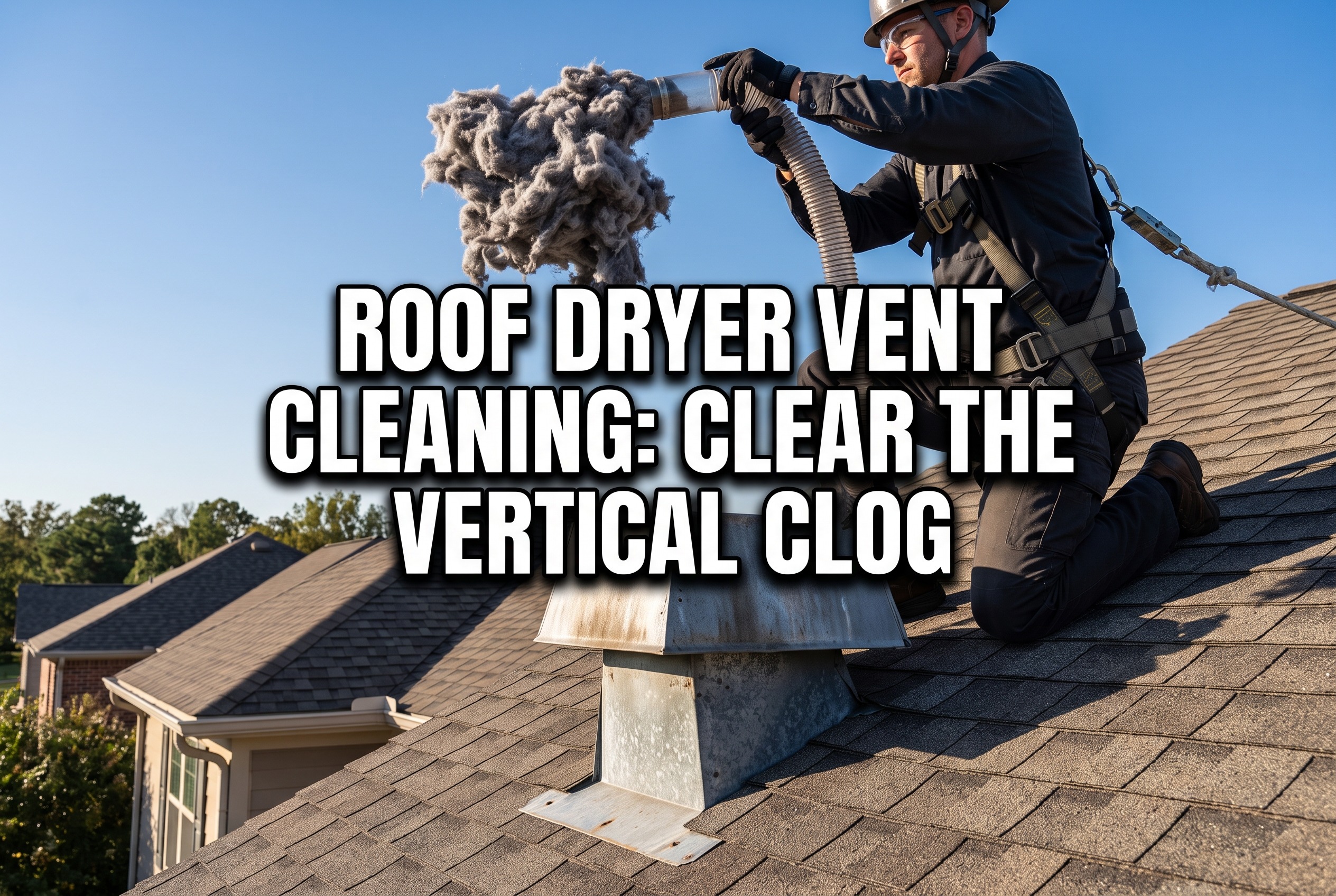
Roof dryer vent cleaning is one of the most challenging and critical maintenance tasks for modern homeowners. In many newer builds and townhomes, architects have moved the laundry room to the second floor or deep into the interior of the house for convenience. Because the dryer cannot vent out of a nearby side wall, the exhaust pipe is routed vertically, pushing hot air and lint straight up through the attic and out of the roof.
While this layout is convenient for doing laundry, it creates a severe mechanical disadvantage for your appliance. Pushing heavy, wet lint straight up against gravity requires immense airflow. When that airflow weakens, the vertical pipe becomes a high-risk zone for rapid blockages, water damage, and devastating lint fires.
At The Duct Pros, we specialize in complex, high-velocity exhaust clearing. We have the advanced tools and safety training required to tackle vertical duct runs that average handymen cannot reach. Here is a technical breakdown of why venting through the roof is so problematic and why professional extraction is mandatory for your safety.
1. The Gravity Problem and Rapid Lint Buildup
A vertical exhaust line fights a constant battle against gravity.
Falling Debris: When your dryer cycle ends and the blower motor shuts off, any lint that was traveling vertically through the pipe instantly falls back down.
The Base Clog: This falling debris accumulates at the lowest 90-degree elbow joint sitting directly behind your dryer. Over just a few months, this creates a rock-solid plug that completely chokes off the system, causing your dryer to overheat and dramatically increasing the risk of a combustion event.
2. Roof Vent Hoods and Bird Nests
The termination point on your roof is highly susceptible to outside interference.
The perfect home: Birds and rodents constantly seek warmth. The metal flapper on a roof vent provides an enclosed, heated incubator that is completely safe from ground predators.
Jammed Flappers: Roof vents use a specialized damper to keep rain and snow out. When heavy, wet lint reaches the top of the pipe, it often glues this damper shut. If the flap cannot open, your dryer exhausts its hot, moist air directly into your attic space, rapidly causing toxic mold growth and rotting roof decking.
3. The Risk of Severe Condensation
Vertical runs going through an attic face extreme temperature variations.
The Cold Attic Clash: In the winter, your attic is freezing, but the air inside the dryer pipe is over 130°F (54°C). This extreme temperature clash causes the steam inside the pipe to immediately condense into liquid water.
Internal Flooding: Because the pipe points straight up, this liquid water cannot drain outside. Instead, it runs backward down the pipe, pooling behind your dryer, rusting the internal cabinet, and shorting out the heating element.
4. Why DIY Roof Vent Cleaning is Impossible
You cannot clear a 20-foot vertical pipe with a consumer brush kit from the hardware store.
The Breakage Risk: Cheap fiberglass rods will almost certainly snap when forced through multiple elbows in a long vertical run, turning a simple clog into a major drywall repair project.
Fall Hazards: Attempting to climb a steeply pitched roof with a vacuum and a brush is incredibly dangerous for an untrained homeowner.
5. Professional High-Velocity Extraction
Clearing a vertical line requires specialized commercial pneumatics.
Top-Down and Bottom-Up Clearing: At The Duct Pros, we attack the blockage from both ends. We utilize high-pressure pneumatic tools that safely travel the entire length of the vertical pipe. These tools blast the heavy lint clogs apart and force them entirely out of the system, restoring perfect aerodynamic flow and securing your home from fire hazards.
Don’t let a hidden vertical blockage destroy your appliance or threaten your property. Restore your airflow safely by scheduling a professional cleanout today.
📞 (866) 712-1122
🌐 www.theductpros.us
📧 Info@theductpros.us
🎯 Frequently Asked Questions About Vertical Exhaust Lines
Roof dryer vent cleaning: How often should a roof vent be cleaned? Because vertical lines fight gravity and accumulate debris much faster than standard horizontal lines, they require more frequent attention. We highly recommend having a roof-vented dryer system professionally cleaned and inspected every 8 to 12 months to prevent severe base clogs and condensation issues.
Roof dryer vent cleaning: Why is my dryer leaving clothes damp if the heat works? If the heating element is hot but the clothes are damp, your roof vent is severely clogged. The dryer is evaporating the water from your clothes, but because the vertical pipe is blocked, the heavy, humid steam cannot escape the drum. The moisture simply recirculates, leaving your laundry wet and driving up your electric bill.
Roof dryer vent cleaning: Can you clean a roof vent without getting on the roof? In many cases, yes. Our specialized pneumatic whips and high-velocity extraction tools are designed to be fed from the laundry room upwards. This allows us to blast the blockage out through the top of the roof vent safely, though heavily jammed exterior roof dampers may still require a technician to perform a physical roof inspection.