
Post construction air duct cleaning is the absolutely critical, yet most frequently forgotten, final step of any major home renovation, remodel, or new build. You have just spent months living in a chaotic construction zone, dealing with contractors, and investing tens of thousands of dollars into creating your dream kitchen, finishing your basement, or tearing down walls to create an open-concept living space. The contractors have finally packed up their tools, the final coat of paint has dried, and the surface-level cleaning is done. However, your home is not actually clean.
While the visible surfaces might sparkle, the “lungs” of your home have just endured months of intense chemical and particulate abuse. The moment you turn on your central heating or air conditioning, your newly renovated home will instantly be coated in a fine layer of white powder, and you will be breathing in toxic construction materials.
At The Duct Pros, we specialize in the deep extraction of heavy construction debris and ultrafine remodeling particulates. If you have recently completed a home improvement project, here is a detailed, technical breakdown of exactly what is currently hiding inside your ventilation system, how it threatens your expensive HVAC equipment, and why professional extraction is a mandatory step before you can truly enjoy your new space.
1. The Insidious Nature of Ultrafine Drywall Dust
The single biggest contaminant generated during a home renovation is drywall dust. It is incredibly invasive and behaves very differently than normal household dirt.
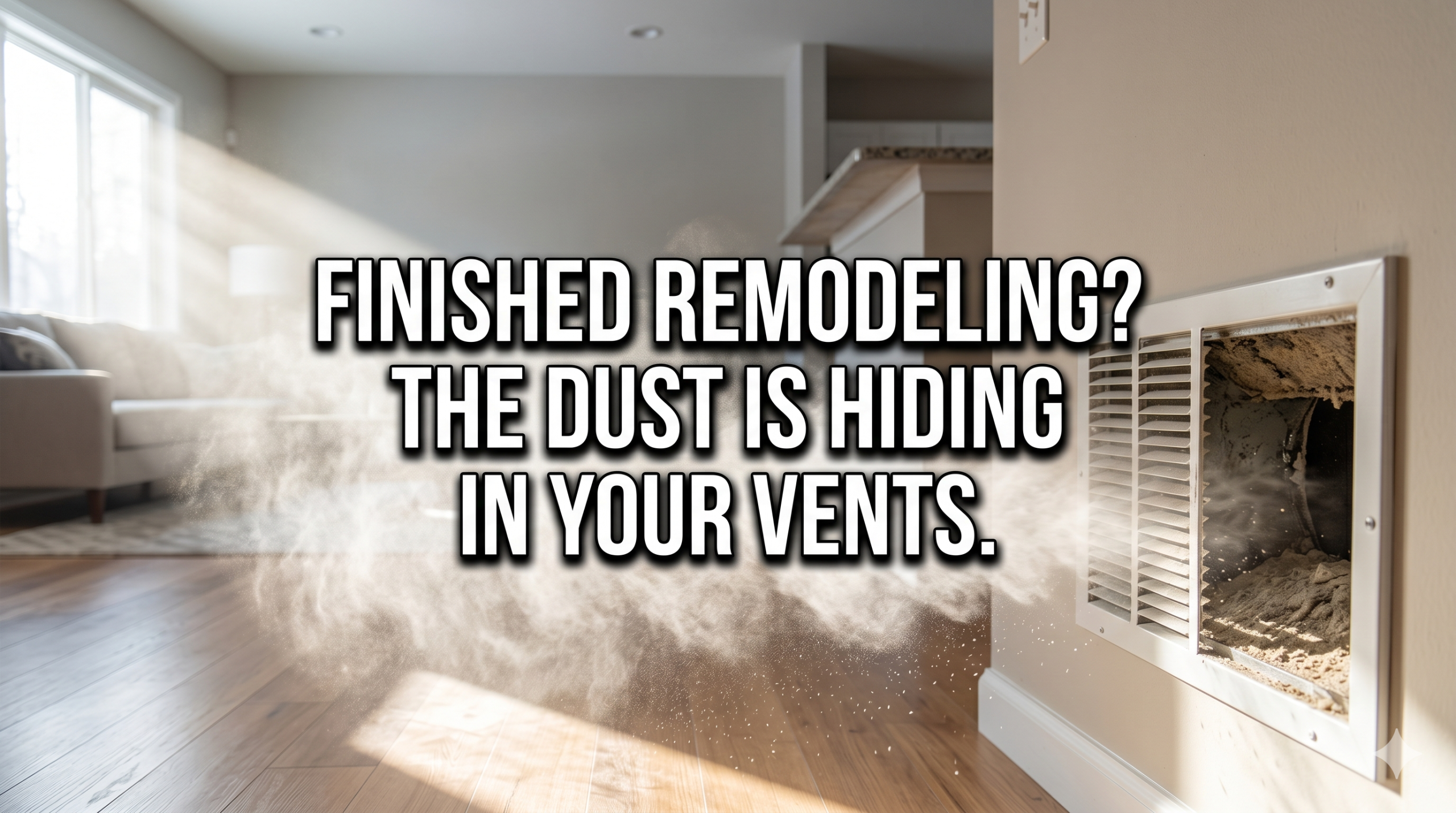
Bypassing the Filter: During the taping, mudding, and sanding phases of drywall installation, massive clouds of ultrafine white dust are created. Because your HVAC system is constantly pulling air from the house, it sucks this cloud directly into the return vents. Drywall dust particles are measured in microns—they are so microscopically small that they easily pass straight through a standard fiberglass or pleated furnace filter.
Coating the System: Once it bypasses the filter, this highly statically charged dust heavily coats the entire interior surface of your sheet metal trunk lines, flexible ductwork, and blower motor.
The Endless Dusting Cycle: If this powder is not physically extracted from the ductwork, your HVAC system will slowly blow it back into your home over the next several years. You will find yourself constantly wiping a thin, chalky white film off of your brand-new countertops, dark wood floors, and television screens every single day.
2. Construction Debris and the “Floor Vent Trash Can”
If your renovation involved updating flooring, tearing down walls, or moving duct lines, your floor vents likely became accidental trash receptacles for the construction crew.
Heavy Debris Accumulation: Contractors are notorious for sweeping debris directly into open floor registers to quickly clear a workspace. It is incredibly common for our technicians to extract massive chunks of broken drywall, shards of ceramic tile, heavy sawdust, torn fiberglass insulation, and loose screws from deep within the branch lines.
Leftover Garbage: Beyond building materials, we frequently find the actual garbage left behind by the framing and drywall crews. Empty soda cans, fast food wrappers, razor blades, and cigarette butts are routinely pulled from the ductwork of newly constructed or heavily renovated homes. This hidden trash actively blocks airflow and degrades your indoor air quality.
3. The Immediate, Catastrophic Threat to Your HVAC Equipment
Running a furnace or air conditioner in a home filled with construction dust is the fastest way to destroy an expensive climate control system.
The Cement Effect: When you run your air conditioner, the indoor evaporator coil naturally sweats, creating condensation. When ultrafine drywall dust bypasses the filter and hits that wet coil, the moisture reacts with the gypsum powder. It essentially turns the dust back into a thick, hardened drywall mud or cement directly on the delicate aluminum fins.
Suffocation and Failure: This hardened paste completely suffocates the coil, blocking heat transfer and forcing the compressor to work continuously. Furthermore, the thick layer of dust heavily coats the blower motor, trapping the heat it generates. This extreme strain will cause a brand-new HVAC system to overheat, trip safety switches, and suffer catastrophic motor failure.
Voided Warranties: Most major HVAC manufacturers have strict clauses stating that operating the equipment in a heavy construction environment without proper filtration and subsequent professional cleaning will immediately void the factory warranty.
4. The Respiratory Hazards of Breathing Remodeling Fallout
Unlike the organic dust (skin cells and pet dander) that normally accumulates in a home, construction dust is highly abrasive and poses severe health risks to your family.
Chemical Particulates: Renovation dust contains microscopic particles of silica, gypsum, heavy metals, volatile organic compounds (VOCs) from fresh paint and chemical adhesives, and sometimes even dangerous asbestos or lead if you are renovating an older property.
Silica Exposure: Breathing in airborne sawdust and silica dust can cause severe respiratory irritation, trigger asthma attacks, and lead to chronic coughing. Your home should be a safe haven, not a hazardous worksite. You cannot allow your ventilation system to continuously pump these aggressive, abrasive chemicals into your newly decorated bedrooms.
5. The Required High-Velocity Extraction Process
A simple household vacuum and a new furnace filter are entirely useless against heavy construction debris and static-cling drywall dust. True remediation requires commercial-grade power.
Maximum Negative Pressure: At The Duct Pros, we connect your entire HVAC system to a heavy-duty, truck-mounted extraction unit. This places the ductwork under thousands of cubic feet per minute (CFM) of negative vacuum pressure, ensuring absolutely no toxic dust escapes back into your beautiful new rooms.
Pneumatic Scrubbing: While under suction, we feed specialized, high-powered pneumatic whips and rotary brushes into every single vent. These tools physically break the static bond of the drywall dust, sweeping out the heavy tile chunks and sawdust, and pulling everything seamlessly out to our containment unit.
Do not let hidden construction fallout ruin your massive remodeling investment. Ensure your new space is actually clean, protect your family’s respiratory health, and safeguard your HVAC equipment from premature failure by scheduling a comprehensive post-renovation extraction.
📞 +1 (866) 712-1122 🌐 www.TheDuctPros.us 📧 Info@TheDuctPros.us
🎯 Frequently Asked Questions About Renovation Dust and Air Ducts
Do I really need my air ducts cleaned after a remodel? Yes. Even if your contractors sealed off the work area with plastic sheeting, microscopic drywall dust, sawdust, and chemical particulates inevitably enter the return vents and bypass standard filters. If left uncleaned, this abrasive dust will coat your HVAC equipment, risking mechanical failure, and will be continuously blown back into your newly cleaned living spaces for years.
Can drywall dust ruin an air conditioner? Absolutely. Drywall dust is highly abrasive and extremely fine. When it bypasses the furnace filter, it impacts the damp, indoor AC evaporator coil. The moisture mixes with the gypsum dust, creating a thick, cement-like paste that suffocates the system, blocks heat transfer, and causes the blower motor to overheat and burn out.
How do professionals remove construction debris from floor vents? Professional air duct cleaners utilize heavy-duty pneumatic agitation tools and massive negative air vacuum machines. We insert motorized brushes deep into the floor registers to physically break up heavy debris, sawdust, and chunks of drywall. The intense suction then safely extracts this heavy material out of your home, completely restoring the ductwork’s airflow capacity