

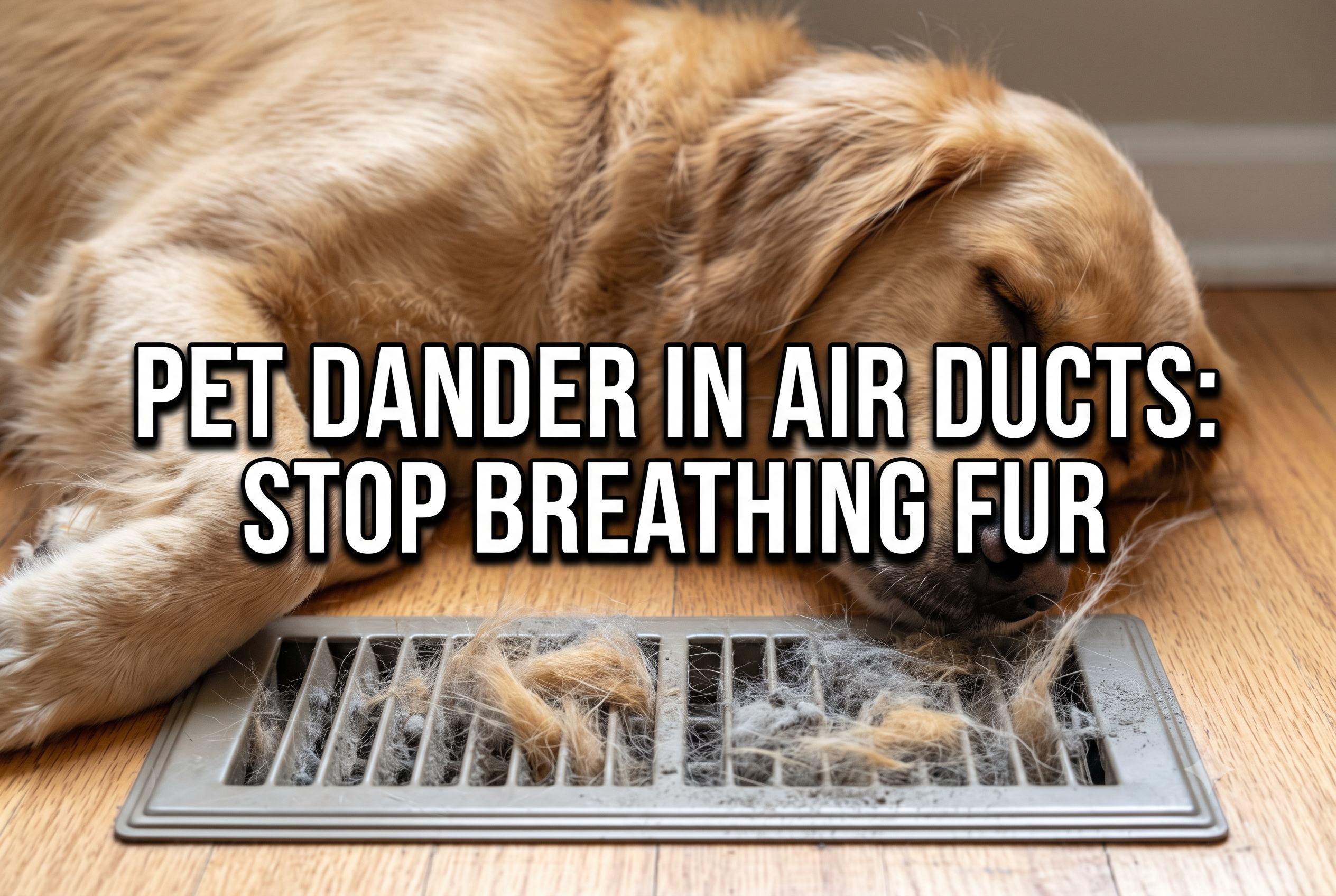
Pet dander in air ducts is one of the leading causes of chronic indoor allergies for pet owners. We love our dogs and cats, but living with them means accepting a constant battle against shedding fur, tracked-in dirt, and microscopic skin flakes. You likely vacuum your carpets, wash your pet’s bedding, and lint-roll your furniture on a regular basis. However, if you are ignoring your home’s central ventilation system, your cleaning efforts are only addressing half the problem.
Your HVAC system acts like a giant vacuum cleaner for your home. It actively pulls in the ambient indoor air, conditions it, and pushes it back out. If your furry friends are constantly shedding, your ductwork is steadily inhaling those lightweight proteins, oils, and hairs. Over time, your hidden air pipes become a highly concentrated reservoir of animal allergens, waiting to trigger respiratory distress every time the blower turns on.
At The Duct Boss, we specialize in comprehensive high-velocity Air Duct Cleaning and HVAC restoration. While we do not handle new system installations, our core expertise is extracting heavy biological buildup from existing ventilation networks. Here is a technical breakdown of how animal allergens take over your system and why professional extraction is a must for pet owners.
1. The Mechanics of Animal Allergens
What exactly makes pet allergens so difficult to control? It comes down to their microscopic size and unique physical properties.
Microscopic Dander: Pet dander is composed of microscopic flecks of skin shed by cats, dogs, rodents, and birds. These particles are significantly smaller and lighter than standard household dust, allowing them to remain suspended in the air for hours before eventually being pulled into your return vents.
Sticky Proteins: Unlike dry dust, animal dander contains specific proteins and natural body oils. When these particles enter your metallic ductwork, they act like glue, stubbornly sticking to the walls of the pipes, the blower motor, and the evaporator coils.
2. The Recirculation Loop
Once pet dander enters your HVAC infrastructure, it creates a continuous loop of indoor air pollution.
Bypassing the Filter: Standard fiberglass HVAC filters are designed to protect the equipment from large debris, not to trap microscopic skin flakes. Much of the dander passes directly through the filter screen.
The Aerosol Effect: As the sticky layer of dander and hair thickens inside the ducts, the high-velocity air from your blower motor constantly shears off small particles, aerosolizing them and blasting them back into every room of your house.
3. Hidden “Pet Odors” in the Ductwork
If your home always smells like your dog, even immediately after you mop the floors and give the dog a bath, the smell is coming from your walls.
The Biological Reservoir: The thick mat of hair and oily skin cells sitting inside your dark ductwork emits a continuous, stale animal odor. Every time the AC or heater activates, it effectively diffuses this pet smell throughout the entire property.
4. Suffocating the Blower and Coils
Pet hair is incredibly damaging to your expensive HVAC machinery.
Mechanical Strain: Thick clumps of dog or cat hair easily wrap around the blower motor blades and create an insulating blanket over the delicate indoor cooling coils. This drastically restricts airflow, forces the system to run longer, spikes your energy bills, and causes premature equipment failure.
5. Total HEPA Extraction and Sanitization
A standard household vacuum and a bottle of air freshener cannot solve a severe pet dander problem.
Deep Scouring: At The Duct Boss, we utilize truck-mounted HEPA vacuums and specialized pneumatic whips to physically scour the interior walls of your ductwork, breaking the “glue-like” bond of the oily dander.
Antimicrobial Sanitization: After the massive volumes of fur and dander are entirely extracted into our containment systems, we can apply an EPA-registered anti-microbial treatment to eliminate any lingering biological odors, giving your home a truly clean slate.
Stop the endless cycle of vacuuming and sneezing. Reclaim your indoor air quality and protect your HVAC system by scheduling a professional duct cleaning today.
📞 866-876-2677
🎯 Frequently Asked Questions About Pet Allergens and Air Ducts
Pet dander in air ducts: How often should pet owners have their ducts cleaned? While a standard home should have its ducts cleaned every 3 to 5 years, homes with multiple pets—especially heavy shedders like Golden Retrievers or Huskies—should schedule a professional air duct cleaning every 1 to 2 years to prevent massive hair and dander clogs.
Pet dander in air ducts: Can duct cleaning get rid of cat or dog allergies? Professional duct cleaning removes the massive reservoir of concentrated pet allergens hidden inside your ventilation system. By stopping the HVAC unit from constantly blowing aerosolized dander into your living space, allergy sufferers typically experience a dramatic reduction in indoor symptoms.
Pet dander in air ducts: Does cleaning the ducts remove the “wet dog” smell? Yes. Stale pet odors often originate from the layers of oily dander and hair trapped inside the duct runs and evaporator coil. Physically extracting this biological buildup, followed by a professional antimicrobial fogging, permanently removes the source of the hidden odors.