
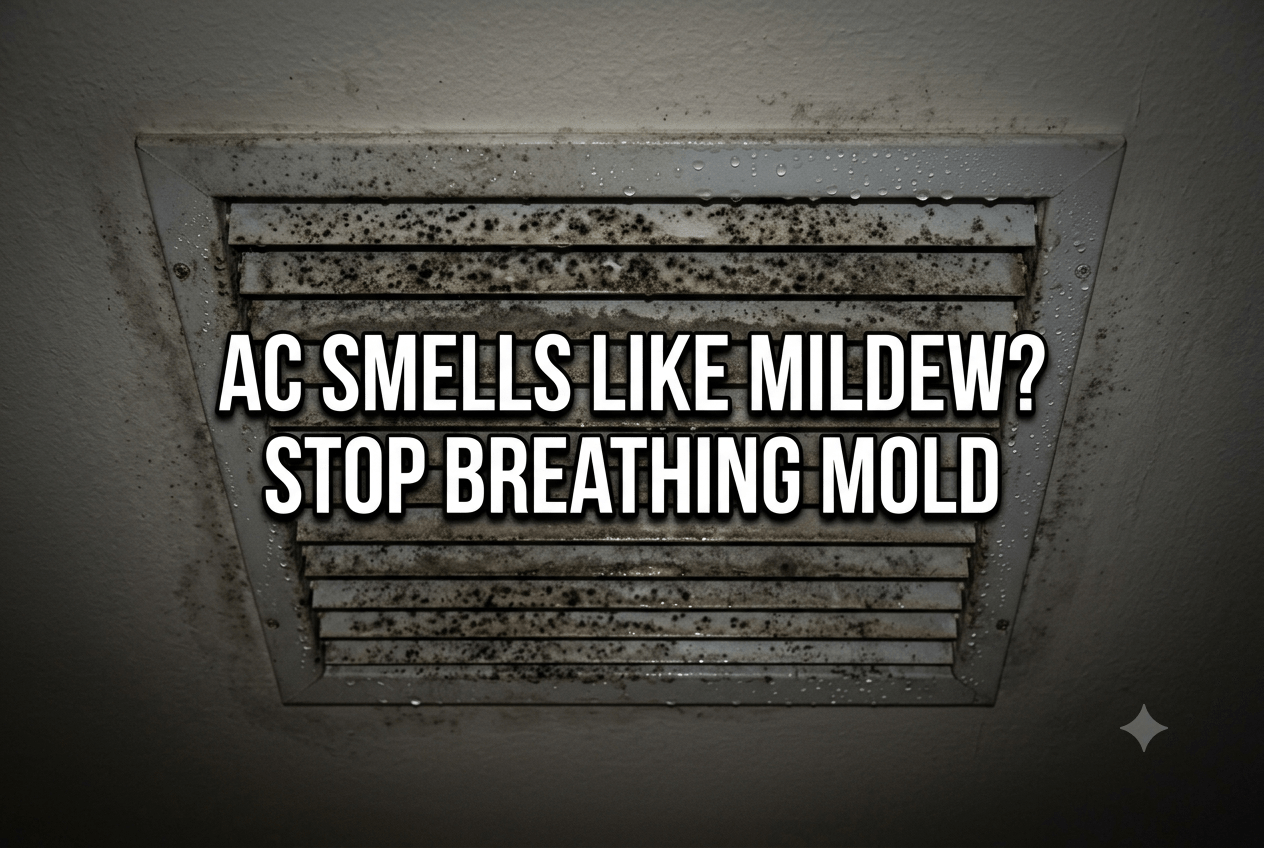
Musty smell from AC vents is one of the most alarming warning signs your home can give you. You turn on your air conditioner expecting a blast of crisp, refreshing air, but instead, your living room is instantly filled with a heavy, damp odor. Often described as smelling like a damp basement, old gym socks, or wet cardboard, this scent is not something that will simply “blow away” if you leave the system running.
This specific odor is the unmistakable off-gassing of active biological growth. It means that somewhere deep inside your dark, enclosed ventilation network, a combination of excess moisture and settled dust has created the perfect breeding ground for mold, mildew, and bacteria. Every time the blower motor engages, it is actively aerosolizing these spores and volatile organic compounds (VOCs) directly into your breathing space.
At The Duct Pros, we are specialists in deep-cleaning and resetting compromised air systems. While we do not provide installation services for new equipment, our core expertise lies in aggressively rescuing and sterilizing your existing infrastructure to save you from massive replacement costs. Here is a technical breakdown of why your AC smells like mildew, the mechanics of “Dirty Sock Syndrome,” and how professional extraction neutralizes the threat.
1. The Science of HVAC Condensation
To understand why mildew grows in your vents, you have to understand how air conditioning works. Your AC does not just cool the air; it actively dehumidifies it.
The Evaporator Coil: Warm, humid air from your home is pulled over the freezing-cold indoor evaporator coil. As the air cools, the moisture within it condenses into liquid water on the metallic fins of the coil.
The Drain Pan: This condensation is supposed to drip into a drain pan and safely exit your home through a PVC pipe. However, if that drain line gets sluggish or clogged, standing water pools inside the dark, warm cabinet of your air handler, creating a 100% humidity microclimate.
2. Dust + Water = Biological Growth
Mold and mildew require three things to survive: darkness, moisture, and a food source. Your ductwork naturally provides the darkness. A clogged drain pan or high indoor humidity provides the moisture.
The Biological Food Source: The dust inside your ducts is not just dirt; it is composed of dead skin cells, pet dander, and microscopic organic fibers. When high-velocity humid air travels across a thick layer of this organic dust, dormant mold spores rapidly activate, colonizing the interior walls of your supply lines and feeding on the organic matter.
3. “Dirty Sock Syndrome”
If the musty smell is incredibly strong and smells exactly like a locker room, you are likely dealing with a highly specific HVAC condition known as “Dirty Sock Syndrome.”
Bacterial Colonization: This occurs when a massive colony of bacteria takes over the wet evaporator coil. When the system cycles from heating to cooling (typically in the spring and fall), the temperature shift causes the bacteria to release a highly concentrated, foul-smelling gas.
The Recirculation: Because the coil is the primary gateway for all air entering your home, 100% of the air you breathe is forced through this bacterial colony before reaching your rooms.
4. The Health and Efficiency Risks
Ignoring a musty odor is not a viable strategy. As the colonization spreads, it fundamentally compromises both your air quality and your system’s mechanics.
Respiratory Distress: Inhaling concentrated mold spores and mildew VOCs can trigger severe asthmatic reactions, chronic sinus congestion, and allergic responses, even in healthy adults.
Mechanical Suffocation: As mold and bacterial slime build up on the evaporator coil, they insulate the aluminum fins. This blocks the heat transfer process, forcing your compressor to run endlessly, spiking your energy bills, and ultimately leading to a frozen coil.
5. Total System Sterilization
You cannot fix a biologically compromised HVAC system with aerosol air fresheners or cheap fiberglass filters. The contamination source must be physically extracted and chemically neutralized.
High-Torque Source Extraction: We utilize high-powered, truck-mounted HEPA vacuums and pneumatic agitation tools to scour the interior walls of your ductwork. This strips away the dust, skin cells, and dander that act as the food source for the mold.
EPA-Registered Antimicrobial Fogging: Once the bare metal is exposed, we introduce an advanced, hospital-grade antimicrobial fog into the system. This penetrating mist coats the entire interior of the ductwork and the evaporator coil, destroying the existing mold, neutralizing the odor-causing bacteria, and leaving behind a protective barrier to prevent future colonization.
Stop breathing contaminated air. Eradicate the damp, musty odors at the source and restore the crisp, clean airflow you deserve by scheduling a professional extraction and sanitization today.
📞 (866) 712-1122
🌐 www.theductpros.us
📧 Info@theductpros.us
🎯 Frequently Asked Questions About Musty AC Smells
Is it safe to run my AC if it smells musty? It is highly recommended that you stop running the system. A musty smell is a definitive indicator of mold, mildew, or bacterial growth inside the air handler or ductwork. Running the system forces high-velocity air across this contamination, aerosolizing the spores and spreading them throughout every room in your house, which can trigger severe respiratory issues.
Can cleaning my air ducts get rid of a mold smell? Yes. A comprehensive professional duct cleaning removes the organic dust and dander that mold feeds on. When combined with an EPA-registered antimicrobial fogging treatment, the process physically removes the biological material and chemically neutralizes the spores, permanently eliminating the musty odor.
Why does my AC smell like mildew only when it first turns on? This is a classic sign of “Dirty Sock Syndrome” or a heavily soiled evaporator coil. When the system sits idle, moisture and bacteria fester on the warm, dark coil. When the blower motor first kicks on, it immediately blasts the concentrated pocket of off-gassed odors into your home. Once the system runs for a while and the coil gets cold, the smell is temporarily suppressed until the next cycle