
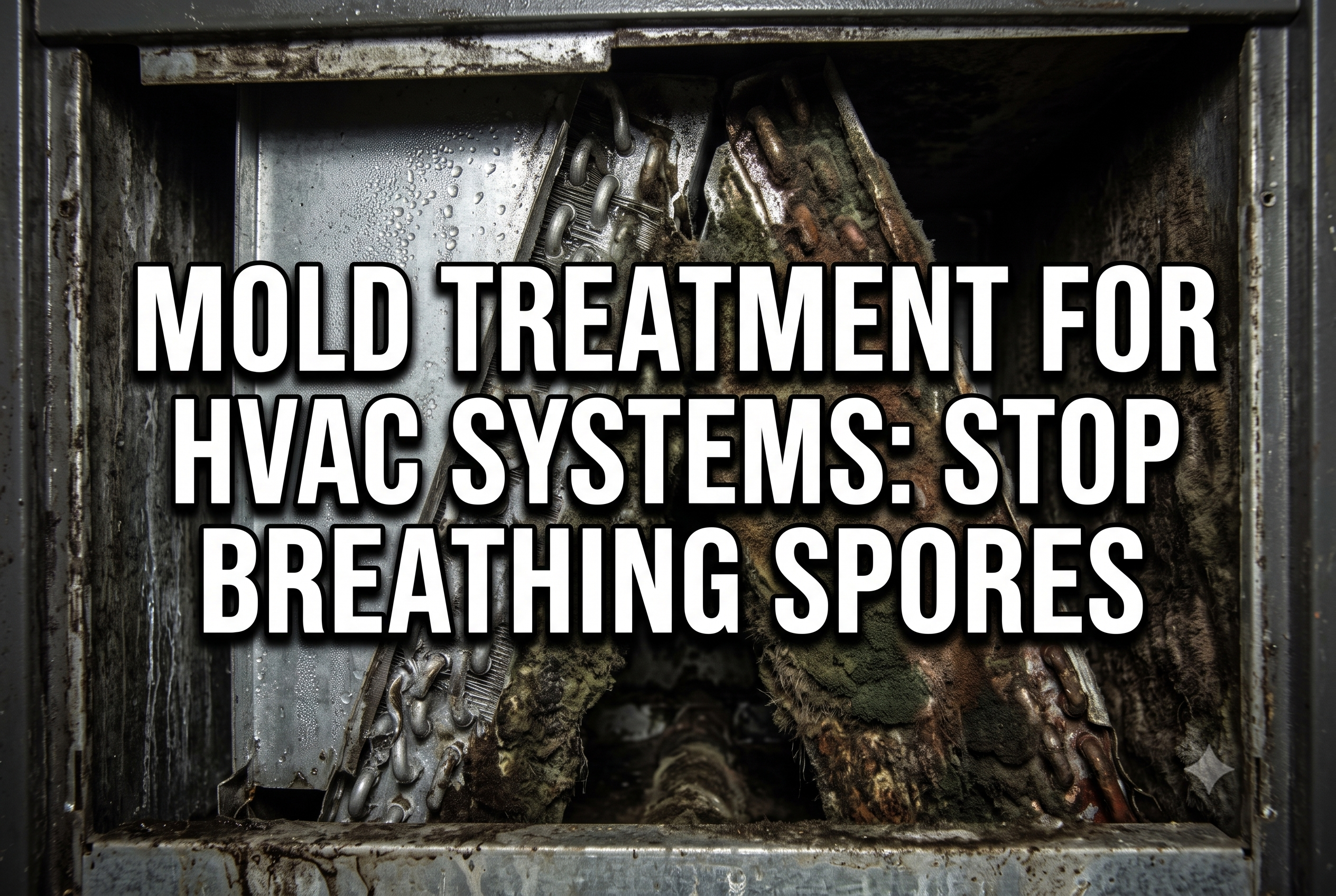
Mold treatment for HVAC systems is one of the most critical steps a homeowner can take to protect their family’s health and maintain a safe indoor environment. When you think of mold, you likely picture visible dark patches growing on a damp bathroom wall or along a basement windowsill. However, the most dangerous mold growth in a residential home is often completely invisible—hiding deep within the dark, moisture-rich labyrinth of your central air conditioning and heating ducts.
Because your HVAC system continuously pulls in warm air, creates condensation, and circulates it back into your living spaces, it can easily become a breeding ground for biological colonies. Ignoring a musty smell or minor humidity issues allows mold spores to multiply rapidly, turning your comfort system into a high-speed distribution network for airborne allergens and toxins.
At The Duct Pros, we specialize in professional Air Duct Cleaning, HVAC Cleaning, and specialized Mold Treatment. While we do not handle new equipment installations, our core expertise lies in rescuing contaminated ventilation networks. Here is a technical breakdown of why mold targets your HVAC system, the health hazards it poses, and how professional treatment permanently neutralizes the threat.
1. The Perfect Storm: Darkness, Moisture, and Dust
Mold requires three basic elements to grow and thrive: darkness, moisture, and a organic food source. Your home’s ventilation network provides all three in abundance.
The Condensation Trap: During warm weather cycles, warm indoor air passes over your AC’s freezing evaporator coil, creating heavy condensation. If your drain pan is sluggish or humidity is high, moisture lingers in the system.
Organic Food Sources: Dust, skin cells, and pet dander trapped inside your ducts provide the exact organic nutrients mold spores need to colonize the interior walls of your ductwork and air handler.
2. Health Hazards of Aerosolized Mold Spores
When an active mold colony establishes itself inside your duct system, every activation of the blower motor aerosolizes millions of microscopic spores and volatile organic compounds (VOCs).
Respiratory Distress: Inhaling concentrated mold spores can trigger severe allergic reactions, chronic sinus congestion, coughing, and debilitating asthma attacks.
Vulnerable Occupants: Children, elderly family members, and individuals with compromised immune systems are especially sensitive to indoor mold exposure, making prompt remediation a health priority.
3. The Limit of Standard Cleaning
Many homeowners assume that changing their air filter or wiping down the register grills is enough to solve a mold problem.
Deep-Rooted Contamination: Standard filters only catch large particles and do nothing to eradicate mold roots that have embedded themselves into the metal coils or interior duct lining.
Chemical Neutralization Required: Physical extraction removes the bulk debris, but a specialized antimicrobial treatment is required to chemically kill the microscopic spores and prevent them from returning.
4. Our Professional HVAC Mold Remediation Process
At The Duct Pros, we utilize a rigorous, multi-step approach to ensure your system is completely sterilized.
High-Torque Physical Extraction: We use industrial HEPA negative-air vacuums and pneumatic agitation tools to scour the ductwork and remove all accumulated dust and biological sludge.
EPA-Registered Antimicrobial Fogging: Once the surfaces are clean, we apply an advanced, hospital-grade antimicrobial fog throughout the entire system. This treatment neutralizes active mold spores, eliminates foul musty odors, and leaves behind a protective barrier against future growth.
Don’t let hidden biological growth compromise your indoor air quality. Protect your family’s lungs and restore your HVAC system by scheduling a professional mold treatment today.
📞 (866) 712-1122
🌐 www.theductpros.us
📧 Info@theductpros.us
🎯 Frequently Asked Questions About HVAC Mold Treatment
Mold treatment for HVAC systems: How do I know if mold is growing in my ducts? The most common indicators include a persistent musty, damp, or “dirty sock” odor whenever the air conditioner or heater turns on, unexplained allergy flare-ups while indoors, or visible dark rings around your supply and return register grills.
Mold treatment for HVAC systems: Can I spray household bleach into my vents to kill mold? No, using household bleach inside your air ducts is strongly discouraged. Bleach contains a high water content that can actually feed mold growth on porous or semi-porous surfaces, and its harsh chemical vapors can become heavily aerosolized and blown into your living space when the system turns on. Professional EPA-registered treatments are required.
Mold treatment for HVAC systems: How often should this service be performed? If your home has experienced severe humidity issues, water leaks near the air handler, or a history of musty odors, an immediate professional inspection and mold treatment are recommended. For general maintenance, combining an annual HVAC inspection with routine duct cleanings helps prevent mold colonies from ever taking root.