
Mold in air ducts symptoms are often dismissed by homeowners as seasonal allergies or a temporary funky smell, but ignoring these critical warning signs can lead to devastating health consequences and massive property damage. Your central heating and cooling system is designed to circulate comfortable air, but under the wrong conditions, it can easily transform into a high-powered, whole-home biological distribution network.
Mold is a living fungus that requires three very specific things to thrive: absolute darkness, a steady organic food source, and high moisture. Unfortunately, the interior of your HVAC ductwork perfectly provides all three of these elements. When condensation builds up on your indoor evaporator coil or inside poorly insulated metal pipes, it mixes with the natural dead skin cells and dust bypassing your filter. This creates an ideal, highly insulated breeding ground for toxic black mold and mildew colonies.
As The Duct Guys, we are Your Trusted Experts In Fresh Air, and we routinely handle severe biological contamination cases. Because mold grows deep inside the hidden trunk lines where you cannot see it, you must learn to recognize the secondary signs of an infestation. Here is a comprehensive, technical breakdown of the most critical symptoms indicating your HVAC system is contaminated, and why immediate professional extraction is required.
1. The Undeniable “Dirty Sock” Syndrome
The absolute first and most prominent symptom of HVAC mold contamination is an overwhelming, highly distinct odor.
The Scent of Spores: Mold releases volatile organic compounds (MVOCs) as it feeds and reproduces. Because these colonies are growing directly inside the airflow pathway, your blower motor forcefully pushes these biological gases into your living space.
Identifying the Odor: Homeowners typically describe the smell as a damp, musty, rotting, or stale odor that perfectly mimics the smell of a locker room or wet, dirty gym socks.
The Timing is Key: This symptom is highly predictable. If your home smells completely fine when the system is off, but that heavy, musty odor aggressively blasts out of the floor or ceiling registers the exact second the air conditioner or heater kicks on, you have an active biological colony growing inside your ductwork or on your evaporator coil.
2. Persistent, Unexplained Physical Health Symptoms
Your body will often react to toxic airborne spores long before you ever see physical evidence of a mold problem in your home.
The Allergy Loop: If you or your family members find yourselves constantly suffering from a runny nose, itchy eyes, scratchy throat, and sneezing fits while inside the house, but the symptoms miraculously disappear when you leave for work or go outdoors, your indoor air is contaminated.
Severe Respiratory Reactions: Certain strains of mold, such as Stachybotrys chartarum (toxic black mold), release dangerous mycotoxins. The Environmental Protection Agency (EPA) notes that prolonged exposure to aerosolized mold spores can trigger severe asthma attacks, chronic sinus infections, chest tightness, and profound, unexplained fatigue. Your HVAC system is effectively pumping these mycotoxins directly into your bedroom while you sleep.
3. Visual Evidence on Vent Covers and Surrounding Drywall
While the main colony is usually hidden deep within the dark main trunk lines, the fast-moving air will eventually carry spores to the end of the line.
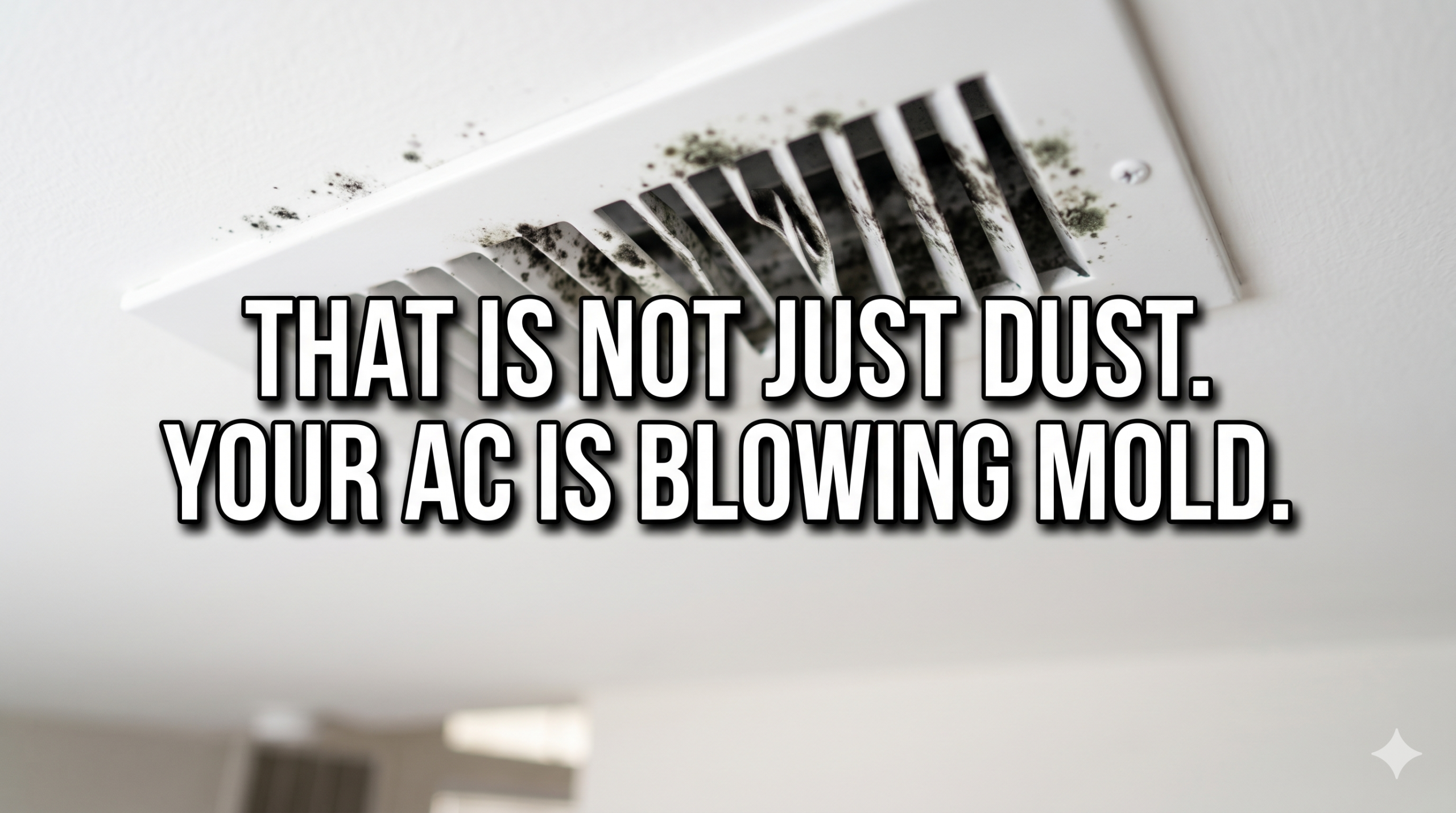
The Black Spotting: Look closely at your metal or plastic supply registers (the vents blowing air out). If you see a fuzzy, patchy pattern of dark black, dark green, or brown spots clinging to the louvers, it is highly likely that mold is aggressively feeding on the dust trapped on the vent.
Drywall Creep: In severe cases, the mold spores will blow past the vent cover and begin to colonize the actual drywall or ceiling paint immediately surrounding the register. This is a massive red flag indicating that the air coming out of that pipe is heavily saturated with biological moisture and active spores.
4. Why DIY Bleach Treatments Are Dangerous and Ineffective
When homeowners spot mold on a vent cover, their first instinct is usually to grab a bottle of household bleach and a rag. This is a massive, dangerous mistake that frequently makes the infestation significantly worse.
The Water Content Problem: Standard household bleach is actually composed of about 90% water. While the chemical chlorine might burn the surface layer of the mold on a metal vent, it quickly evaporates. The remaining 90% water then soaks into the surrounding dust and microscopic cracks, essentially watering the surviving mold roots and causing the colony to rapidly explode in growth a few days later.
Aerosolizing the Threat: Scrubbing a dry mold colony with a rag or a standard vacuum will immediately agitate the organism. The mold enters a defensive state and rapidly ejects millions of microscopic spores into the air, spreading the contamination from the ductwork directly into your carpet and furniture.
5. The Professional Remediation and Antimicrobial Process
Eradicating mold from a ventilation system requires strict containment protocols, negative air pressure, and highly specialized chemical treatments.
Total Negative Air Extraction: We begin by sealing your entire HVAC system and putting it under immense negative pressure using commercial-grade HEPA vacuum equipment. We use pneumatic whips to physically scrub the mold colonies off the walls of the sheet metal. Because the system is under a heavy vacuum, the millions of dislodged spores are instantly sucked out of your home and into our containment unit, ensuring zero cross-contamination.
EPA-Registered Antimicrobial Fogging: Once the physical organism is completely removed, we finish the biohazard remediation by introducing a hospital-grade, EPA-registered antimicrobial fog into the ductwork. This odorless mist travels through the entire system, penetrating every microscopic crevice to kill any remaining invisible spores and permanently neutralize the rotting odors.
Do not gamble with your family’s respiratory health or let your HVAC system slowly destroy your indoor air quality. If you smell the musty odors or see the dark spots on your vents, immediate action is required.
📞 +1 (866) 712-1122 🌐 www.TheDuctPros.us 📧 Info@TheDuctPros.us
🎯 Frequently Asked Questions About HVAC Mold
What does mold in air ducts smell like? Mold growing inside an HVAC system produces a highly distinct, damp, musty odor that is most commonly compared to the smell of wet, dirty gym socks or a stagnant, rotting locker room. If this smell aggressively floods your home the exact moment your air conditioner or heater fan turns on, you almost certainly have an active mold colony in your ductwork.
Can mold in air ducts make you sick? Yes, absolutely. Mold in your air ducts releases microscopic spores and mycotoxins that are forcefully circulated throughout your home up to 60 times a day. Breathing in this contaminated air can cause severe allergic reactions, chronic sinus infections, worsening asthma symptoms, headaches, and persistent fatigue.
How do professionals remove mold from air ducts? Professionals never use household bleach. We utilize heavy-duty, truck-mounted negative air machines to put the ductwork under a massive vacuum, preventing spores from escaping into your living space. We then use motorized brushes to physically extract the mold growth, followed by pumping a specialized, EPA-registered antimicrobial fog throughout the entire system to kill any microscopic spores and sterilize the metal pipes.