
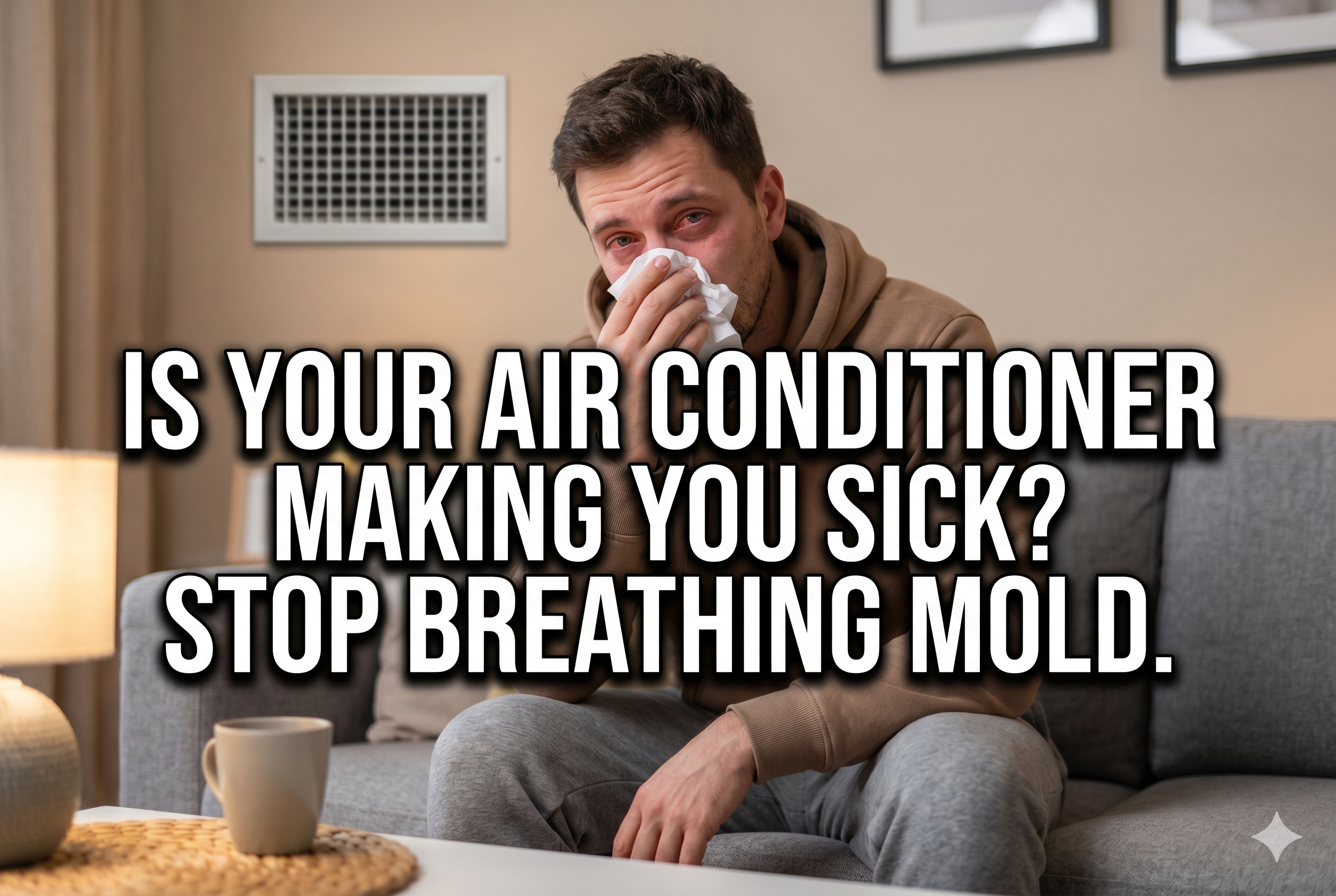
Mold allergy symptoms are incredibly easy to misdiagnose. Millions of homeowners spend months suffering from what they believe is a stubborn seasonal cold, pet allergies, or high outdoor pollen counts, completely unaware that the actual source of their illness is blowing directly out of their ceiling vents. Your home should be your ultimate safe haven, but if your central heating and cooling system has been compromised by biological growth, it actively transforms into a whole-house respiratory hazard.
The Centers for Disease Control and Prevention (CDC) warns that indoor environments can frequently harbor massive colonies of mold, particularly in areas with high condensation and poor light. The interior of your HVAC ductwork is a dark, insulated tunnel that frequently collects moisture from your air conditioner’s evaporator coil. When this moisture mixes with everyday household dust, it creates the perfect breeding ground for toxic black mold, mildew, and fungal colonies.
At The Duct Guys, we specialize in diagnosing and eradicating severe biological contamination inside residential ductwork. If you or your family members are constantly feeling under the weather, it is time to look at the air you are breathing. Here is a comprehensive guide to recognizing the physical warning signs of indoor fungal exposure and how professional extraction can restore your home’s air quality.
1. The Biological Mechanics of an Allergic Reaction
To understand why your body reacts so violently to a contaminated HVAC system, you must understand how mold reproduces and travels.
Microscopic Invaders: Mold colonies do not just stay in one place. To survive and expand, they continuously release millions of microscopic reproductive spores into the air. When mold grows inside your ductwork, the high-powered blower motor of your furnace or AC acts as a delivery system, forcefully injecting these invisible spores into every room of your house.
The Immune Response: When you inhale these airborne spores, your body’s immune system identifies them as dangerous foreign invaders. In an attempt to protect you, your immune system triggers a massive release of histamine. This chemical reaction creates severe inflammation in your respiratory tract, leading directly to the classic physical symptoms of an allergic reaction.
Toxic Strains: Certain strains of mold go beyond simple allergens. They produce chemical byproducts known as mycotoxins. Prolonged exposure to aerosolized mycotoxins can push past standard allergies and cause serious, long-term toxicological effects on the human body.
2. Identifying the Primary Respiratory Symptoms
The most immediate and obvious signs of mold exposure manifest in your upper respiratory system, perfectly mimicking a never-ending cold.
Chronic Coughing and Sneezing: If you experience intense, uncontrollable sneezing fits or a dry, hacking cough that only seems to occur when you are sitting in your living room or trying to sleep in your bedroom, indoor mold is a highly likely culprit.
Sinus Congestion and Postnasal Drip: Spores severely irritate the delicate lining of your nasal passages, causing them to swell and produce excessive mucus. This leads to the feeling of a permanently stuffed-up nose, intense sinus pressure headaches, and a constant, irritating drip in the back of your throat.
Asthma Exacerbation: For individuals who already suffer from asthma, a mold-infested HVAC system is incredibly dangerous. The sudden influx of spores can trigger severe, life-threatening asthma attacks, wheezing, and a terrifying feeling of tightness in the chest.
3. Non-Respiratory and Skin-Related Warning Signs
Mold exposure does not only affect your lungs and sinuses. The inflammation caused by mycotoxins and spores can trigger a wide array of systemic physical issues.
Itchy, Watery Eyes: Airborne spores easily land on the moist surface of your eyes, causing immediate redness, intense itching, and constant watering. If you wake up every morning with bloodshot, swollen eyes, the air blowing from the vent directly above your bed is likely contaminated.
Skin Rashes and Hives: Physical contact with mold spores—which continuously settle on your couches, bedsheets, and clothing from the air vents—can trigger a condition known as allergic contact dermatitis. This results in dry, scaly skin patches, unexplained hives, and intense itching.
Profound Fatigue and “Brain Fog”: Fighting off a continuous biological invasion takes a massive toll on your immune system. Homeowners living with hidden mold frequently report feeling constantly exhausted, lethargic, and unable to concentrate, regardless of how many hours of sleep they get.
4. The “HVAC Litmus Test” for Mold
How do you differentiate between outdoor seasonal allergies and an indoor ductwork contamination? You simply have to pay attention to your environment and the timing of your symptoms.
The Location Test: Do your symptoms miraculously improve when you leave the house to go to work or run errands, only to return with a vengeance the moment you walk back through your front door?
The Thermostat Trigger: Do you notice that your coughing, sneezing, and watery eyes significantly worsen about 10 to 15 minutes after the air conditioner or heater kicks on?
The Scent Warning: Does your house smell perfectly fine when the system is off, but aggressively smells like dirty, wet gym socks or a stale basement when the forced air starts blowing? If you answered yes to any of these questions, your HVAC system is highly compromised.
5. The Professional Antimicrobial Solution
Ignoring the problem will only allow the mold colony to grow larger, thicker, and more dangerous. You cannot fix an HVAC mold infestation with household cleaners or store-bought HEPA filters.
Complete Source Removal: The only way to stop the allergic reactions is to physically remove the organism. Our technicians utilize heavy-duty, truck-mounted negative air machines to place your entire duct system under intense suction. We use pneumatic brushes to scour the metal pipes, ripping the mold roots off the walls and extracting the spores directly outside to our containment units.
EPA-Registered Sterilization: After the physical extraction is complete, we introduce a highly specialized, hospital-grade antimicrobial fog into the ventilation system. This effectively coats the interior of the ductwork, killing any remaining microscopic bacteria, neutralizing the volatile organic compounds causing the musty odors, and preventing future fungal growth.
Do not let your home’s climate control system compromise your family’s health. Restore your indoor air quality and breathe freely again by scheduling a complete diagnostic and extraction service today.
📞 +1 (866) 712-1122 🌐 www.theductguys.us 📧 Info@theductguys.us
🎯 Frequently Asked Questions About Mold Allergies
How do I know if my allergies are from mold in my house? The biggest indicator is the timing and location of your symptoms. If your itchy eyes, coughing, and congestion clear up when you are at work or outside, but immediately return when you are at home—especially when the air conditioner or furnace is running—you are likely reacting to indoor airborne mold spores circulated by your HVAC system.
Can mold in air ducts cause permanent health damage? While most people experience standard allergic reactions that subside once the mold is removed, prolonged exposure to toxic strains (like black mold) can cause severe complications. Continuous inhalation of mycotoxins can lead to chronic respiratory infections, permanent asthma development in children, and severe immune system suppression.
Will changing my furnace filter stop mold allergies? No. While a high-MERV filter is great for catching standard dust, it cannot solve an active mold infestation. If the mold colony is growing inside the ductwork or on the indoor AC coil, it is already past the filter. The forced air will continue to pick up millions of spores and blow them directly into your living spaces until the system is professionally sterilized.