

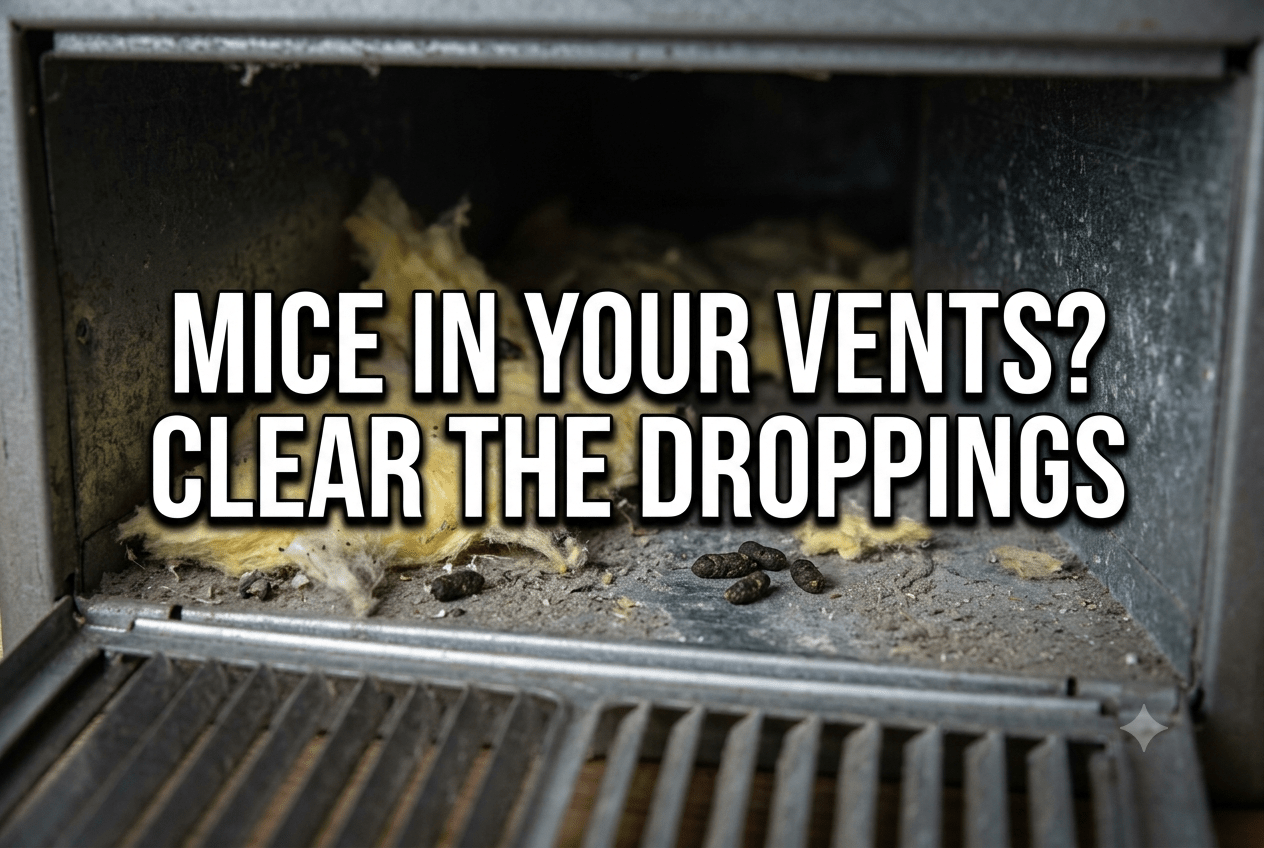
Mice in air ducts is a homeowner’s worst nightmare. While a mouse scurrying across the garage floor is unsettling, knowing that rodents have nested inside your home’s central ventilation system is a severe biological emergency. Your ductwork provides rodents with a dark, climate-controlled, and predator-free highway system that grants them access to almost every room in your house.
The problem extends far beyond the creepy scratching noises you hear in the ceiling at night. When rodents infiltrate your HVAC system, they treat your air ducts as their personal restroom and nesting ground. Every single time your blower motor engages, it forces high-velocity air directly over accumulations of mouse urine, feces, and shedding hair, weaponizing your indoor air quality and spreading dangerous pathogens into your living spaces.
At The Duct Pros, we specialize in high-velocity biological extraction and structural sanitization. While we do not provide new HVAC equipment installation services, our core expertise is rescuing compromised systems from severe contamination. If your exterminator has recently eliminated a pest problem, the job is only half done. Here is a technical breakdown of why rodents target your ductwork, the severe health risks they leave behind, and why professional HEPA extraction is mandatory.
1. How Rodents Breach the Ventilation Envelope
Your ductwork is supposed to be a closed, sealed loop. However, mice are incredibly determined and possess teeth that can chew through surprisingly tough materials.
The Vulnerability of Flex Ducts: In attics and crawlspaces, the system heavily relies on flexible ductwork—a plastic inner liner wrapped in fiberglass insulation and a thin foil jacket. This material is completely defenseless against a rodent. Mice easily chew through the outer jacket to harvest the soft fiberglass for nesting material, eventually biting entirely through the inner plastic core to enter the airstream.
Unsealed Junctions: Even in homes with hard sheet metal ducts, rodents can squeeze through gaps as small as a dime. Unsealed joints, deteriorated mastic tape, or poorly fitted register boots provide easy access points for a determined mouse.
2. The Severe Biological Threat
The presence of rodents in your air ducts turns your home’s respiratory system into a toxic distribution network.
Hantavirus and Salmonella: Mouse droppings are heavily laden with dangerous bacteria and viruses, most notably Hantavirus. When these droppings dry out in the warm environment of your ductwork, they turn into a highly infectious powder.
Aerosolized Toxins: As your air conditioner or heater blows air across these dried droppings and urine puddles, it picks up this microscopic, toxic powder and blasts it out of your ceiling and floor registers. Breathing this contaminated air can trigger severe respiratory distress, asthma attacks, and highly dangerous pulmonary infections.
3. The “Dead Animal” Odor
Sometimes the first sign of an infestation is not a sound, but a horrific smell.
Trapped Decay: Rodents have very short lifespans, and they frequently die deep inside the labyrinth of your home’s ductwork or inside the air handler cabinet itself.
Forced Recirculation: As the body decomposes, the biological gases are trapped inside the closed loop of the HVAC system. The blower motor continuously recirculates this potent, gag-inducing odor of decay into your bedrooms and living room, making the home virtually unlivable.
4. Why Pest Control Is Only Phase One
Many homeowners hire an exterminator, catch the mice, and assume the problem is solved. This is a dangerous misconception.
The Toxic Leftovers: An exterminator’s job is to stop the active infestation. They do not clean out the ductwork. If you only kill the mice, you are leaving behind months’ worth of toxic feces, dried urine, decaying carcasses, and nesting debris directly in your primary air path. The health hazard remains entirely active.
5. Total Biological Extraction and Sanitization
Removing biological rodent waste from an HVAC system requires strict containment protocols to prevent cross-contaminating your home.
Negative Air Containment: At The Duct Pros, we hook your entire system up to an industrial, truck-mounted HEPA vacuum. We place the ductwork under intense negative pressure so that as we disturb the toxic feces and nests, all the microscopic pathogens are instantly sucked outside to our containment unit.
High-Torque Scouring and EPA Sterilization: We use pneumatic whips to break the bond of dried urine and feces off the metallic walls. Once the physical debris is entirely removed, we apply an EPA-registered antimicrobial fog. This deeply penetrating mist neutralizes the dangerous bacteria, destroys the lingering odors of urine and decay, and fully sterilizes the air path.
Do not let rodents turn your HVAC system into a biological hazard. Once the exterminator leaves, secure your home’s air quality by scheduling a comprehensive pest-contamination duct cleanout today.
📞 (866) 712-1122
🌐 www.theductpros.us
📧 Info@theductpros.us
🎯 Frequently Asked Questions About Mice in Ductwork
Can mice get into my central air conditioning vents? Yes. Mice frequently chew through the soft, flexible ductwork located in attics and crawlspaces to build nests in the warm fiberglass insulation. Once they chew through the inner lining, they have full access to your home’s entire ventilation network, allowing them to travel safely between rooms.
What happens if a mouse dies in the air duct? If a mouse dies in your ductwork, the HVAC system will act as a distribution network for the gases of decay. Every time the blower motor turns on, it will force the potent, foul odor of the decomposing rodent through the vents and into your living spaces. The body must be physically extracted and the surrounding metal chemically sanitized to eliminate the smell.
Will duct cleaning remove mouse droppings? Yes. Standard vacuuming cannot safely remove rodent waste. A professional, high-velocity HEPA extraction is specifically designed to safely pull toxic accumulations of mouse feces, nesting materials, and dead rodents out of the ductwork without blowing the dangerous, infectious dust into your home