

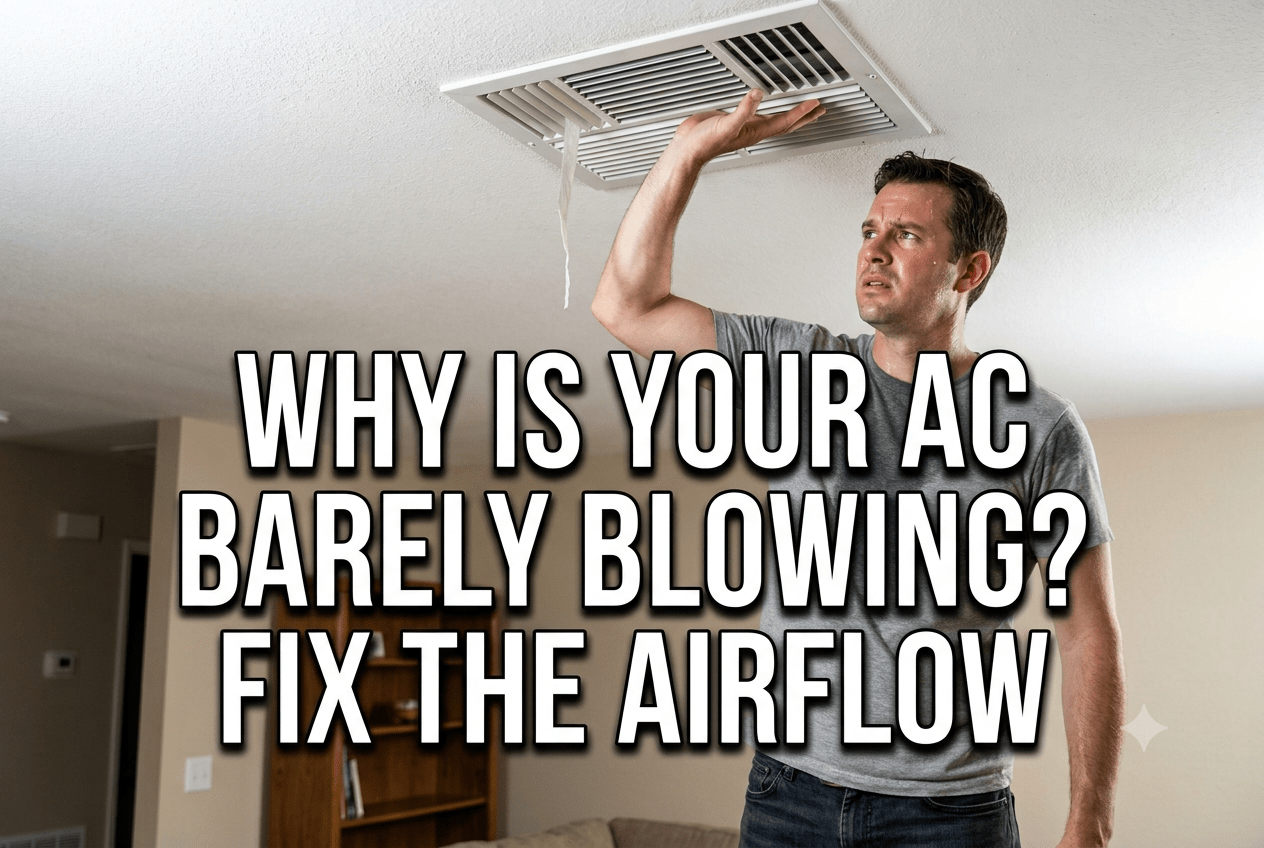
Low airflow from vents is one of the most maddening and uncomfortable HVAC failures a homeowner can experience. It is the middle of the summer, you can hear your air conditioning compressor roaring loudly outside, and the indoor blower motor is humming away, yet when you place your hand over the register, you feel nothing but a weak, pathetic trickle of cool air. Your house remains hot and humid, but your energy bill continues to skyrocket as the system runs endlessly trying to reach the thermostat’s set temperature.
Many homeowners immediately assume their AC unit is broken or out of Freon, prompting them to call for expensive mechanical repairs. However, in the vast majority of cases, the mechanical equipment is generating plenty of cold air—it simply cannot reach your rooms. Your ductwork is the delivery highway of your HVAC system. When that highway is blocked, leaking, or crushed, the conditioned air you are paying for is either trapped inside the machine or being dumped into your attic.
At The Duct Pros, we are Your Trusted Experts In Fresh Air, and we specialize in diagnosing and resolving severe ventilation restrictions. If you are tired of sweating in your own living room while the AC runs non-stop, here is a highly technical breakdown of what causes low airflow from vents, the hidden mechanical strain it places on your system, and how professional extraction and sealing restores peak performance.
1. Severe Debris Buildup and Impacted Ductwork
Your HVAC blower motor is designed to push air through smooth, unobstructed metal or flex duct pathways. It relies on specific static pressure to propel the air to the furthest corners of your home.
The Friction Wall: Over years of use, layers of dust, pet hair, and sticky dander coat the interior walls of the ductwork. If left uncleaned, this debris builds up into thick, inch-deep mats. This heavily textured debris creates massive internal friction, severely slowing down the velocity of the air as it travels from the furnace to your bedroom.
The Blower Motor Strain: When the pipes are choked with debris, the blower motor has to work twice as hard to push the same volume of air. Eventually, the motor begins to wear out, losing its rotational torque and resulting in a permanently weak breeze coming from all the supply registers.
2. The Threat of a Frozen Evaporator Coil
Low airflow is not just a symptom; it is often the direct cause of catastrophic mechanical failure, specifically involving your indoor evaporator coil.
The Suffocation Effect: If your return air ducts are heavily clogged with pet hair, or if you have neglected to change a heavily soiled furnace filter, the system cannot inhale enough warm air from the house to blow over the freezing cold evaporator coil.
The Ice Block: Without a constant supply of warm air passing over it, the condensation on the evaporator coil rapidly freezes. Within hours, the entire coil becomes encased in a solid block of ice. Once the coil is frozen solid, air can no longer pass through it at all, resulting in a sudden and total loss of airflow from your vents, followed shortly by a burned-out compressor.
3. Crushed, Kinked, or Disconnected Flex Ducts
If you have extremely weak airflow in just one or two specific rooms, rather than the whole house, the problem is almost certainly a structural failure in the attic or crawlspace.
The Vulnerability of Flex Duct: Most modern homes use flexible ductwork (a plastic inner liner wrapped in fiberglass and a foil jacket) to route air to individual rooms. Because this material is soft, it is easily crushed by carelessly stored attic boxes, stepped on by contractors, or chewed through by nesting rodents.
The Disconnected Joint: The tape and mastic sealant holding the duct joints together can dry out and fail over time. When a high-pressure supply line completely disconnects in the attic, 100% of the cold air meant for your master bedroom is dumped directly into the 130-degree attic space, leaving your bedroom vent completely dead.
4. Starving the System: Blocked Return Vents
Your HVAC system operates on a precise balance of supply and return air. It can only blow out as much air as it is allowed to pull in.
The Vacuum Principle: If you have large pieces of furniture, thick rugs, or heavy curtains blocking your primary return air grilles (the large vents usually located in hallways or low on walls), you are essentially suffocating the system.
Negative Pressure Drop: Blocking the return vents drops the static pressure of the entire system. The blower motor spins, but it is starved for air. Moving furniture at least two feet away from all return grilles is the easiest, most immediate way to improve supply airflow across the entire house.
5. Professional Diagnostics and Whole-Home Reset
Restoring maximum airflow requires a systematic, professional approach to clear blockages and seal structural leaks.
High-Velocity Source Extraction: At The Duct Pros, we connect your entire ventilation network to an industrial, truck-mounted HEPA vacuum. We place the system under intense negative pressure and use pneumatic whips to violently scour the interior walls. This rips away the thick layers of friction-causing dust and pet dander, restoring the ductwork to its original, smooth, bare-metal state.
System Balancing and Inspection: While the system is under pressure, we can easily identify structural leaks, disconnected joints, and crushed flex lines in the attic. By repairing these breaches and removing the internal blockages, we instantly restore the static pressure, ensuring a powerful, icy blast of air reaches every single room in your home.
Stop paying sky-high energy bills for an AC system that cannot cool your home. Restore your comfort and protect your HVAC equipment from premature failure by scheduling a comprehensive airflow diagnostic and cleaning today.
📞 (866) 712-1122 🌐 www.TheDuctPros.us 📧 Info@TheDuctPros.us
🎯 Frequently Asked Questions About Weak HVAC Airflow
Why is my AC running but barely any air is coming out of the vents? This is typically caused by a severe restriction in the ductwork or a frozen evaporator coil. If the interior of the ductwork is heavily caked with years of dust and pet hair, the air friction slows the velocity down to a trickle. Alternatively, a clogged air filter can cause the internal AC coil to freeze into a solid block of ice, physically blocking the air from passing through.
Can dirty air ducts cause low airflow? Yes, absolutely. HVAC blower motors rely on smooth, clean pipes to push air efficiently. When an inch of thick, sticky dust and biological debris coats the inside of the ducts, it creates massive static friction. This forces the blower motor to work much harder and significantly reduces the speed and volume of the air coming out of your vents.
How do you fix one vent that has barely any airflow? If the airflow is powerful throughout the house but weak in only one specific room, the problem is isolated to that specific branch line. The flexible duct running to that room in the attic is likely crushed by a box, kinked, torn open by rodents, or has become completely disconnected at the junction box, dumping the air into the attic instead of the room.