
Black mold in air ducts is one of the most alarming situations a homeowner can face. Your central HVAC system is designed to circulate conditioned air throughout your entire home, keeping your family comfortable. However, when the dark, enclosed spaces of your ductwork become compromised by moisture, they transform into the perfect incubator for toxic biological growth.
Once mold takes root inside your ventilation system, it is no longer an isolated problem. Every time your blower motor turns on, it forcefully aerosolizes millions of microscopic mold spores, blasting them into your living room, bedrooms, and kitchen. This creates a severe indoor air quality crisis that surface cleaning simply cannot resolve.
At The Duct Pros, we specialize in deep physical extraction and comprehensive HVAC sanitization. While we do not install new equipment, our core expertise is eliminating biological hazards from existing air systems. Here is a technical breakdown of why mold colonizes your ductwork, the severe health risks it poses, and how professional extraction neutralizes the threat.
1. How Moisture Creates a Biological Breeding Ground
Mold requires three things to survive: darkness, a food source, and moisture. Your ductwork naturally provides all three.
The Food Source: The standard layer of settled household dust and pet dander inside your ducts acts as the perfect organic soil for mold to feed on.
The Moisture Trap: During the summer, your air conditioner’s evaporator coil creates heavy condensation. If the drain pan backs up, or if humid air hits freezing cold metallic ducts in an unconditioned attic, liquid water pools inside the pipes. Within 48 hours, dormant mold spores will activate and begin colonizing this wet, dusty sludge.
2. The Severe Health Risks of Aerosolized Spores
Living in a home with moldy ductwork is a constant assault on your immune system.
Toxic Mycotoxins: Certain strains of black mold (such as Stachybotrys chartarum) release mycotoxins into the air. When continuously inhaled, these toxins can trigger severe neurological symptoms, chronic fatigue, and persistent headaches.
Respiratory Distress: Even non-toxic mold strains are aggressive allergens. Occupants frequently experience unrelenting coughing, wheezing, sinus infections, and dangerous asthma exacerbations that mysteriously clear up when they leave the house.
3. Identifying the Warning Signs
Because you cannot see inside your walls, you must rely on secondary symptoms to identify an infestation.
The Smell: The most common indicator is a persistent, musty, damp odor—often described as smelling like wet dirt or rotting leaves—that fills the room immediately after the AC kicks on.
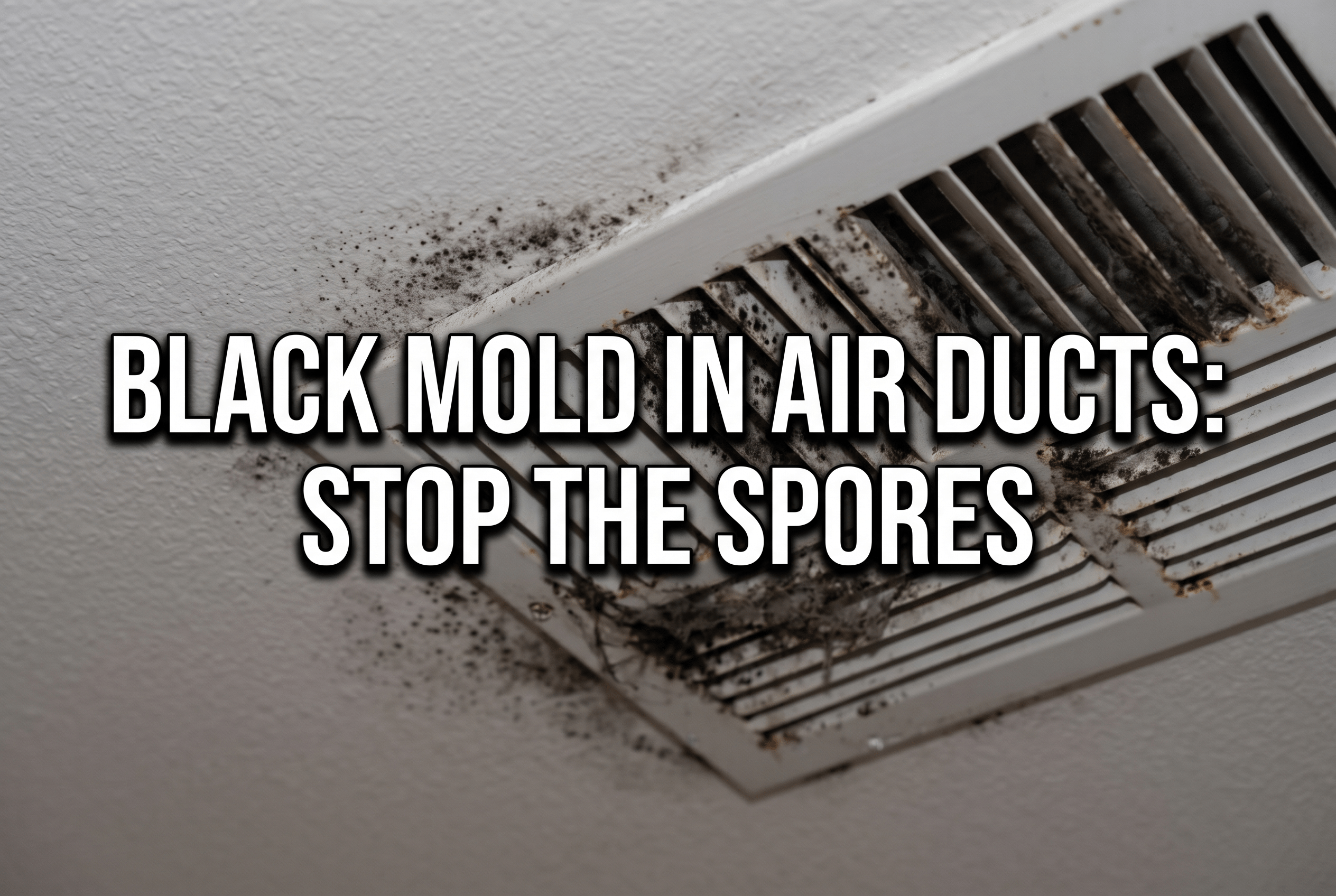
Visible Spotting: Keep a close eye on your ceiling registers. If you see dark, pepper-like spots or smeared black stains forming on the metal slats or the drywall immediately surrounding the vent, mold is actively growing just behind the grill.
4. Why Bleach and DIY Cleaning Fail
Attempting to clean mold out of your vents with household products is highly ineffective and dangerous.
The Bleach Myth: Spraying bleach into a duct only removes the dark color of the mold on the surface; it does not penetrate the porous layer of dust to kill the root of the colony. Furthermore, aerosolizing bleach through your HVAC system pushes toxic chemical fumes into your breathing space.
Releasing Spores: Scrubbing a dry mold colony with a consumer brush will instantly shatter the growth, releasing a massive, highly concentrated cloud of spores directly into your face and deeper into the ductwork.
5. Professional Extraction and Antimicrobial Fogging
True remediation requires industrial equipment and specialized chemistry.
Source Removal: At The Duct Pros, we utilize truck-mounted HEPA negative air machines. We place the entire system under a powerful vacuum, safely scouring and extracting the mold-infested dust sludge entirely out of your home without cross-contaminating your living spaces.
Chemical Eradication: After the physical debris is removed, we apply an EPA-registered antimicrobial fog. This treatment permeates the entire duct network, destroying any remaining microscopic spores at the cellular level and preventing future colonization.
Don’t let toxic spores hold your health hostage. Restore your indoor air quality and protect your family by scheduling a professional HVAC sanitization today.
📞 (866) 712-1122
🌐 www.theductpros.us
📧 Info@theductpros.us
🎯 Frequently Asked Questions About HVAC Mold
Black mold in air ducts: Can it spread to my furniture and walls? Yes. Because your HVAC system continuously circulates air, it acts as a distribution network for the mold. The aerosolized spores blown out of your vents will eventually land on your carpets, couches, and walls. If the humidity in your home is high enough, those spores will take root and start secondary mold colonies throughout your living space.
Black mold in air ducts: How do I know if the mold in my vents is toxic? It is impossible to determine the exact strain of mold simply by looking at it. While not all dark-colored mold is the highly toxic Stachybotrys chartarum, all mold in ductwork represents a severe allergen and health hazard that must be treated with the same level of urgency and professional remediation.
Black mold in air ducts: Do I need to replace my ductwork if it has mold? In most cases, rigid sheet metal ductwork can be completely salvaged through professional HEPA extraction and antimicrobial fogging. However, if you have flexible, plastic-lined ductwork (flex duct) that has become deeply saturated and heavily infested with mold, the porous fiberglass insulation may be compromised, requiring physical replacement of those specific sections.