

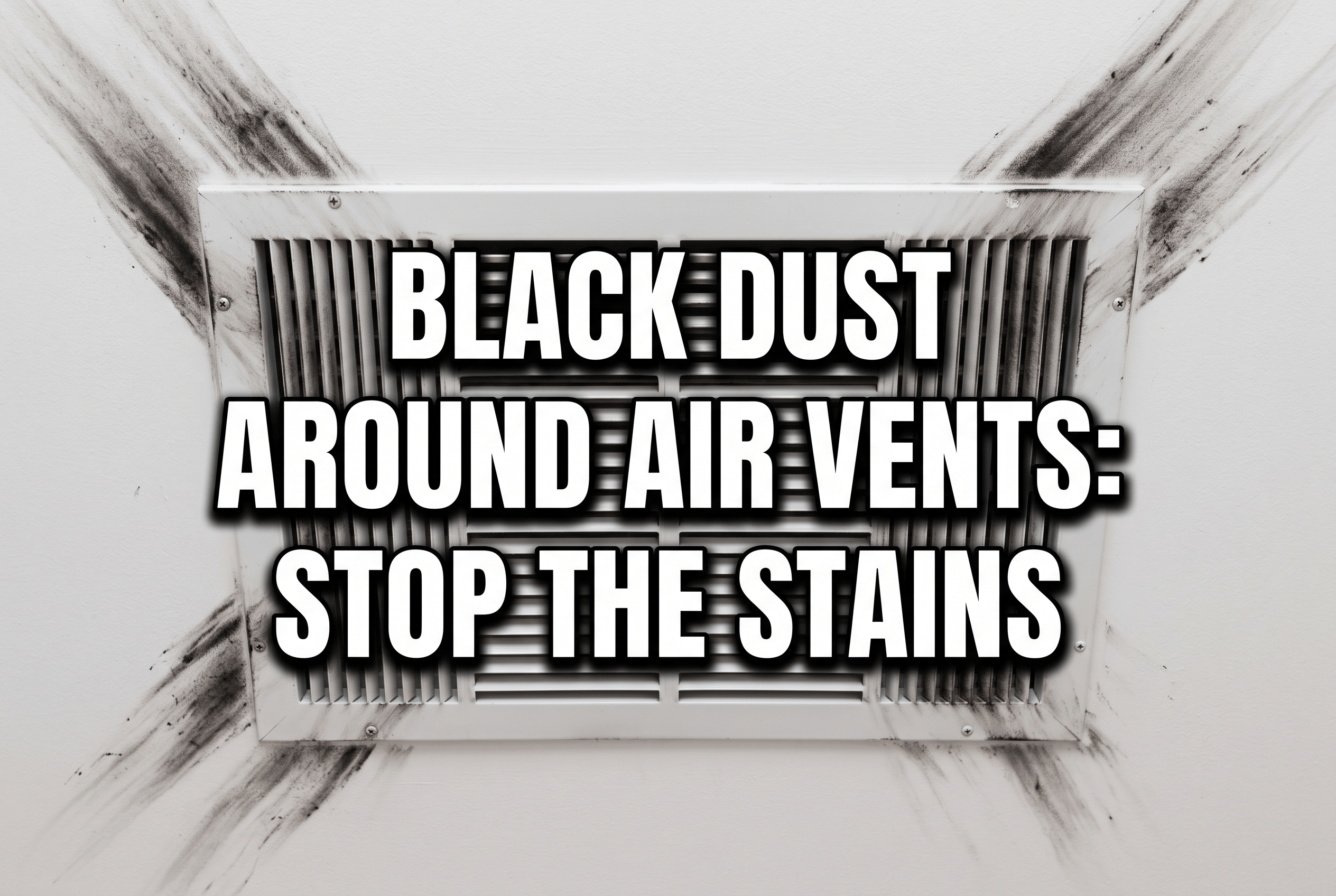
Black dust around air vents is one of the most frequent and urgent customer queries we receive is from homeowners asking, you may spend hours scrubbing the walls and bleaching the ceiling, only to watch the dark, ugly streaks reappear around your AC registers a few weeks later. This frustrating phenomenon is not a housekeeping failure; it is a clear visual indicator that your central ventilation system is pushing heavily contaminated air into your home.
When dark soot, dirt, or biological growth begins to stain your ceiling or walls, your HVAC system has effectively become a heavy-duty aerosolizer for indoor pollution. Wiping the drywall only removes the symptom. To stop the staining permanently, you have to address the massive reservoir of debris hidden entirely out of sight.
At The Duct Pros, we specialize in diagnosing airborne contamination and performing complete, high-velocity physical extractions. We do not paint ceilings or replace drywall; our mission is to eliminate the root cause of the mess. Here is a technical breakdown of why your vents are turning black and how our commercial-grade extraction permanently clears the air.
1. The “Ghosting” Phenomenon (Thermal Tracking)
The dark streaks on your ceiling are often the result of a physical reaction called thermal tracking.
Cold Air Meets Warm Drywall: When cold, conditioned air blows out of your vent, it cools the immediate surrounding drywall. If the air inside your house is slightly humid, microscopic condensation forms on this cold ceiling space.
The Dirt Magnet: As your HVAC system blows out heavily contaminated air, the microscopic dirt, pet dander, and dust particles instantly stick to this micro-condensation. Over months of running the AC, this builds up into a thick, highly visible black stain radiating outward from the vent.
2. Soot from Candles and Gas Appliances
Sometimes the black dust is not standard dirt, but actual carbon soot.
The Candle Effect: Frequently burning heavily scented jar candles or using unvented gas fireplaces releases microscopic carbon soot into your home’s air.
HVAC Recirculation: Your return vents aggressively inhale this soot, coating the interior walls of your ductwork with a greasy, black film. When the system cycles, it blasts this concentrated carbon back out, aggressively staining the plastic or metal of your supply registers.
3. The Threat of Biological Growth (Mold)
If the black dust appears spotted, web-like, or fuzzy, you are likely dealing with biological contamination.
Condensation and Spores: If the metal duct behind the wall is sweating due to poor insulation, the moisture mixes with standard household dust to create a breeding ground for mold. As the mold colonizes just behind the register grill, the high-speed air pushes the dark spores out, causing black, pepper-like spots to grow on the ceiling paint.
4. Why Surface Cleaning is a Temporary Illusion
You cannot resolve an internal HVAC problem with a sponge and soapy water.
The Hidden Reservoir: Wiping the vent grill or the drywall removes the 1% of the dirt that has escaped. The other 99% is sitting in a massive, thick layer three to fifteen feet deep inside your main supply lines. Until that internal blockage is removed, the high-velocity blower motor will continue to force the black dirt onto your ceiling.
5. Professional Source Removal and HEPA Extraction
Stopping the stains requires industrial-level negative pressure.
Pneumatic Scouring: At The Duct Pros, we connect truck-mounted HEPA negative air machines directly to your HVAC system. We feed specialized pneumatic air whips deep into the ductwork, safely shattering the greasy soot, dirt, and mold spores off the interior sheet metal. By extracting the heavy debris at the source, we ensure the air blowing out of your vents is clinically clean, permanently stopping the black stains from ruining your ceilings.
Stop scrubbing your ceilings and start breathing cleaner air. Protect your home’s aesthetics and your family’s lungs by scheduling a comprehensive duct cleanout today.
📞 (866) 712-1122
🌐 www.theductpros.us
📧 Info@theductpros.us
🎯 Frequently Asked Questions About Vent Staining
Black dust around air vents: Is the black dust on my ceiling dangerous to breathe? It depends entirely on the source. If the black dust is carbon soot from candles, it is a respiratory irritant. If the black spotting is caused by aerosolized mold spores or highly concentrated dust mite feces, it poses a severe health hazard that can trigger chronic asthma, severe sinus infections, and allergic reactions.
Black dust around air vents: Will changing my air filter stop the black dust? While a clean air filter is essential for protecting the blower motor, it will not stop the black dust if the contamination is already inside the supply ducts. Filters only clean the air entering the system. If years of black soot and dirt are already sitting in the pipes beyond the filter, only professional physical extraction can remove it.
Black dust around air vents: Can I use bleach to clean the black spots off my vent? You can use a mild bleach solution to clean the exterior metal grill and the immediate drywall. However, you should never spray bleach inside the ductwork itself. Aerosolizing bleach through your HVAC system will push toxic chemical fumes into your living space and will fail to remove the heavy dust sludge causing the issue.