
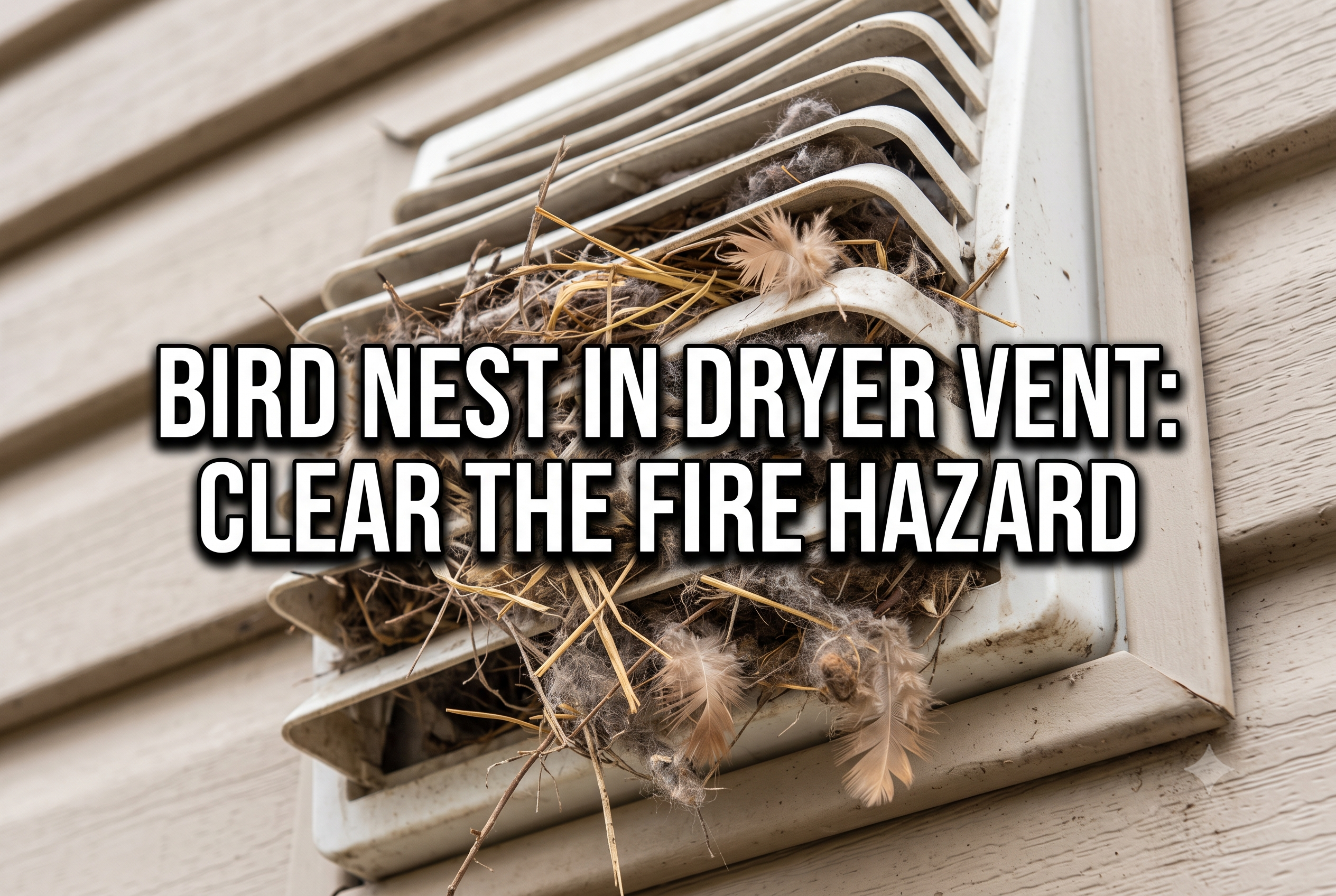
Bird nest in dryer vent systems is a surprisingly common, yet incredibly dangerous, household emergency. When spring arrives and temperatures begin to shift, local wildlife immediately begins searching for warm, secure, and predator-free environments to build their homes and raise their young. To a bird, the exterior exhaust hood of your laundry system looks like the perfect, pre-built sanctuary.
Unfortunately, what serves as a cozy home for a starling or sparrow acts as a catastrophic blockage for your home’s ventilation system. The combination of dry nesting materials, highly flammable clothing lint, and the intense heat generated by your clothes dryer creates a literal ticking time bomb inside your walls.
At The Duct Boss, we specialize in professional, high-velocity Dryer Vent Cleaning and obstruction removal. While we do not handle general pest control, we are the experts in extracting massive physical blockages from your exhaust lines and restoring total airflow. Here is a technical breakdown of why avian intruders target your system, the severe risks they pose, and how our professional extraction methods secure your home.
1. Why Birds Choose Your Exhaust Pipe
To understand the problem, you have to look at your house from a bird’s perspective.
The Perfect Incubator: Your dryer vent is a smooth, dry, enclosed tube that is completely protected from rain and wind. More importantly, every time you run a load of laundry, the pipe floods with warm, humid air—creating an ideal, heated incubator for eggs.
Failing Flappers: The exterior plastic or metal louvers on your vent hood are designed to open when the dryer is running and snap shut when it stops. However, if lint builds up around the hinges, the flaps stay permanently propped open, rolling out the red carpet for local wildlife to enter.
2. The Extreme Fire and Health Risks
A bird nest is not just a nuisance; it is an immediate threat to your property and your health.
Instant Combustion: Birds construct their nests out of dry grass, twigs, leaves, and straw. They often weave highly flammable clothing lint into the structure. When this dense, combustible mass completely blocks the exhaust pipe, the intense thermal energy from your dryer backs up. It only takes a single spark from an overheating heating element to ignite the nest and send flames shooting through your walls.
Biological Contamination: Avian pests carry a host of diseases, mites, and parasites. Furthermore, bird droppings inside your vent can harbor histoplasmosis spores. If the airflow reverses or the vent leaks, these harmful biological contaminants can easily be pushed back into your laundry room.
3. Signs You Have an Avian Intruder
You will often notice the symptoms of a blockage before you actually see the birds.
Scratching and Chirping: The most obvious sign is hearing distinct scratching, fluttering, or high-pitched chirping coming directly from the wall behind your dryer.
Exterior Debris: Take a walk outside and look at your vent hood. If you see twigs, grass, or heavy lint hanging out of the louvers, or notice birds constantly flying to and from that side of the house, a nest is actively being built.
Sudden Drying Issues: If your clothes are suddenly taking multiple cycles to dry and the dryer cabinet is scorching hot to the touch, the nest has successfully choked off all airflow.
4. Why DIY Removal is Dangerous
Attempting to clear a nest yourself can easily make the situation worse.
Compacting the Debris: Using a consumer brush kit or a broom handle often just pushes the nest deeper into the pipe, compacting the twigs and mud into a rock-solid plug that is impossible to remove without dismantling the walls.
Health Hazards: Reaching into a vent without proper respiratory protection exposes you directly to avian mites and toxic droppings.
5. Professional Extraction and Pest Guards
Safely clearing an avian blockage requires commercial-grade pneumatic tools.
Reverse Airflow Extraction: At The Duct Boss, we utilize specialized tools from the exterior of the home that blast high-pressure air backward. This safely breaks the nest apart and pulls the twigs, mud, and lint completely out of the pipe without pushing it deeper into your house.
Pest-Proofing: Once the system is cleared and airflow is verified, we highly recommend installing a specialized, code-compliant pest guard over the exterior hood. This allows lint to escape but physically blocks birds and rodents from ever re-entering.
Don’t wait for a fire to start or for parasites to enter your home. Restore your dryer’s safety and evict unwanted guests by scheduling a professional vent clearing today.
📞 866-876-2677
🎯 Frequently Asked Questions About Bird Nests in Vents
Bird nest in dryer vent: How long does it take for a bird to build a nest in my vent? Birds work incredibly fast. A pair of starlings or sparrows can construct a dense, restrictive nest inside a dryer vent pipe in as little as 24 to 48 hours. If you notice birds hovering around your vent, you must act immediately before the blockage becomes severe.
Bird nest in dryer vent: Can I just turn the dryer on high heat to blow the nest out? No, absolutely not. Turning the dryer on will not blow a packed nest out; it will simply pack the nest tighter against the walls of the pipe. More dangerously, the extreme heat buildup caused by the blockage can easily ignite the dry twigs and lint, causing an immediate house fire.
Bird nest in dryer vent: How do I stop birds from coming back every spring? The only permanent solution is to have the existing nest professionally extracted, thoroughly clean the vent of all remaining lint, and then install a specialized exterior pest guard. These guards are designed to allow heavy lint to exhaust properly while featuring a heavy-duty cage that completely blocks birds from entering.