
Air Duct Sanitization, When most homeowners think about HVAC maintenance, they picture removing physical debris—the heavy layers of dust, pet hair, and cobwebs that build up inside the pipes. While physical extraction is the mandatory first step, it does not completely solve the problem of biological contamination. Microscopic threats like aerosolized bacteria, dormant mold spores, and viral particles are too small to be completely eliminated by vacuuming alone. This is where professional air duct sanitization becomes essential.
Your ductwork provides a dark, temperature-controlled environment that, when exposed to the moisture of an air conditioning coil, becomes an ideal incubator for microorganisms. If your family is suffering from recurring illnesses, unexplained allergies, or persistent musty odors, simply removing the dirt is not enough. You must neutralize the biological footprint left behind.
At The Duct Pros, we specialize in commercial-grade physical extraction followed by advanced chemical neutralization. We do not just make your ducts look clean; we make them clinically safe to breathe through. Here is a technical breakdown of the sanitization process, how it differs from standard cleaning, and why it is the ultimate upgrade for your indoor air quality.
1. Cleaning vs. Sanitization: The Crucial Difference
It is vital to understand that cleaning and sanitizing are two entirely different scientific processes.
Physical Cleaning: This is the process of using high-pressure air whips and HEPA vacuums to physically scour and extract the macroscopic debris (dust mites, dirt, and pet dander) from the walls of the ductwork.
Chemical Sanitization: This is the application of specialized antimicrobial agents designed to penetrate the cellular walls of microscopic bacteria, viruses, and fungi, completely destroying their ability to reproduce and survive inside your ventilation network.
2. How the Antimicrobial Fogging Process Works
Sanitization cannot be achieved by simply wiping down the visible register grills with household cleaners.
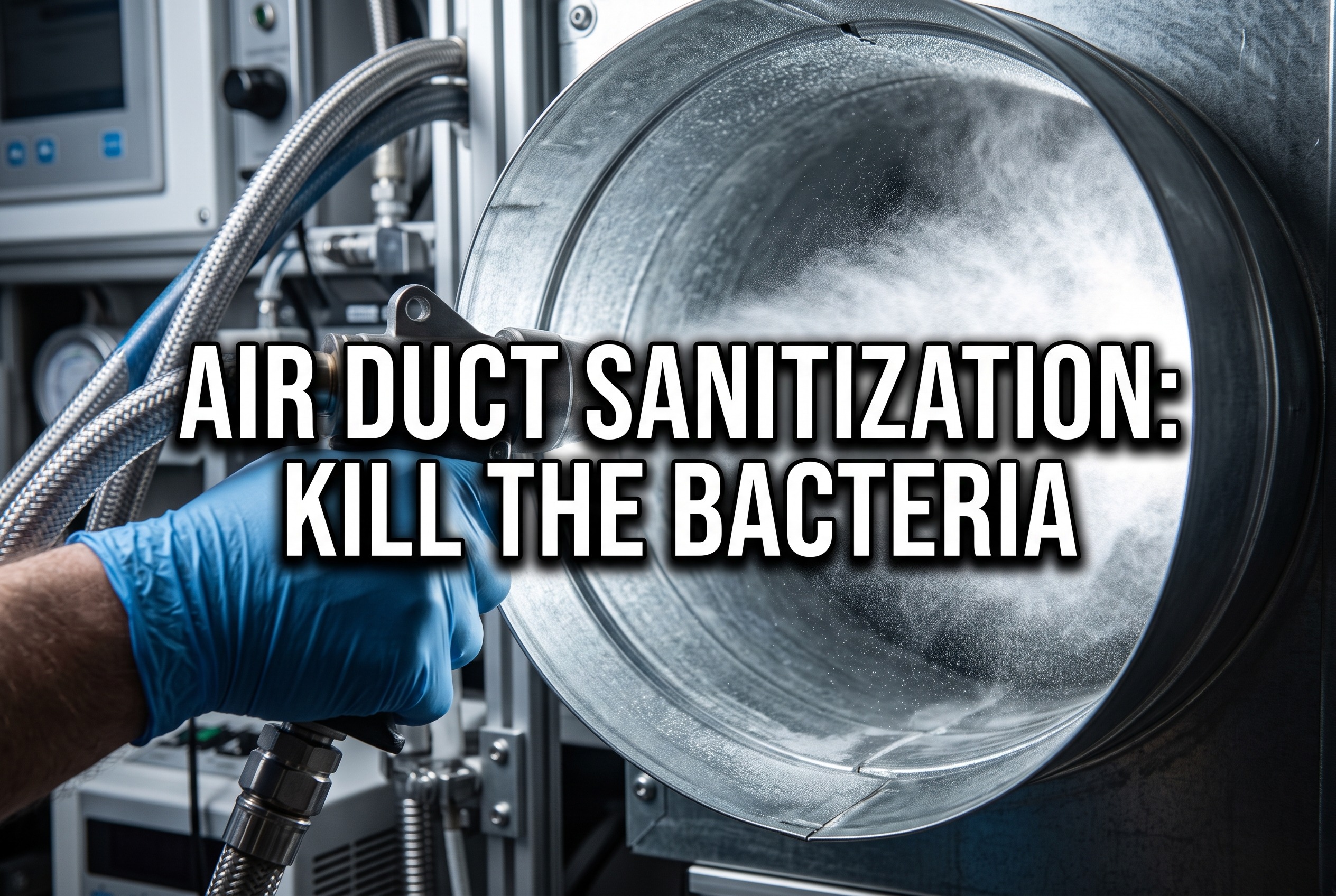
The Fogging Mechanism: After the ducts are completely physically cleared of dust (which acts as a shield for bacteria), we utilize a specialized pneumatic fogger. This machine atomizes an EPA-registered antimicrobial solution into a microscopic, dry mist.
Total Coverage: Because the solution is atomized into the air stream, it naturally follows the exact same aerodynamic path that the air takes, coating every square inch of the internal sheet metal, the blower motor, and the delicate fins of the evaporator coil with a sterilizing barrier.
3. Eliminating Post-Illness Contamination
Sanitization is highly recommended after a prolonged period of sickness in the home.
Trapped Pathogens: When a family member suffers from a severe viral infection or bacterial bronchitis, their coughing introduces pathogens into the return vents. These microorganisms can survive inside the dark ductwork and continue to recirculate, extending the duration of the illness or passing it to other family members.
The Reset Button: A full-system sanitization chemically neutralizes these lingering pathogens, providing a clean slate for your home’s air quality and protecting your family’s immune systems.
4. Neutralizing Stubborn Biological Odors
If your house smells stale even after a deep clean, the odor is likely biological.
Bacterial Off-Gassing: Musty odors (often referred to as “dirty sock syndrome”) are actually the volatile organic compounds (VOCs) being off-gassed by bacterial slime growing on your AC coil.
Destroying the Source: Air fresheners only mask these VOCs. Our antimicrobial fog actively destroys the bacterial colonies producing the odor, leaving your ductwork smelling genuinely fresh and neutral.
5. Safe, EPA-Registered Solutions
You should never allow unverified chemicals to be aerosolized into your breathing air.
Hospital-Grade Safety: At The Duct Pros, we exclusively use EPA-registered, hospital-grade antimicrobial solutions that are specifically formulated and approved for use in residential HVAC systems. Once the fog dries (usually within an hour), it leaves behind no toxic residue and is completely safe for humans, children, and pets.
Take your indoor air quality to the highest possible standard. Eradicate hidden bacteria and protect your family by adding a professional sanitization treatment to your next duct cleaning.
📞 (866) 712-1122
🌐 www.theductpros.us
📧 Info@theductpros.us
🎯 Frequently Asked Questions About HVAC Sanitization
Air duct sanitization: Can I just spray Lysol into my return vent? No. Spraying household aerosol disinfectants like Lysol into your HVAC system is highly dangerous and ineffective. These consumer products contain highly flammable propellants and harsh perfumes that are not approved for HVAC use. Aerosolizing them through your system can cause respiratory distress and even create a fire hazard near your furnace’s heating element.
Air duct sanitization: How long does the antimicrobial fog take to dry? The specialized antimicrobial solution we use is atomized into such a fine mist that it typically dries on the interior walls of the ductwork within 30 to 60 minutes. Because it leaves no wet residue, you can safely turn your HVAC system back on and occupy the home almost immediately after the treatment is complete.
Air duct sanitization: Do I need to have my ducts cleaned before they are sanitized? Yes, absolutely. You cannot effectively sanitize a dirty surface. If you apply an antimicrobial fog to a duct heavily coated in dust, the chemical will only treat the top layer of dirt, while the bacteria hidden beneath the dust layer survives. The heavy debris must be physically extracted first so the sanitization fluid can bond directly to the bare sheet metal.