
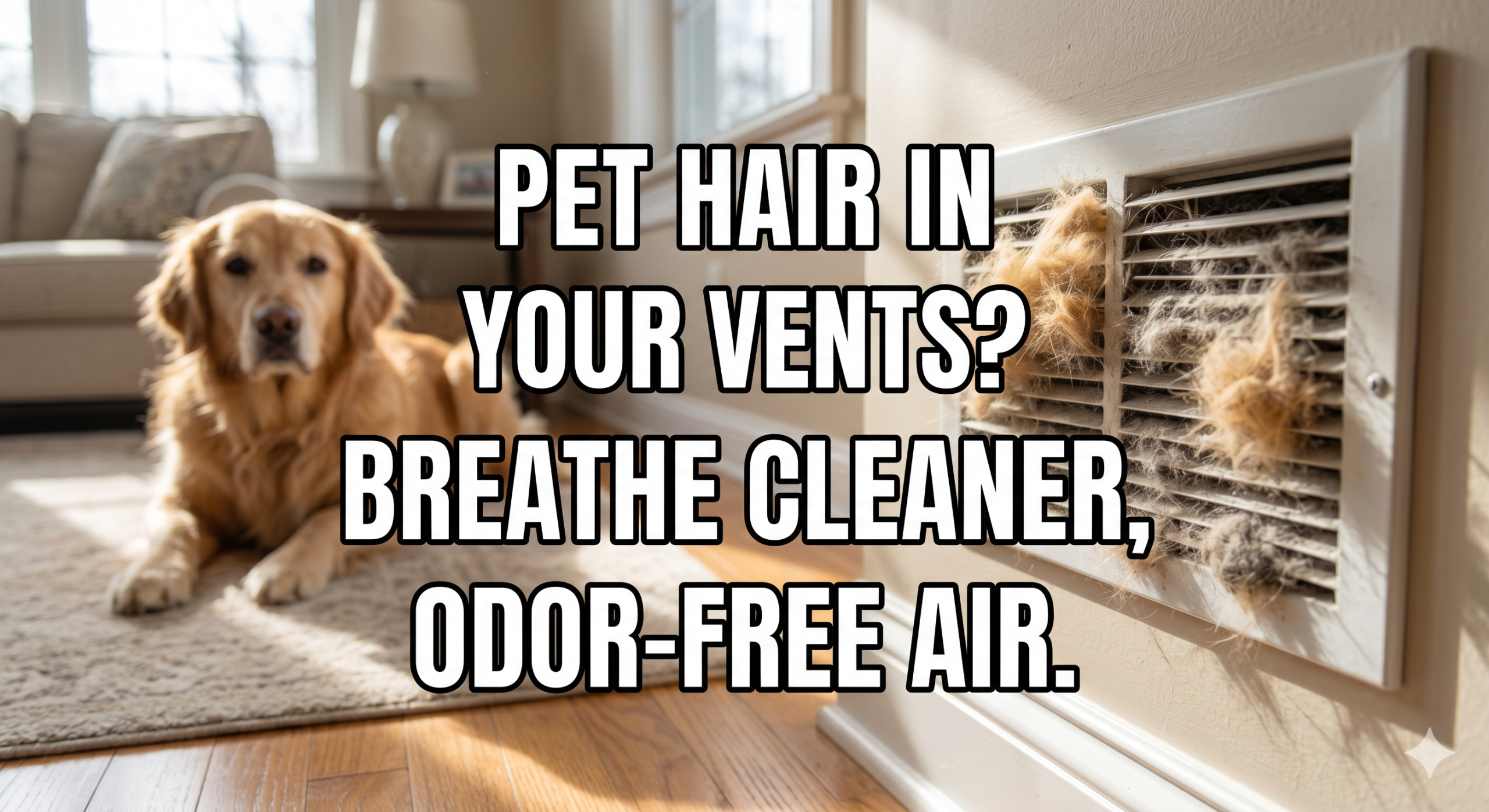
Air duct cleaning for pet owners is not just a luxury home maintenance task; it is a vital necessity for keeping your indoor air fresh, your HVAC system running efficiently, and your home free of overwhelming animal odors. We love our dogs, cats, and household pets, treating them as integral members of the family. However, sharing your home with animals comes with a significant environmental cost. No matter how frequently you vacuum your carpets, run automated robot sweepers, or brush your pets outdoors, an incredible amount of fur and microscopic dander inevitably escapes your daily cleaning routine.
So, where does all that missed hair go? It is sucked directly into the “lungs” of your home—your central heating and cooling system.
At The Duct Pros, we routinely extract massive, tightly woven blankets of pet hair from the ductwork of animal lovers. If you have pets and feel like you are constantly battling floating fur, lingering smells, and sneezing guests, here is a comprehensive look at exactly what your pets are leaving behind in your ventilation system, and why professional extraction is the only way to truly reset your home’s air quality.
1. The Difference Between Pet Hair and Pet Dander
To understand why your HVAC system is so heavily impacted by your pets, you have to look at the two different types of biological waste they leave behind.
Shedding Fur: Pet hair is highly visible. As your dog or cat walks around, scratches, and shakes, large strands of hair become airborne. Your HVAC system’s return vents pull immense amounts of air from the home, acting like a giant vacuum cleaner. The airborne hair gets sucked into the vents, quickly clogging your primary furnace filter and coating the interior walls of the ductwork.
Microscopic Dander: While you can easily see pet hair, dander is completely invisible. Pet dander consists of microscopic, jagged flecks of dead skin shed by cats, dogs, birds, and other animals. Because these skin flakes are so small and lightweight, they easily bypass standard fiberglass air filters. Dander travels deep into the supply lines, coating the metal pipes in a highly allergenic, organic film that continues to accumulate for years.
2. The Persistent “Wet Dog” HVAC Smell
One of the most common complaints from pet owners is a distinct, musty animal odor that seems impossible to eliminate, regardless of how many scented candles they burn.
Oils and Saliva: Along with hair and dead skin, your pets naturally secrete bodily oils, and their fur is often coated in dried saliva from grooming. When this hair and dander are pulled into the ductwork, those oils are pulled in with them.
The Odor Distribution Cycle: The dark, enclosed environment of your ductwork traps these organic odors. When your air conditioner or furnace turns on, the high-powered blower motor forcefully pushes air across the oil-soaked hair and dander. This effectively turns your entire HVAC system into a whole-home odor distribution machine, blasting that stale “wet dog” or “litter box” smell directly into every room of your house.
3. Mechanical Strain and Blower Motor Failure
Allowing pet hair to accumulate inside your ductwork doesn’t just impact your indoor air quality; it poses a severe mechanical threat to your expensive heating and cooling equipment.
The Suffocated Evaporator Coil: The indoor evaporator coil of your air conditioner must remain clean to properly absorb heat from your home’s air. When microscopic pet dander and fine fur bypass the filter, they mix with the natural condensation on the coil, creating a thick, muddy paste. This acts as a thermal blanket, forcing your AC to run twice as long to cool the house, which directly spikes your monthly utility bills.
Overheating the System: As the return ducts become choked with dense clumps of fur, the system experiences a massive drop in airflow. The blower motor is forced to work against extreme static pressure to pull enough air through the blockages. Over time, this heavy strain causes the motor to overheat and prematurely burn out, leading to thousands of dollars in easily preventable repair costs.
4. Creating an Unwelcoming Environment for Guests
Even if you are completely “nose-blind” to the smell of your own pets and do not suffer from allergies yourself, your home’s contaminated air is heavily impacting your visitors.
The Allergy Trigger: Pet dander is one of the most potent indoor allergens. When guests who are sensitive to pet dander enter your home, the continuously recirculated air will immediately trigger their symptoms, causing red, watery eyes, sneezing fits, and chest tightness.
The Unseen Accumulation: You might thoroughly clean the living room before company arrives, but the moment the central air turns on, the HVAC system blows a fresh wave of trapped dander and hair back onto your couches and countertops.
5. Professional Source Removal and Sanitization
Standard vacuuming and changing your 1-inch furnace filter will not fix a duct system that is already choked with years of compacted pet hair.
Heavy-Duty Extraction: Our technicians utilize truck-mounted, high-powered negative air vacuums to put your entire ventilation network under intense suction. We then send specialized pneumatic agitation whips deep into the branch lines to aggressively scrub the metal walls, dislodging the tightly woven mats of pet hair, dander, and dander-eating dust mites.
Total System Reset: Every ounce of dislodged debris is violently extracted directly out to our contained units. By completely removing the biological source of the contamination, we restore maximum airflow to your HVAC system, permanently neutralize the trapped animal odors, and ensure your family is breathing incredibly crisp, clean air.
If you share your home with shedding pets, routine ventilation maintenance is absolutely critical. Stop breathing recirculated dander and stop overpaying on your utility bills.
📞 +1 (866) 712-1122 🌐 www.TheDuctPros.us 📧 Info@TheDuctPros.us
🎯 Frequently Asked Questions About Pets and Air Ducts
How often should pet owners get their air ducts cleaned? While a typical household might wait 3 to 5 years between professional cleanings, homes with multiple shedding pets (like Golden Retrievers, Huskies, or long-haired cats) should schedule air duct cleaning for pet owners every 2 to 3 years. The massive volume of hair and dander produced by animals severely accelerates the rate at which ductwork becomes clogged and contaminated.
Does cleaning air ducts get rid of pet smells? Yes. Pet odors are caused by the natural oils, dried saliva, and skin cells attached to the fur trapped inside your ductwork. Surface cleaning your home cannot eliminate these hidden odors because your HVAC system continually recirculates them. Professional source-removal duct cleaning physically extracts the odor-causing debris, permanently neutralizing the smell at its absolute source.
Can pet hair damage my HVAC system? Absolutely. When excessive pet hair gets pulled into the return vents and bypasses the filter, it heavily coats the blower motor and the delicate indoor evaporator coil. This forces the system to work much harder to push air, resulting in massive spikes in your monthly electricity bills and drastically increasing the risk of premature, catastrophic blower motor failure.