
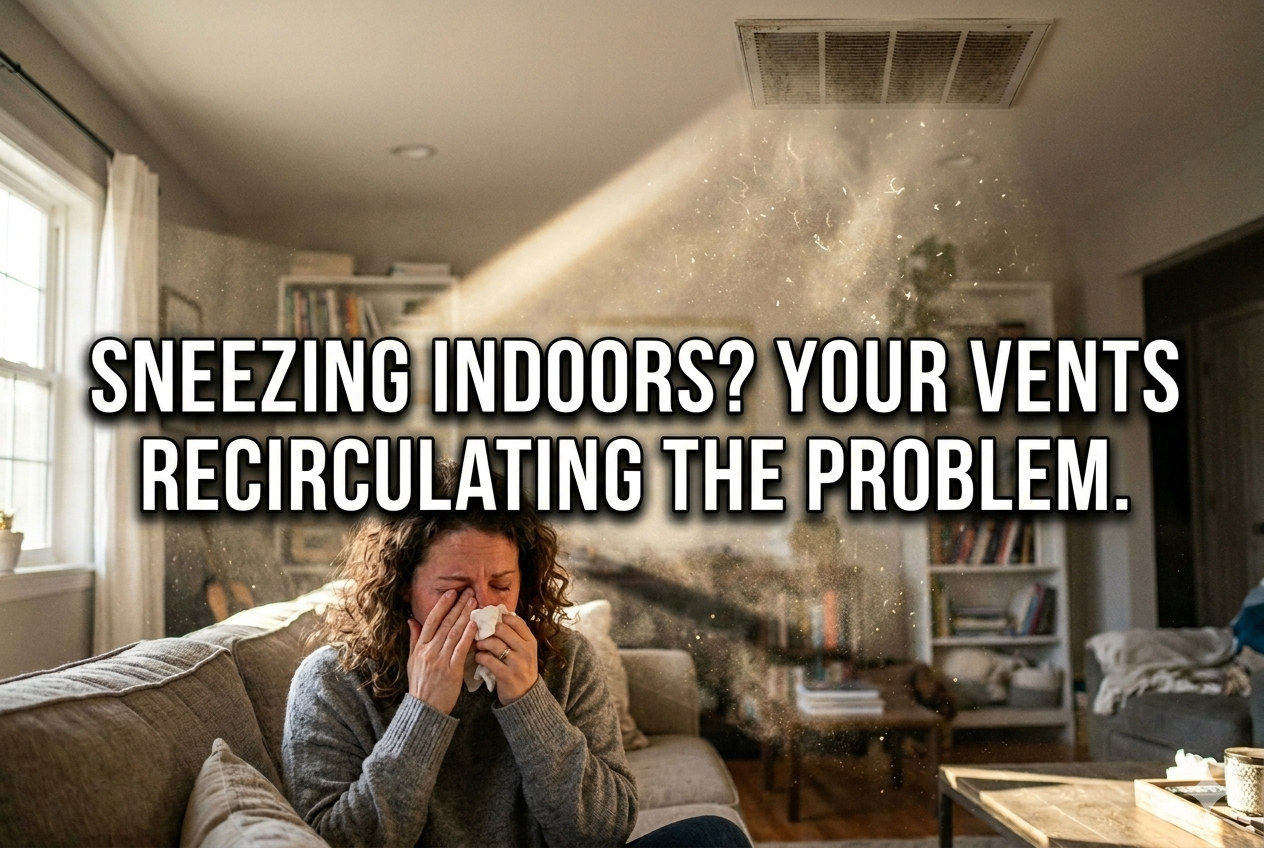
Air duct cleaning for allergies is often the missing puzzle piece for homeowners who cannot seem to find relief from constant sneezing, coughing, and sinus pressure. Your home is supposed to be your safe haven—a place where you can escape the environmental triggers of the outside world. However, if you find that your allergy symptoms actually worsen when you step inside and close the doors, your sanctuary has been compromised. You can buy the most expensive antihistamines, run portable air purifiers in every room, and vacuum your carpets daily, but if you ignore the massive respiratory system hidden behind your drywall, you will continue to lose the battle against indoor allergens.
At The Duct Pros, we work extensively with families who suffer from chronic respiratory distress. Many people are shocked to learn that according to the Environmental Protection Agency (EPA), indoor air can be two to five times more polluted than outdoor air. The primary culprit for this intense concentration of allergens is a neglected HVAC system. Here is a comprehensive look at the specific microscopic triggers hiding in your ventilation system and why scheduling a professional deep clean is a critical step toward reclaiming your health.
1. The Dust Mite Dilemma (The Invisible Infestation)
When we talk about being “allergic to dust,” we are rarely talking about the dirt itself. The actual allergen is a microscopic pest that thrives in dusty environments.
What Are Dust Mites? Dust mites are microscopic arachnids that feed heavily on the dead human skin cells found in household dust. Your ductwork, which accumulates layers of skin cells and organic fibers over the years, is the ultimate feeding ground for these creatures.
The Toxic Byproduct: Dust mites produce waste, and it is this biological waste that triggers severe allergic reactions and asthma attacks in humans. When your ductwork is lined with dust, it is also lined with thousands of dust mites and their highly allergenic droppings.
The Eradication Process: Standard surface cleaning cannot reach the colonies living inside your branch lines. By applying professional negative-pressure extraction, we physically remove the dust, the skin cells, and the mite colonies entirely, cutting off the source of the allergen.
2. The Seasonal Pollen Trap (Spring Allergies Year-Round)
You might think that pollen is strictly an outdoor problem that ends when the seasons change, but your HVAC system acts as a vault that traps these seasonal triggers indoors.
How Pollen Enters: Every time you open your front door, open a window, or walk inside with pollen stuck to your clothes and hair, those microscopic spores enter your home’s air cycle. Your HVAC return vents suck this pollen in, where it gets trapped in the dark, sticky environment of your duct walls.
The Perpetual Loop: Once pollen is trapped in your ducts, your air conditioner will continuously blow it back into your living space. This means you could be inhaling concentrated spring tree pollen or autumn ragweed in the dead of winter. A professional cleaning flushes this trapped pollen out of your home’s ecosystem.
3. Pet Dander and Hidden Biological Triggers
Even if you do not currently own a pet, biological triggers might still be circulating through your home.
The Persistence of Dander: Pet dander is incredibly light and sticky. It consists of microscopic flecks of skin shed by cats, dogs, and birds. It bypasses standard furnace filters with ease and coats the entire interior of the HVAC system.
The Previous Owner’s Pets: If you recently purchased your home, you could be suffering an allergic reaction to the previous owner’s golden retriever. Pet dander can remain active and highly allergenic in ductwork for years if it is not physically extracted.
4. The Danger of the HVAC Recirculation Fan
The reason these hidden allergens are so devastating to your health is the sheer mechanical force of your heating and cooling system.
The Wind Tunnel Effect: Your HVAC system is essentially a high-powered wind tunnel. It takes all the air in your home, pulls it through the return ducts, heats or cools it, and blasts it back out. It repeats this cycle roughly five to seven times every single day.
Violent Agitation: When the powerful blower motor turns on, it violently agitates the dust mites, pollen, and dander resting inside the pipes. This aerosolizes the allergens, turning them into a fine mist that rains down on your kitchen counters, your living room couch, and your bed. Every time the AC turns on, you are hit with a fresh wave of respiratory triggers.
5. Source Removal: The Only True Medical Relief
There are many gimmicks on the market, such as aerosol sprays or heavily scented vent clips, that claim to purify your air. None of these address the physical mass of allergens.
Negative Air Extraction: True relief requires “source removal.” Our technicians put your entire system under thousands of cubic feet per minute of negative vacuum pressure. We then use pneumatic whips to scrub the interior metal walls, dislodging the compacted allergens and sucking them directly out to our truck.
Sanitization: Once the physical allergens are gone, we can apply an EPA-registered antimicrobial treatment to neutralize any remaining microscopic bacteria, leaving the system sterile and the air remarkably crisp.
Breathe Freely in Your Own Home
You shouldn’t have to rely on daily antihistamines just to sit comfortably in your own living room. By addressing the root cause of your poor indoor air quality, you can transform your home back into the safe, breathable sanctuary it was meant to be.
Contact The Duct Pros today to schedule an emergency allergy-relief duct extraction and finally experience the difference of truly clean air.
 Company Name: The Duct Pros Phone Number: (866) 712-1122
  Website: TheDuctPros.us
  Email: Info@TheDuctPros.us

 Frequently Asked Questions About Allergies and Air Quality
Will cleaning my air ducts help with my allergies? Yes. Air duct cleaning for allergies is highly effective because it physically removes the compacted layers of dust mites, pollen, pet dander, and other environmental triggers that are trapped inside your ventilation system. By removing the source of the allergens, your HVAC system stops blowing them into the air you breathe.
Can dirty air ducts cause sinus infections? Dirty air ducts can absolutely contribute to chronic sinus issues. When you constantly breathe in recirculated dust, mold spores, and bacteria, it inflames the nasal passages and mucous membranes. This chronic inflammation prevents your sinuses from draining properly, which often leads to painful, recurring bacterial sinus infections.
How often should an allergy sufferer have their ducts cleaned? While the standard recommendation for a normal home is every 3 to 5 years, individuals with severe allergies, asthma, or compromised immune systems should have their ductwork professionally cleaned every 2 to 3 years. Additionally, high-quality, pleated HEPA filters should be used in the furnace and changed every 30 days to prevent rapid buildup.