
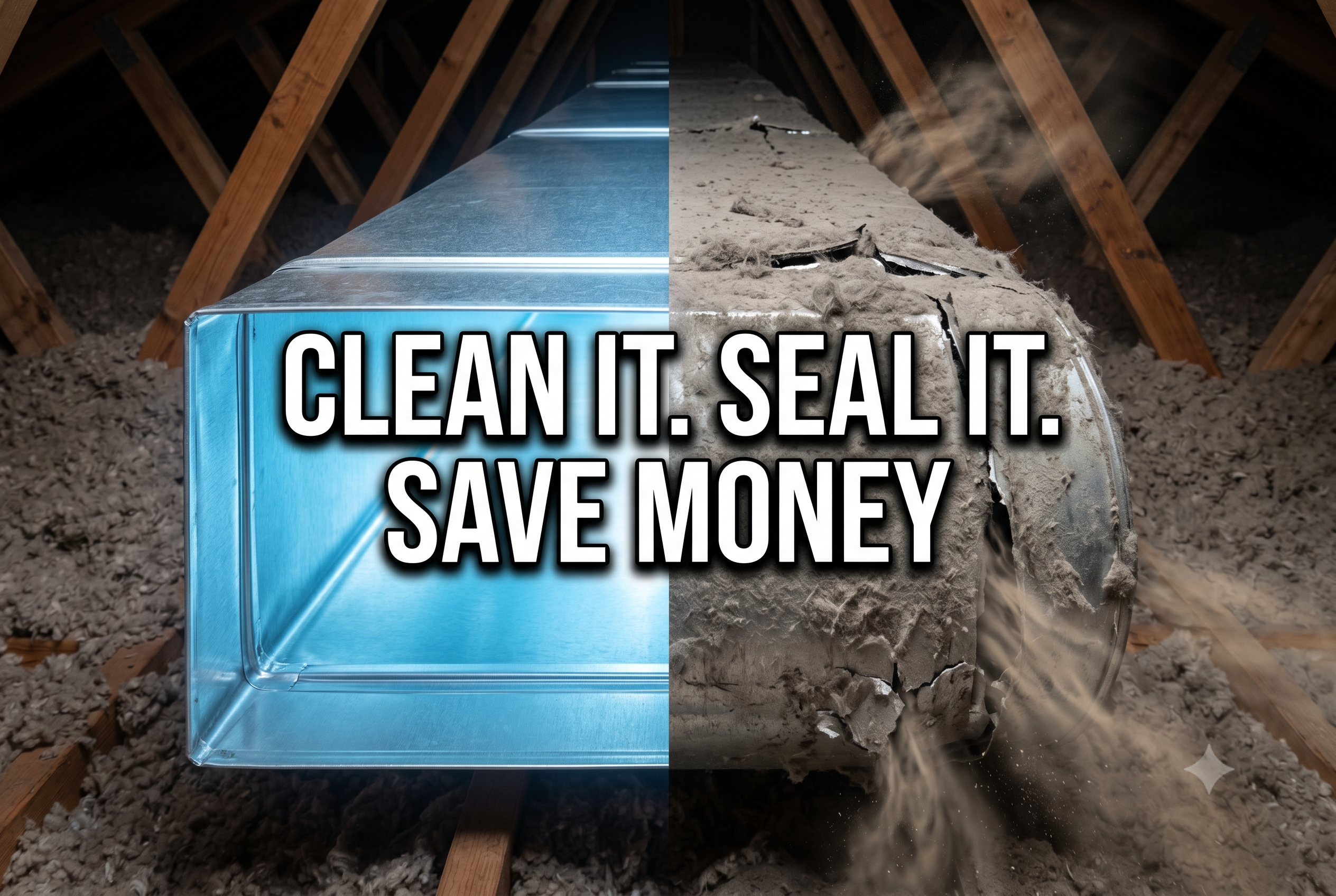
Air duct cleaning and sealing are frequently treated as two completely separate home maintenance tasks, but in reality, they are two halves of the exact same puzzle. If your home constantly feels dusty, your energy bills are skyrocketing, and certain rooms never seem to cool down or heat up properly, you are likely dealing with a compromised ventilation system. Cleaning the ductwork removes the biological hazards and impacted debris you are currently breathing, but if those pipes are full of microscopic holes and disconnected joints, you are leaving the front door wide open for the contamination to immediately return.
According to the U.S. Department of Energy, the average central heating and cooling system loses between 20% to 30% of its conditioned air due to leaks, holes, and poorly connected ducts. This means you are paying to heat and cool your attic, your crawlspace, and the inside of your wall cavities. When you combine this massive energy loss with a thick layer of internal dirt, pet dander, and mold, your HVAC system transforms from a comfort engine into a highly expensive hazard.
At The Duct Pros, we are Your Trusted Experts In Fresh Air, and we know that true indoor air quality requires a holistic approach. If you want to permanently stop the cycle of endless dusting and drastically lower your monthly utility bills, you must secure the entire system. Here is a deeply technical breakdown of why air duct cleaning and sealing must be performed together, how they drastically improve your home’s thermal envelope, and the mechanics of this ultimate two-step HVAC reset.
1. Why Cleaning Must Always Precede Sealing
You cannot apply a high-quality sealant over a layer of compacted drywall dust, pet hair, and fungal growth. The physics of adhesion simply will not allow it.
The Adhesion Failure: Whether a professional is using brushed-on mastic sealant, commercial-grade foil tape, or advanced aerosolized polymer injections, the sealant must make direct contact with the bare metal or fiberglass of the ductwork. If the ducts are lined with years of biological grime, the sealant will stick to the dust instead of the pipe. As the temperature fluctuates, the sealant will instantly peel off and fail.
The Necessary Blank Slate: Professional HEPA extraction is the mandatory preparation phase. By placing the system under intense negative pressure and pneumatically scouring the interior walls, we strip the ductwork down to its original, bare-metal state. Only then can a permanent, airtight seal be established across the seams and joints.
2. Stopping the “Attic Vacuum” Effect
Duct leaks do not just let conditioned air escape; they also aggressively pull highly toxic, unconditioned air into your living space through a process called negative pressure infiltration.
The Toxic Inhalation: If your HVAC return ducts have cracks or disconnected joints while running through an unconditioned attic or crawlspace, they act like high-powered vacuums. They will actively suck in fiberglass insulation particles, rodent droppings, mold spores, and extreme humidity directly from the attic.
Breaking the Cycle: If you only clean the ducts, you remove the debris that is currently there, but the massive holes in the attic will simply suck new fiberglass and pest waste right back into the system the next day. Sealing the ductwork permanently closes these structural breaches, guaranteeing that the only air entering your home is filtered through your primary return vent.
3. Restoring Lost HVAC Capacity and Airflow
If you have rooms in your house that are freezing in the winter and sweltering in the summer, your HVAC system is bleeding out static pressure before the air can reach the end of the line.
The Static Pressure Drop: Central air systems rely on precise static pressure to push heavy, conditioned air to the furthest corners of your home. When your ductwork is riddled with small leaks, that pressure drops drastically.
The Dual Solution: Heavy accumulations of pet dander and dust restrict airflow, while leaks bleed the pressure completely. By simultaneously extracting the restrictive blockages and sealing the structural leaks, the blower motor can finally operate at peak efficiency. The air velocity is restored, pushing maximum heating and cooling power to those stubborn, hard-to-reach rooms at the end of the hallway.
4. Extending the Lifespan of the Blower Motor and Compressor
Operating a dirty, leaking HVAC system forces the mechanical components to run in a constant state of thermal and electrical overdrive.
The Endless Cycle: Because you are losing 30% of your conditioned air to the attic, your thermostat never reaches its target temperature. This forces your air conditioner and furnace to run twice as long as they were designed to.
Preventing Premature Failure: Furthermore, the dirt pulled in through unsealed return leaks bypasses your filter and impacts directly onto the wet evaporator coil, suffocating the system. By cleaning and sealing the network, you drastically reduce the system’s total run time and protect the sensitive mechanical components from heavy debris. This prevents catastrophic compressor failure and adds years of life to your expensive HVAC equipment.
5. The Ultimate Professional Two-Step Execution
Achieving a perfectly clean and airtight ventilation system requires commercial-grade equipment and specialized execution.
Phase One: Source Extraction: We connect your ductwork to our high-powered, truck-mounted negative air machines. Using specialized rotary brushes and air whips, we violently agitate the interior of the lines, ripping decades of compacted dirt, allergens, and pet dander off the walls and extracting it outside your home. We then sanitize the bare metal with an EPA-registered antimicrobial fog.
Phase Two: Envelope Sealing: Once the system is structurally sound and completely sterile, we address the leaks. Depending on the accessibility of the ductwork, we meticulously seal the seams, joints, and plenum connections using heavy-duty mastic paste or metal-backed HVAC tape. This fortifies the thermal envelope, ensuring your system runs smoothly, cleanly, and efficiently for years to come.
Stop paying to heat and cool your attic, and stop breathing the toxic debris hiding in your walls. Maximize your home’s energy efficiency and protect your family’s respiratory health by scheduling a comprehensive cleaning and sealing service today.
📞 (866) 712-1122 🌐 www.TheDuctPros.us 📧 Info@TheDuctPros.us
🎯 Frequently Asked Questions About HVAC Cleaning and Sealing
Can you seal air ducts without cleaning them first? No, it is highly discouraged and mechanically ineffective. Sealants like mastic paste, aerosol polymers, and foil tape require a perfectly clean, bare-metal surface to adhere properly. If you attempt to seal a duct that is coated in dust, pet hair, or mold, the sealant will fail, peel off, and blow into your home. Professional cleaning is the mandatory first step to any sealing project.
How much energy does sealing leaky ductwork save? According to the Department of Energy, sealing and insulating your ductwork can improve your home’s overall heating and cooling efficiency by 20% to 30%. When you combine this with the massive airflow improvements gained from physical duct cleaning, homeowners often see a drastic and immediate reduction in their monthly energy bills.
Will duct sealing help with my indoor allergies? Yes, drastically. Leaky return ducts in unconditioned spaces (like basements, crawlspaces, and attics) act as vacuums, constantly pulling in dangerous allergens like mold spores, fiberglass insulation, and rodent waste, which are then blown into your bedrooms. Sealing the ducts permanently shuts this biological doorway, ensuring only clean, filtered air enters your living space.