

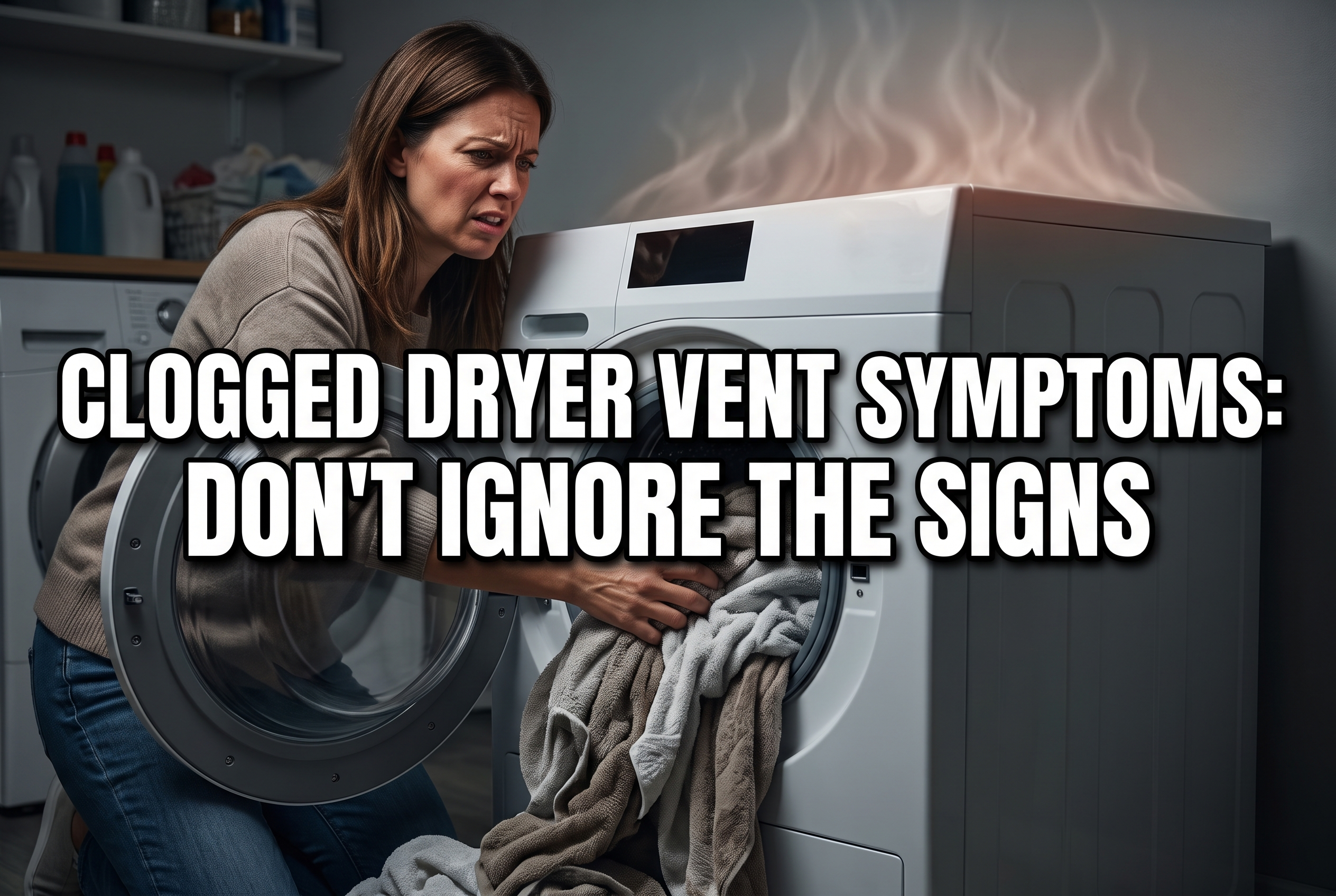
Clogged dryer vent symptoms early can save you from skyrocketing electricity bills, ruined appliances, and a devastating household fire. A clothes dryer operates on a very simple mechanical principle: it uses intense thermal energy to evaporate water from your clothing and a high-speed blower motor to push that heavy, moisture-laden steam completely out of your house. When that exhaust pathway becomes restricted by months or years of accumulated clothing lint, the system fundamentally breaks down.
Because the ductwork connecting your dryer to the outside of your home is hidden behind drywall, in attics, or under crawlspaces, a severe lint blockage is completely invisible to the naked eye. Homeowners must rely on the physical performance of the machine to tell them when danger is building inside the walls.
At The Duct Pros, we specialize in high-velocity pneumatic lint extraction and total exhaust line restoration. We do not fix broken dryer motors; our mission is to ensure your appliance has the clear, aerodynamic pathway it needs to operate safely. Here is a technical breakdown of the most critical warning signs that indicate your system is choking.
1. Clothes Are Hot but Still Damp
The most universal indicator of a severe blockage is a sudden drop in drying efficiency.
The Steam Trap: If your clothes are coming out of a 60-minute cycle feeling incredibly hot to the touch but still damp or completely wet, the heating element is working perfectly, but the exhaust is failing.
Recirculating Moisture: Because the dense lint clog prevents the steam from escaping the pipe, the moisture simply recirculates inside the dryer drum. Your appliance is essentially trying to dry clothes inside a sauna, forcing you to run two or three cycles for a single load.
2. The Dryer Exterior is Scorching Hot
Your appliance is designed to vent excess heat outside. When it can’t, that thermal energy backs up directly into the laundry room.
The Touch Test: Place your hand flat on the top of the dryer cabinet during the middle of a cycle. It should feel warm. If the metal is scorching hot—so hot that you cannot comfortably leave your hand on it for more than a few seconds—the internal airflow is completely blocked, and the machine is on the verge of tripping its thermal fuse.
3. A Burning Smell in the Laundry Room
This is a critical emergency symptom that requires immediate action.
Combustible Lint: Clothing lint is highly flammable—it is often used as a survival fire starter. When the exhaust pipe is choked, the lint inside the dryer’s internal lint trap housing is exposed to extreme, backed-up heat.
Immediate Action: If you detect a musty, acrid, or faint burning odor while the dryer is running, shut the appliance off immediately. Do not use it again until the entire exhaust line has been professionally cleared.
4. The Vent Hood Flap Won’t Open
You can often diagnose a clog from the outside of your house.
Visual Inspection: Go outside while the dryer is running and look at the exterior exhaust hood. The metal or plastic louvers should be blown wide open by a strong gust of hot air. If the flaps are barely moving, glued shut by wet lint, or if you feel almost zero air pressure coming out, the pipe is blocked somewhere inside the walls.
5. Professional High-Velocity Extraction
Clearing a massive, compacted lint log requires more than a household vacuum.
Total Line Clearing: At The Duct Pros, we utilize industrial-grade pneumatic whips and high-pressure air tools that travel the entire length of your exhaust line, from the laundry room all the way to the roof or exterior wall. We blast the dense lint blockages apart and extract the debris completely, restoring peak aerodynamic flow and securing your home against fire hazards.
Don’t wait for your thermal fuse to blow or a fire to spark. Protect your appliance and your property by scheduling a professional dryer vent cleanout today.
📞 (866) 712-1122
🌐 www.theductpros.us
📧 Info@theductpros.us
🎯 Frequently Asked Questions About Dryer Vent Blockages
Clogged dryer vent symptoms: Can a clogged vent permanently ruin my dryer? Yes. When a clogged vent forces a dryer to run multiple cycles just to dry one load, it puts massive strain on the blower motor and the drive belt. More importantly, the trapped thermal energy will eventually burn out the heating element and can melt the internal electrical control boards, leading to an appliance replacement that costs hundreds of dollars.
Clogged dryer vent symptoms: Is it normal to have lint behind the dryer? No. Finding a pile of lint on the floor directly behind your dryer is a major warning sign. It indicates that the back pressure from a clogged exhaust pipe is so severe that lint is being forcefully blown backward out of the pipe joints or tearing through the flexible transition hose.
Clogged dryer vent symptoms: How long does a professional vent cleaning take? For a standard residential setup, a comprehensive, professional high-velocity extraction typically takes between 45 minutes to an hour. Homes with complex, vertically routed vents that exhaust through the roof may require slightly more time to ensure the entire line is safely scoured and cleared.