

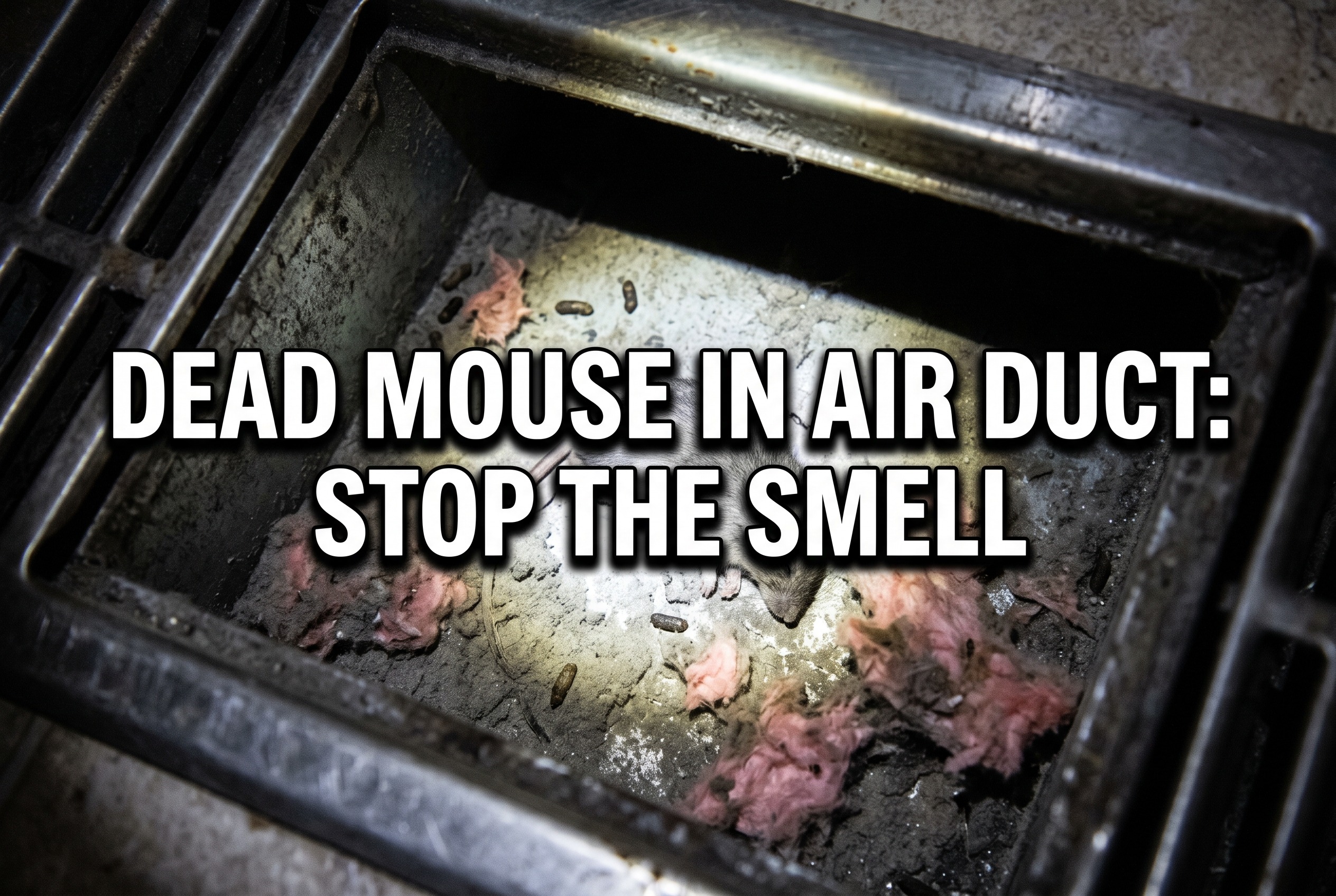
Dead mouse in air duct systems is a household nightmare that announces itself with an unmistakable, overwhelming stench. As outdoor temperatures drop in the fall or rise sharply in the summer, mice and rats seek shelter inside residential walls, crawlspaces, and attics. Unfortunately, they frequently chew their way into flexible ductwork to build nests, and inevitably, some do not make it out.
When a rodent expires inside your ventilation network, the problem goes far beyond a foul odor. As the carcass decomposes, it introduces severe biological contaminants, parasites, and hazardous gases directly into your home’s central air path. Every time your air conditioner or heater activates, it forces this toxic air directly into your living spaces.
At The Duct Pros, we specialize in professional physical extraction and comprehensive HVAC sanitization. While we do not provide trapping or general pest control services, we are the experts in restoring your air quality after an infestation. Here is a technical breakdown of the risks involved and how to permanently eliminate the contamination.
1. The Biological Contamination Risk
A decomposing rodent is a severe health hazard, not just a nuisance.
Airborne Pathogens: As the carcass breaks down, it releases volatile organic compounds (VOCs) and dangerous bacteria into the enclosed metallic pipe.
Parasite Migration: Ticks, fleas, and mites that were living on the host will immediately abandon the carcass and begin migrating through the ductwork, eventually blowing out of the register grills and into your home.
2. Why the Smell Spreads Instantly
The odor of a dead rodent is incredibly pervasive, but the HVAC system acts as an amplifier.
Pressurized Distribution: Your ductwork operates under high pressure. The blower motor forcefully pushes air directly over the carcass, picking up the concentrated putrid gases and distributing them evenly into every single room of the house simultaneously.
Permeating Materials: If left unaddressed, the foul odor will seep into the metallic walls of the ducts and the delicate aluminum fins of your evaporator coil, causing a lingering smell even after the body is removed.
3. The Limits of DIY Removal
Trying to locate and remove a carcass yourself is often impossible and highly unsanitary.
Deep Hideouts: Rodents rarely die right near the vent opening. They typically crawl deep into the winding supply lines or die inside flexible ducting located in the attic or crawlspace.
Inadequate Tools: A household vacuum cannot reach deep enough, and attempting to fish the carcass out with a wire hanger usually just breaks the body apart, worsening the contamination.
4. Professional Extraction and Sanitization
Resolving this biological hazard requires specialized, commercial-grade equipment.
High-Velocity Extraction: At The Duct Pros, we use industrial HEPA negative air machines and pneumatic agitation tools to safely locate and pull the carcass, droppings, and nesting materials completely out of your home.
Antimicrobial Fogging: Once the physical debris is removed, we apply an EPA-registered antimicrobial fog. This crucial step chemically neutralizes the remaining biological footprint, kills lingering bacteria, and permanently eliminates the foul odor.
Do not endure the stench or risk your family’s health. Restore your indoor air quality by scheduling a professional extraction and sanitization today.
📞 (866) 712-1122
🌐 www.theductpros.us
📧 info@theductpros.us
🎯 Frequently Asked Questions About HVAC Pest Contamination
Dead mouse in air duct: How long does the smell of a dead mouse last in an air vent? Without professional removal, the severe odor of a decomposing mouse can last anywhere from three weeks to several months, depending on the humidity levels, the size of the rodent, and the temperature inside the ductwork.
Dead mouse in air duct: Is it safe to run my AC or heater if there is a dead mouse inside? No, it is highly discouraged. Running the HVAC system will force the blower motor to pull the putrid gases, bacteria, and potential parasites directly from the carcass and blow them into your breathing space, severely compromising your indoor air quality and health.
Dead mouse in air duct: Can you get sick from breathing in air from a vent with a dead mouse? Yes. Inhaling the volatile organic compounds (VOCs) and bacteria from a decaying rodent can cause headaches, nausea, and severe respiratory irritation. Furthermore, rodent droppings left behind can transmit dangerous diseases, such as Hantavirus, when aerosolized by the HVAC blower.