
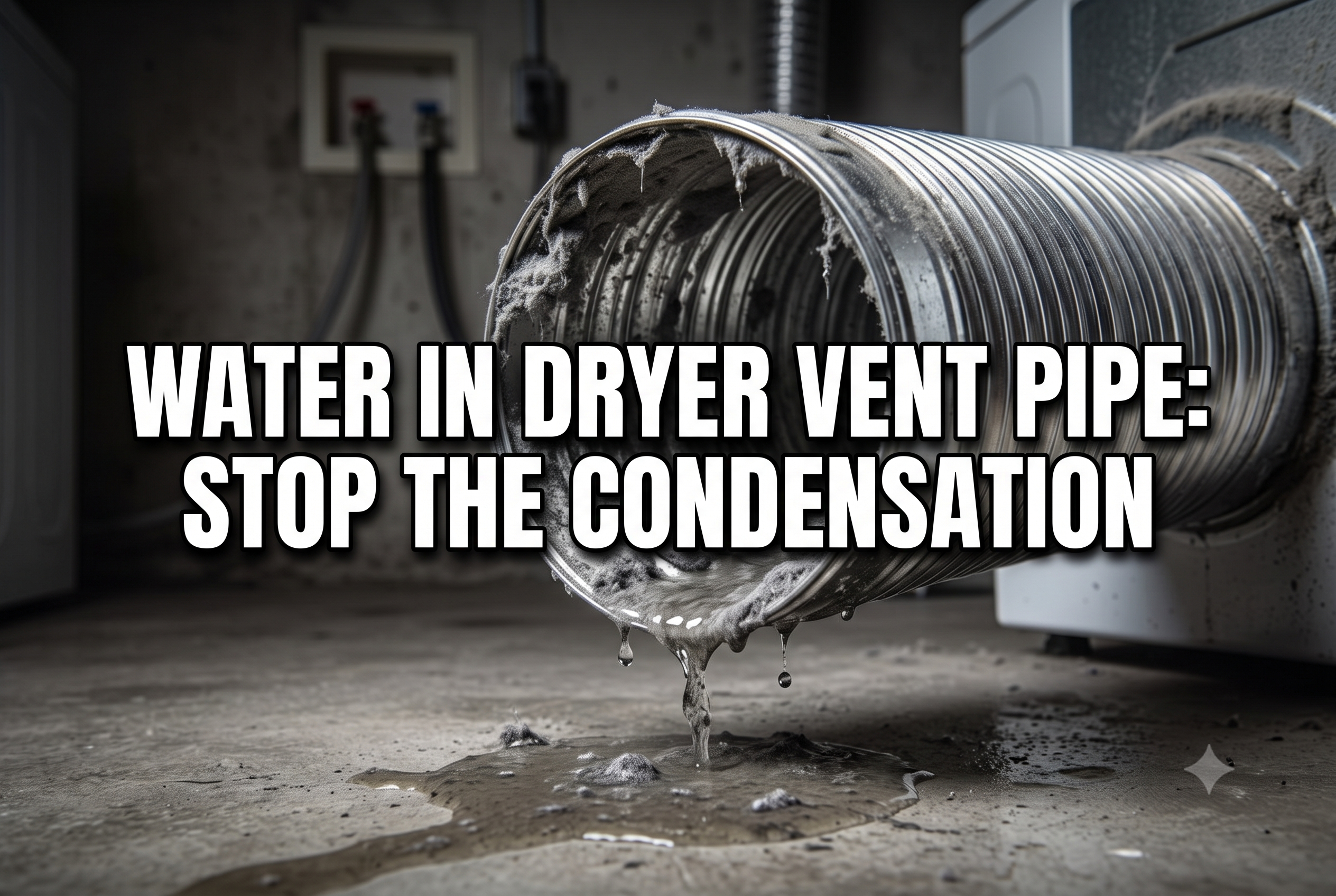
Water in dryer vent pipe systems is a shocking discovery for most homeowners. When you pull your dryer away from the wall to clean behind it, the last thing you expect to find is a puddle of dirty water leaking from the exhaust hose. A clothes dryer is designed to use intense heat and high-velocity airflow to evaporate moisture and expel it completely out of your home. If that moisture is turning back into liquid and pooling inside your walls, your ventilation system is fundamentally failing.
This isn’t just a minor annoyance that requires a towel to mop up. When liquid water is allowed to sit inside a dark, lint-packed metallic tube, it creates a cascade of severe property damage, ranging from structural rot to toxic mold colonization. Understanding why this condensation occurs is the first step in protecting your home and your expensive laundry appliances.
At The Duct Boss, we specialize in high-velocity lint extraction and comprehensive dryer vent restoration. While we do not handle appliance repair, our core expertise is diagnosing and eliminating the severe airflow restrictions that cause moisture backup. Here is a technical breakdown of why your exhaust line is “sweating” and how professional extraction provides a permanent cure.
1. The Science of Condensation and Lint Blockages
To understand why water is pooling, you have to look at the physics of your drying cycle.
The Evaporation Process: A standard load of wet laundry contains over half a gallon of water. Your dryer’s heating element turns that water into hot, heavy steam, which the blower motor pushes into the exhaust pipe.
The Blockage: If your vent pipe is heavily clogged with months of accumulated clothing lint, the hot, moist air cannot escape to the outside of your house.
The Condensation Trap: Because the air is trapped and stalled, it begins to cool down while still inside the metallic pipe. As the temperature drops, the steam condenses back into liquid water. This water then soaks the existing lint clog, creating a heavy, impenetrable sludge that completely blocks all remaining airflow.
2. Poor Vent Routing and Insulation Issues
Sometimes the problem lies in the architecture of the ductwork itself.
Uninsulated Spaces: If your dryer vent runs through a freezing cold attic or an unconditioned crawlspace during the winter, the extreme temperature difference between the hot steam inside the pipe and the freezing metal outside causes rapid, heavy condensation.
Sagging Lines: Flexible venting that is improperly routed often sags between joists. These dips act exactly like a P-trap under a sink, capturing the condensed water until the pipe is entirely flooded.
3. The Danger of Mold and Structural Rot
Standing water inside a dark, enclosed space is a recipe for biological disaster.
Toxic Mold Growth: Wet clothing lint is the perfect organic food source for black mold. Within 48 hours of saturation, mold colonies will bloom inside the pipe and begin spreading to the surrounding drywall and framing of your laundry room.
Rust and Water Damage: The pooled water will quickly rust out standard metallic vent pipes, causing them to crack and leak directly into your subfloor, leading to expensive structural rot and ruined floorboards.
4. Why Professional High-Velocity Extraction is the Cure
You cannot fix a flooded, clogged vent by simply running the dryer on high heat—this will only generate more steam and worsen the problem.
Complete Physical Extraction: At The Duct Boss, we utilize industrial pneumatic tools that travel the entire length of your exhaust line. These tools shatter the wet, compacted lint sludge and pull the heavy blockage completely out of the pipe.
Airflow Restoration: By clearing the physical barrier, we restore the high-velocity airflow required to push the steam all the way out of your house before it has a chance to cool and condense, permanently solving the water issue.
Don’t ignore the warning signs of a failing exhaust system. Protect your property from water damage, mold, and lint fires by scheduling a comprehensive professional cleanout today.
📞 866-876-2677
🎯 Frequently Asked Questions About Dryer Vent Condensation
Water in dryer vent pipe: Why is there a puddle of water behind my clothes dryer? A puddle behind the dryer almost always indicates a severe blockage in the exhaust line. Because hot, moist air cannot escape the clogged pipe, it condenses back into liquid water inside the ductwork. This water eventually leaks backward out of the pipe joints and pools onto your laundry room floor.
Water in dryer vent pipe: Can a clogged vent cause my dryer to rust? Yes. When a restricted vent forces steam to condense into liquid water, that moisture backs up directly into the dryer’s internal cabinet. Over time, this constant exposure to standing water and high humidity will rust the dryer’s drum, destroy the heating element, and short out the electrical control boards.
Water in dryer vent pipe: Will cleaning the vent stop the condensation permanently? If the condensation is caused by a lint blockage restricting the airflow (which is the most common cause), then yes, a professional, high-velocity extraction will solve the problem. However, if the issue is caused by the pipe sagging or running through a freezing, uninsulated attic, the ductwork may also need to be properly supported or wrapped in specialized HVAC insulation.