
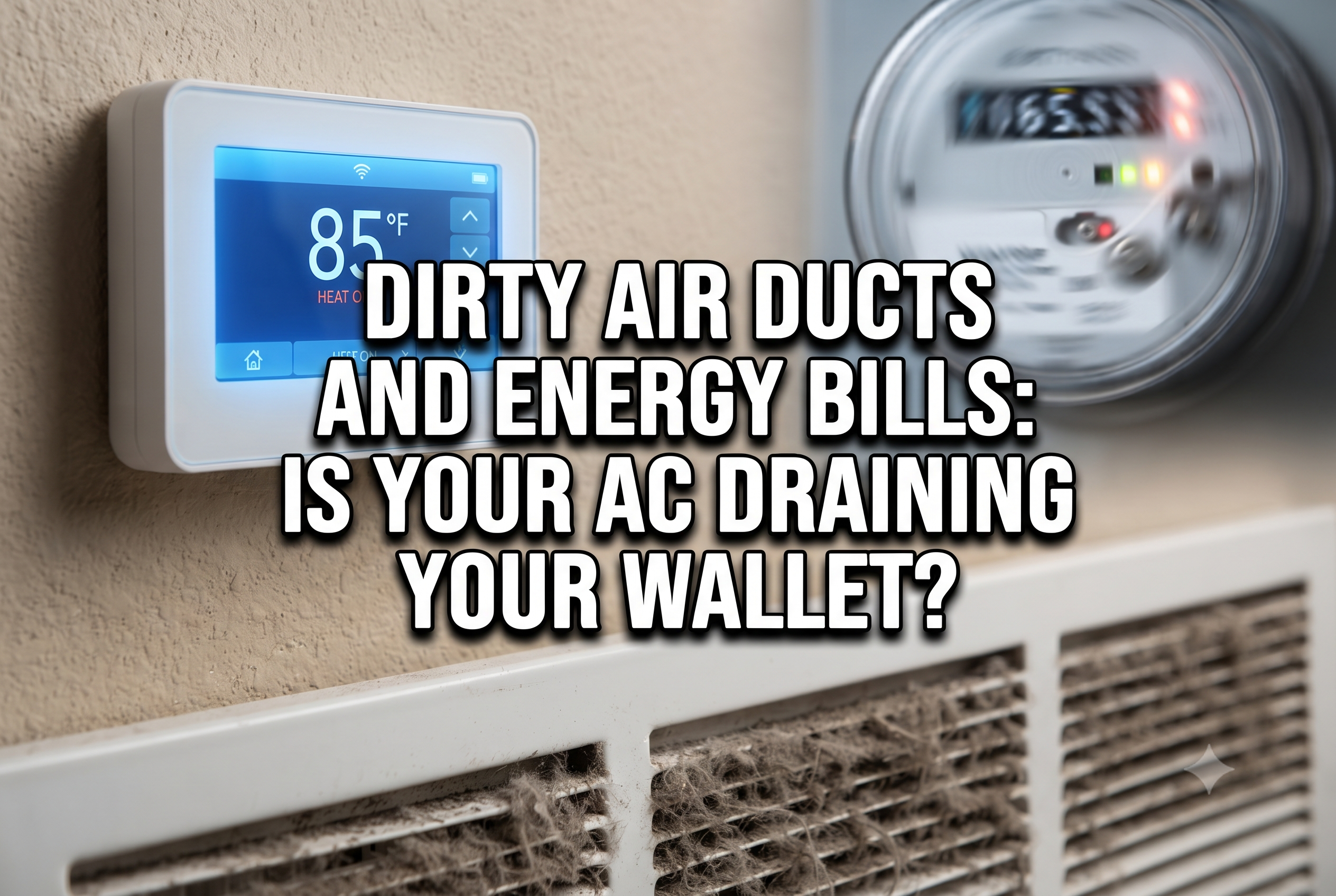
Dirty air ducts and energy bills share a direct, measurable financial connection that most homeowners completely overlook. When your monthly electric or gas bill arrives, you expect a certain baseline cost—especially during the freezing depths of winter or the blistering heat of summer. However, when that bill suddenly spikes higher than usual without any major changes in your daily routine, it is easy to feel frustrated and confused. Most homeowners immediately assume their air conditioner or furnace is failing, or that their utility provider has raised rates.
Often, the real culprit is hiding entirely out of sight inside your walls and ceilings. A neglected, contaminated ventilation network doesn’t just ruin your indoor air quality; it places an invisible, massive financial drain on your household every single month. When your ductwork is choked with dust, pet hair, and debris, your entire HVAC system is forced to work twice as hard to achieve the exact same level of comfort.
At The Duct Pros, we specialize in comprehensive Air Duct Cleaning and HVAC Cleaning designed to restore peak system efficiency. While we do not handle new equipment installations, our core expertise is rescuing existing infrastructure from energy-wasting restrictions. Here is a technical breakdown of how dirty air ducts silently inflate your energy bills and why professional extraction pays for itself.
1. The Mechanics of Static Pressure
Your home’s HVAC system relies on a carefully balanced aerodynamic loop to function efficiently.
The Airflow Restriction: Clean ductwork allows air to flow freely and smoothly from the air handler into every room. When heavy layers of dust, pet hair, and construction debris line the interior walls of your pipes, they create friction.
Skyrocketing Resistance: This friction creates a severe rise in “static pressure.” The blower motor is suddenly forced to pull and push air through a bottlenecked channel. To move the same volume of air through a restricted duct, the motor must draw significantly more electrical current, directly translating to higher power consumption on your utility meter.
2. Extended Run Times and Wear
Because a choked ventilation system cannot deliver conditioned air quickly or efficiently, your home takes much longer to cool down or heat up.
The Endless Cycle: If your living room normally takes ten minutes to reach your desired temperature, a restricted duct system might drag that cycle out to twenty or thirty minutes.
Constant Operation: During peak weather months, your system may struggle so much that it barely shuts off. This constant, extended run time consumes massive amounts of electricity, wearing down electrical components and causing your monthly energy bills to skyrocket.
3. The Heat Exchanger and Coil Choke
The negative financial impact of dirty ducts extends far beyond the pipes themselves; it directly affects the core mechanical components of your system.
Insulating the Coils: If dust and pet dander bypass your filter and coat your air conditioner’s evaporator coil or your furnace’s heat exchanger, a dangerous layer of insulation is formed.
Lost Thermal Transfer: The system relies on direct contact between the air and these metal coils to transfer heat. When dirt blocks that contact, the heat transfer process becomes severely inefficient. The system must run longer and harder just to perform its basic job, wasting energy with every single cycle.
4. Sealing Leaks to Stop Conditioned Air Loss
Dirty ducts are frequently aging, disconnected, or leaky ducts.
Cooling the Attic: If your duct joints have deteriorated or have gaps hidden in the attic or crawlspace, a massive percentage of the conditioned air you are paying for is escaping into unconditioned spaces before it ever reaches your vents.
Paying to Cool the Outdoors: You are essentially paying your utility company to cool or heat your attic. Professional duct cleaning includes a thorough inspection of the system’s integrity, ensuring that every dollar you spend on energy actually goes toward your living space.
5. Professional Extraction for Peak Efficiency
You cannot lower your static pressure or clear a restricted air path by simply changing a filter. The entire system must be scoured.
High-Torque Duct Cleaning: At The Duct Pros, we use industrial, truck-mounted HEPA vacuums and specialized pneumatic agitation tools to completely strip away the years of accumulated dust and debris from your supply and return lines.
Restoring Aerodynamic Flow: By returning your ductwork to bare metal, we instantly lower static pressure, reduce blower motor strain, shorten run times, and help bring your monthly utility bills back down to normal.
Don’t let hidden dust steal your hard-earned money every month. Restore your HVAC system’s peak efficiency, lower your energy consumption, and cut your utility costs by scheduling a professional duct cleaning today.
📞 (866) 712-1122
🌐 www.theductpros.us
📧 Info@theductpros.us
🎯 Frequently Asked Questions About Energy Bills and Air Ducts
Dirty air ducts and energy bills: Can neglected vents really make my electric bill go up? Yes, absolutely. When air ducts are choked with dust, pet hair, and debris, they create aerodynamic resistance known as static pressure. This forces your HVAC blower motor to work much harder and draw more electricity just to push air through the home, resulting in noticeably higher monthly energy bills.
Dirty air ducts and energy bills: How does cleaning improve HVAC efficiency? Professional duct cleaning removes the thick layers of friction-causing debris from your supply and return lines. By clearing the air path and ensuring your system is free of blockages, airflow is maximized, run times are shortened, and your HVAC system can operate at peak manufacturer efficiency.
Dirty air ducts and energy bills: How often should I clean my air ducts to maintain low costs? For most residential homes, a professional air duct cleaning every 3 to 5 years is recommended to prevent heavy dust accumulation and maintain optimal system airflow. However, homes with pets, recent renovations, or high dust levels may benefit from cleaning every 2 years to keep energy efficiency high.