
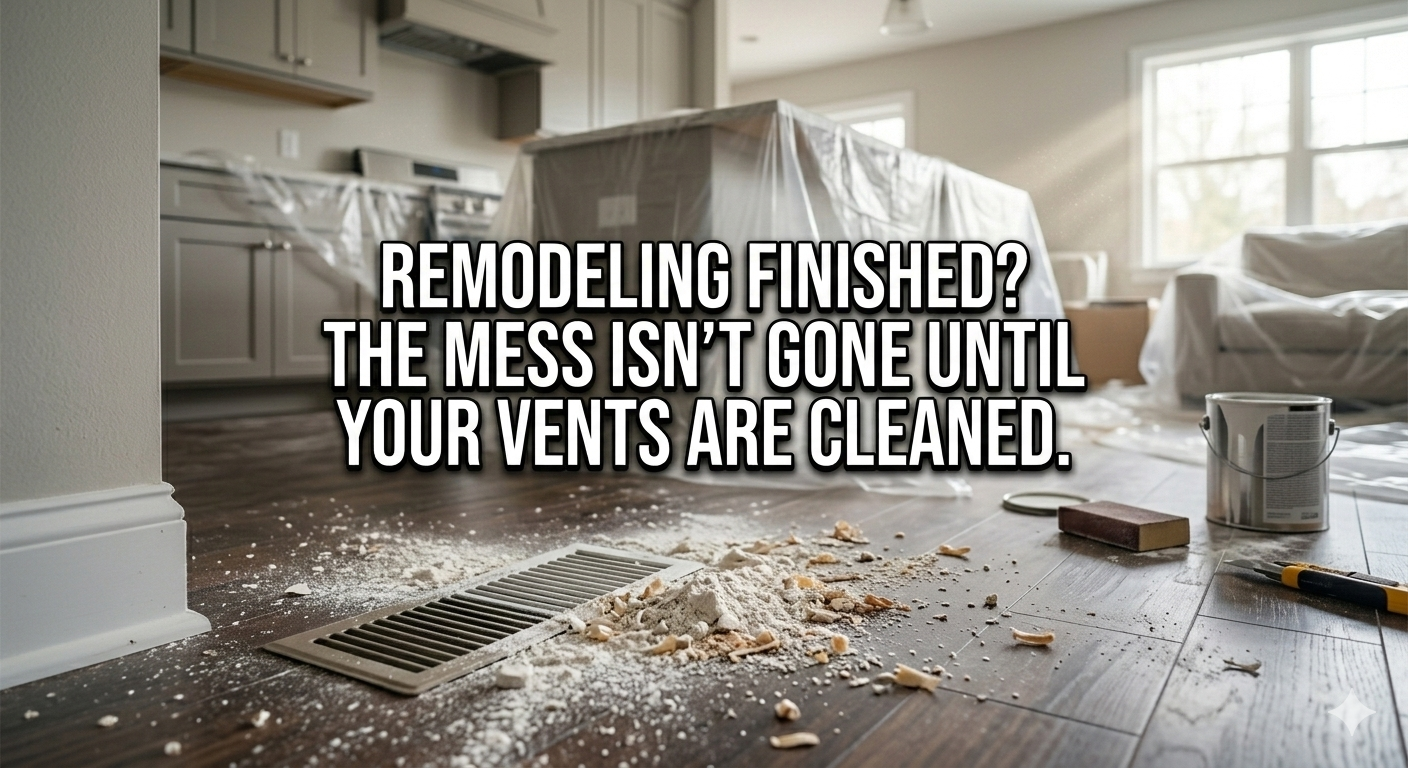
Post-renovation duct cleaning is the critical, final step of a home remodel that almost every general contractor forgets to mention. You just spent weeks (and tens of thousands of dollars) surviving the chaos of a major home renovation. The walls are painted, the new hardwood floors are installed, and the contractors have finally packed up their tools. But after a few days, you notice a highly frustrating problem: no matter how many times you wipe down your new countertops or mop the floors, a fine, powdery white dust immediately reappears.
You aren’t going crazy, and you aren’t bad at cleaning. During the demolition and drywall sanding phases of your remodel, your home’s HVAC system was quietly acting as a massive, industrial vacuum. It inhaled pounds of microscopic construction debris and stored it deep inside your ductwork. Now, every time your air conditioner or heater turns on, it is blasting that hidden toxic powder back into your pristine living space.
At The Duct Pros, we are the premier authorities in whole-home air quality restoration. We know that a remodel isn’t truly finished until the air you breathe is as clean as your new kitchen. Here is a highly technical breakdown of why construction dust is incredibly dangerous to your mechanical equipment, the respiratory hazards of gypsum, and why professional extraction is mandatory after any major home project.
1. The Microscopic Threat of Drywall and Sawdust
Standard household dust is mostly composed of skin cells and fabric fibers. Construction dust is an entirely different beast; it is highly abrasive, mineral-based, and dangerously microscopic.
Gypsum and Silica: The joint compound and drywall used to build your new walls contain gypsum, mica, and silica. When sanded, these materials break down into ultra-fine particulate matter.
Bypassing the Filter: Because drywall dust is so microscopically fine, it easily passes straight through standard 1-inch fiberglass HVAC filters. Instead of being caught, it travels directly into the main supply trunks of your ductwork, coating the interior walls in a heavy, white powder.
2. The “Concrete” Effect on Your Evaporator Coil
Construction dust doesn’t just ruin your indoor air quality; it actively destroys the most expensive components of your air conditioning system.
The Wet Coil Collision: When your air conditioner is running, the indoor evaporator coil is covered in condensation. As the ultra-fine drywall dust bypasses your filter and hits this wet coil, a chemical reaction occurs.
Hardening Like Cement: The gypsum powder mixes with the water on the coil and turns into a thick, plaster-like paste. When the system cycles off and dries, this paste hardens like cement between the delicate aluminum cooling fins. This permanently chokes the system’s airflow, causes the coil to freeze, and eventually burns out the main compressor.
3. The Endless Recirculation Loop
If you do not extract the dust from the ductwork, your post-remodel cleaning efforts will be completely futile.
The Hidden Reservoir: The average residential duct system contains 30 to 40 feet of hidden metallic piping. If a thick layer of heavy sawdust and drywall powder is resting on the bottom of these pipes, it creates a massive reservoir of contamination.
The Daily Blast: Every time the thermostat triggers the blower motor, high-velocity air whips through the lines, picking up a fresh cloud of the white powder and blowing it out of your ceiling registers. It will settle on your furniture, your electronics, and in your lungs, creating an endless cycle of dusting that can last for years.
4. Sealing the Envelope: Finding Construction Breaches
General contractors are experts at building, but they often accidentally compromise the HVAC thermal envelope during the chaos of construction.
Accidental Disconnections: It is incredibly common for plumbers, electricians, or framers working in the attic to accidentally step on and crush a flexible duct line, or knock a joint completely loose.
Sucking in the Attic: If a return line is disconnected during the remodel, your system is no longer pulling air from your house; it is sucking raw fiberglass insulation and 130-degree air directly from the attic and blowing it into your newly finished rooms. Professional duct cleaning provides a comprehensive inspection to ensure the system is sealed and structurally sound.
5. The Professional Post-Remodel Extraction
A shop-vac and a swiffer pad will not fix a contaminated ventilation system. Removing dense, heavy construction debris requires commercial-grade power.
High-Torque Scouring: At The Duct Boss, we insert specialized pneumatic whips and rotary brushes deep into the ductwork. These tools violently agitate the interior walls, shattering the hardened drywall powder and sweeping up the heavy sawdust that has settled in the elbows and drops of the pipe.
Negative Pressure Evacuation: While the lines are being scoured, our truck-mounted HEPA negative air machines pull the entire system under an intense vacuum. Every ounce of the toxic construction debris is sucked out of the home directly to our containment unit, ensuring your newly remodeled house stays completely spotless during the process.
Protect your newly renovated home and your expensive HVAC equipment. Stop the endless cycle of dusting and restore your indoor air quality by scheduling a professional post-construction duct cleanout today.
📞 (866) 712-1122 🌐 www.TheDuctPros.us 📧 Info@TheDuctBoss.com
🎯 Frequently Asked Questions About Construction Dust
Should I clean my ducts before or after a home renovation? Always after. If you clean the ducts before or during the remodel, they will simply fill up with drywall dust and sawdust the moment the contractors resume working. You should schedule your professional duct cleaning as the absolute final step of the renovation, right after the contractors leave and before you do your final deep clean of the home.
Can drywall dust ruin my furnace or air conditioner? Yes, very quickly. Drywall dust is ultra-fine and bypasses standard filters. When it coats the blower motor, it causes extreme friction and overheating. When it hits the wet evaporator coil, it turns into a plaster-like mud that hardens, suffocating the system and often requiring a highly expensive chemical coil cleaning or a full system replacement.
Why is my house still dusty weeks after the contractors left? If you are constantly wiping down surfaces and the dust keeps returning, your HVAC system is the culprit. The ductwork is holding pounds of settled construction dust. Every time the heat or AC kicks on, the blower motor forces a new cloud of this hidden debris out of the vents and into your living space.