
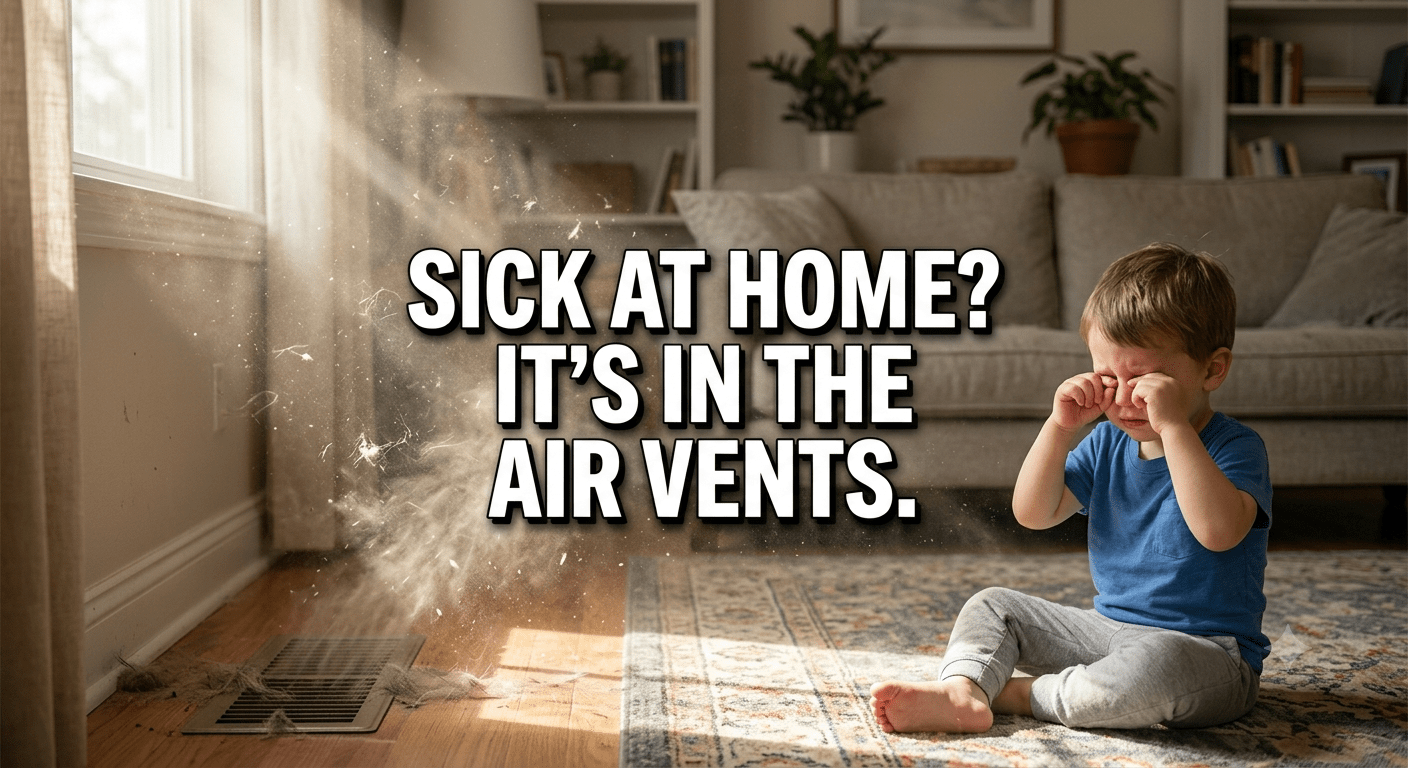
Unexplained allergies indoors often baffle homeowners who otherwise keep a tidy house. You may have increased your vacuuming schedule, installed air purifiers, and switched to hypoallergenic laundry detergent, yet the sneezing, congestion, and itchy, watery eyes persist whenever you are at home. If your symptoms magically improve when you step outside but flare up the moment the furnace or air conditioner kicks on, you aren’t imagining things—you are likely dealing with a massive accumulation of allergens hidden inside your home’s central nervous system: the air ducts.
The ventilation system in a modern home operates as a closed loop. It constantly inhales the existing air in your living space, heats or cools it, and blasts it back out. If your ductwork is lined with years of accumulated dust, pet dander, mold, and chemical residue, your HVAC system isn’t just regulating the temperature; it is weaponizing your breathing space, actively aerosolizing concentrated pollutants and force-feeding them into your family’s lungs up to 60 times a day.
At The Duct Pros, we are Your Trusted Experts In Fresh Air, and we routinely perform whole-home biological extractions to reset a home’s indoor air quality. If you are struggling to identify the cause of your family’s respiratory distress, here is a deeply technical breakdown of why your HVAC system is the likely culprit, the specific allergens lurking inside, and how professional HEPA source extraction permanently resolves the threat.
1. Why Indoors is Often More Toxic Than Outdoors
It seems counterintuitive, but for millions of allergy sufferers, the indoor environment is significantly more hazardous than the outdoors.
The “Closed Loop” Trap: According to the Environmental Protection Agency (EPA), indoor air pollution levels can be two to five times higher than outdoor levels. Modern homes are tightly sealed for energy efficiency, which means they excel at trapping allergens.
The Ductwork Reservoir: Your air ducts provide a vast, highly insulated, and pitch-black reservoir for airborne debris to settle. Every single particle of dust, skin cell, or pet dander that bypasses your primary filter will adhere to the interior walls of your ductwork, building up a thick, biological layer over months and years.
2. The Specific Biological Profile of HVAC Dust
Standard household dust is unpleasant, but the “aged” dust hiding in a ventilation system is a highly concentrated biological cocktail.
Sticky Pet Dander and Proteins: Pet dander is microscopic and oily. It sticks aggressively to the metallic walls of the supply lines. More importantly, the proteins in animal saliva and urine coat these skin particles. When aerosolized by the blower motor, these sticky proteins act as severe, chronic allergy triggers.
The Dust Mite Connection: Dust mites don’t live off human dander on your bedsheets alone. They thrive inside dirty air ducts where a massive, undisturbed food supply (human and animal dander) exists. Dust mite feces contain a complex protein that is one of the most potent environmental allergens on the planet.
Dormant Mold Spores: Microscopic mold spores are ubiquitous in the air. If any moisture enters your system (due to humidity or condensation on the coil), these spores will rapidly activate and colonize the dark interior of your ductwork, releasing volatile organic compounds (VOCs) and massive clouds of reproductive spores.
3. Restoring Lost HVAC Capacity and Air Quality
A heavily contaminated ventilation system chokes the very air it is supposed to filter, creating a toxic feedback loop.
Suffocating the Blower and Coil: When the return and supply trunks are restricted by an inch of impacted debris, your HVAC system must run significantly longer to reach the target temperature. This excessive run time means the system is continuously pushing air across a mile of dusty metal, maximizing the concentration of allergens blown into your home.
The Professional Extract Process: A superficial wipe-down of your vent covers does absolutely nothing to help unexplained allergies. At The Duct Pros, we utilize specialized, truck-mounted HEPA negative air vacuums to put your entire system under intense suction. This ensures that no captured debris is accidentally blown into your home. We then physically scrub the interior metallic surfaces using high-torque pneumatic agitation tools, violently breaking the biological bond of the compacted dander, feces, and dust.
4. Complete EPA-Registered Sterilization and Anti-Microbial Reset
Physical extraction removes the bulk material, but to permanently resolve chronic indoor allergies, the microscopic root structure of the contamination must be addressed.
Antimicrobial Fogging: After the ductwork is scrubbed to the bare metal, we utilize an advanced fogging technique. We introduce an EPA-registered antimicrobial fog directly into the airflow path. This fine mist penetrates the molecular surface of the metal, destroying the hidden mold spores and neutralizing the dust mite proteins that survived the extraction.
The Lasting Relief: This comprehensive process doesn’t just clean your air ducts; it completely resets the home’s air path, ensuring that the only air circulating is the clean, filtered air you paid for.
📞 (866) 712-1122 🌐 www.TheDuctPros.us 📧 Info@TheDuctPros.us
🎯 Frequently Asked Questions About Indoor Allergies
Will cleaning my air ducts really help with unexplained allergies indoors? Yes. For millions of people, their chronic indoor allergy symptoms are directly caused by the continuous recirculation of dust mite waste, pet dander proteins, and mold spores hidden inside the air ducts. Professional HEPA source extraction physically removes this massive reservoir of allergens, breaking the contamination cycle and providing immediate, quantifiable relief from symptoms like congestion and itchy eyes.
How do I know if my allergies are being caused by my air vents? The biggest warning sign is the “improvement effect.” Pay close attention to when your symptoms are best and worst. If your allergies improve significantly when you are outside the home (even during pollen season) or at the office, but flare up the moment you return home or shortly after the HVAC blower motor kicks on, the problem is localized inside your home’s air circulation system.
How often should a person with severe allergies get their ducts cleaned? While a typical homeowner might schedule cleaning every 3 to 5 years, homes with severe allergy sufferers, indoor pets, or very old ductwork should consider a cleaning every 2 to 3 years. The biological load builds up faster in pet-friendly homes, necessitating a more frequent reset to maintain acceptable indoor air quality.