

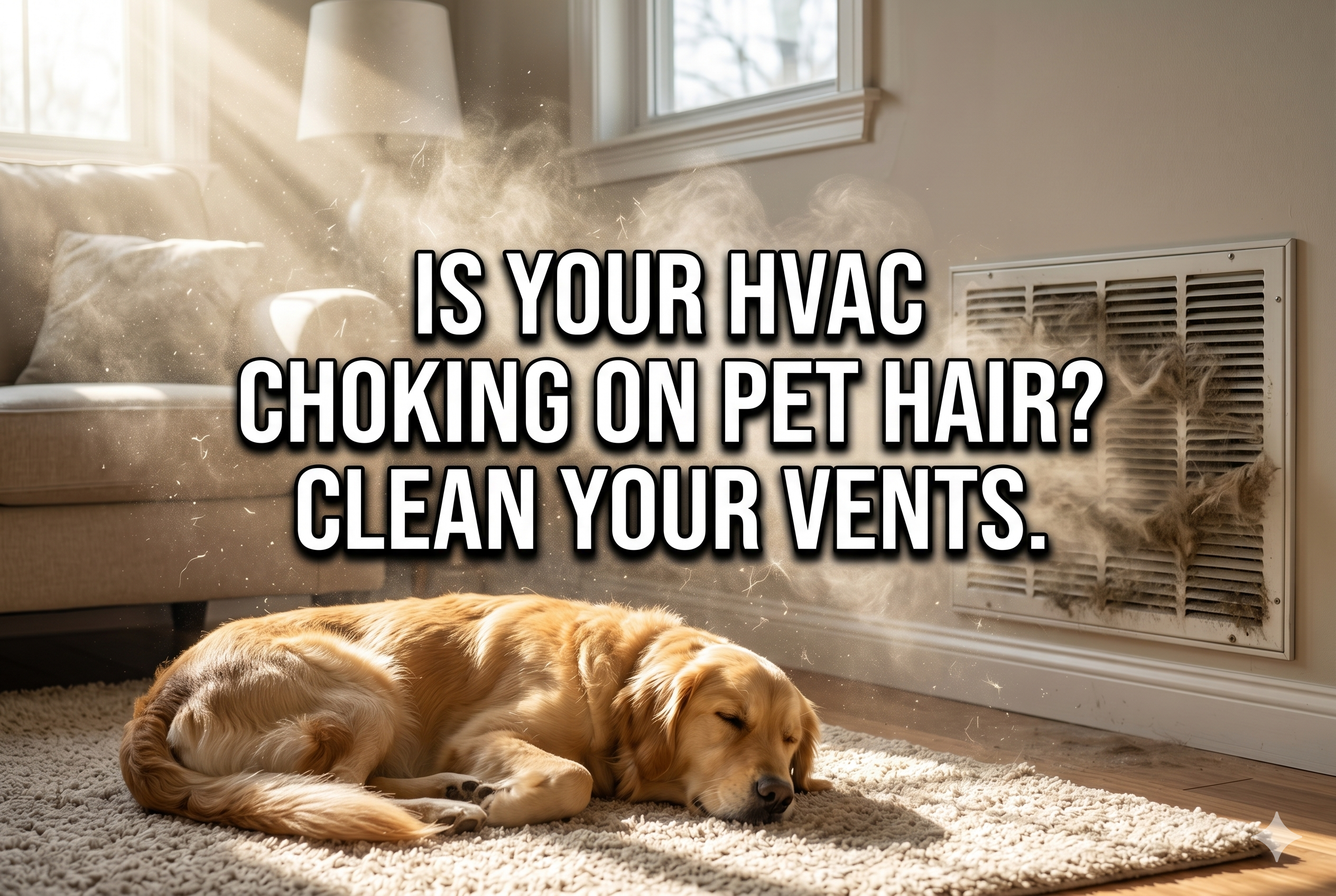
Pet dander in air ducts is one of the most common and structurally taxing indoor air quality issues modern homeowners face. We consider our dogs and cats to be cherished members of the family. We buy them the best food, give them the softest beds, and let them sleep on our furniture. However, sharing our indoor environment with shedding animals comes with a massive, highly concentrated biological toll that completely bypasses your vacuum cleaner.
Every single day, your pets are shedding millions of microscopic skin cells, oily proteins, and loose hair. While you might diligently sweep your hardwood floors and lint-roll your couches, the vast majority of this biological debris becomes airborne. Once it enters the air, it is immediately pulled into your home’s central heating and cooling system. Over months and years, your ductwork silently transforms from a clean metal pathway into a densely packed, fur-lined tunnel of concentrated allergens.
At The Duct Pros, we are Your Trusted Experts In Fresh Air, and we frequently service homes where the HVAC system is actively suffocating under the weight of accumulated animal shedding. If you own pets and find yourself constantly dusting or battling unexplained allergies, here is a deeply technical look at how pet dander destroys your indoor air quality and why a professional system reset is mandatory for pet owners.
1. The Microscopic Reality of Pet Dander
Most pet owners mistakenly believe that “pet allergies” are caused by visible animal hair. In reality, fur is completely harmless. The true threat to your respiratory system is completely invisible to the naked eye.
Sticky Biological Proteins: Pet dander is composed of microscopic flecks of dead skin shed by cats, dogs, rodents, and birds. These skin cells are coated in specific proteins found in the animal’s saliva, urine, and sebaceous (oil) glands.
The Static Cling Effect: Because these proteins are naturally oily, pet dander is incredibly sticky. When it gets sucked into your HVAC return vents, it doesn’t just pass through. It aggressively clings to the interior walls of your metal or flex ductwork, acting like a biological glue. As more dust and hair pass through the system, they stick to this oily layer, rapidly accelerating the buildup of heavy debris.
2. How the HVAC System Becomes a Distribution Network
Your air conditioner and furnace operate by pulling the existing air inside your home into the system, heating or cooling it, and blowing it back out. For pet owners, this creates a catastrophic recirculation loop.
The Return Vent Vacuum: Your return vents act like giant, low-powered vacuum cleaners constantly inhaling the air from your living spaces. Every time your dog shakes, scratches, or rolls on the carpet, a massive cloud of dander is launched into the air and swallowed by the return lines.
Continuous Aerosolization: Once a thick layer of dander and hair has colonized the inside of your supply ducts, your HVAC blower motor essentially weaponizes it. Every time the system kicks on, the forced air rips microscopic dander particles off the walls of the ductwork and blasts them at high velocity directly into your bedrooms, kitchen, and living areas. You are effectively breathing filtered pet waste up to 60 times a day.
3. The Impact on HVAC Efficiency and System Lifespan
Aside from the severe health implications, allowing pet hair and dander to accumulate inside your ventilation system will cause catastrophic, highly expensive mechanical failures.
Suffocating the Evaporator Coil: When thick mats of pet hair bypass your standard furnace filter, they inevitably crash into the indoor evaporator coil. The wet, freezing condensation on the coil acts as a magnet for the hair, creating a thick, muddy blanket over the delicate aluminum fins. This completely chokes the airflow, causing the coil to freeze solid and the AC compressor to overheat.
Blower Motor Burnout: The blower motor is designed to push air through smooth, clean metal pipes. When those pipes are severely restricted by an inch of compacted pet hair and dander, the static pressure inside the system skyrockets. The motor has to work twice as hard to push the same amount of air, leading to astronomical monthly energy bills and premature, catastrophic motor burnout.
4. The Allergy and Respiratory Toll
Even if you are not traditionally “allergic” to dogs or cats, breathing in massive quantities of airborne biological matter takes a heavy toll on the human immune system.
Chronic Respiratory Inflammation: Constantly inhaling aerosolized proteins and skin cells irritates the delicate mucous membranes lining your nasal passages and lungs. This leads to chronic sinus congestion, unexplainable morning headaches, scratchy throats, and a lingering, dry cough.
Triggering Asthma and Eczema: For children, the elderly, or anyone with pre-existing asthma, heavily contaminated air ducts are a severe hazard. The sudden influx of concentrated dander blowing out of a ceiling vent can trigger severe asthma attacks, shortness of breath, and systemic skin conditions like allergic contact dermatitis (eczema).
5. Professional Extraction: The Only Permanent Solution
Wiping down the surface of your vent covers or buying a slightly more expensive air filter at the hardware store will not solve a systemic dander infestation. You must address the root of the buildup.
Commercial HEPA Source Removal: The only way to stop the recirculation of pet allergens is to physically break them off the walls of your ductwork. At The Duct Pros, we connect your entire HVAC network to an industrial, truck-mounted negative air vacuum. We place the home under intense negative pressure, ensuring no loose hair or dander escapes into your living space.
Pneumatic Agitation: We feed specialized pneumatic whips and rotary brushes deep into the branch lines and main trunk. These tools violently whip against the interior walls, breaking the sticky, static bond of the oily dander and compacted fur. The high-velocity suction immediately rips the biological debris out of your home, completely sterilizing the air path.
Stop breathing in years of accumulated pet shedding. Protect your expensive HVAC equipment and dramatically improve your family’s daily comfort by scheduling a comprehensive, whole-home ventilation reset.
📞 (866) 712-1122 🌐 www.TheDuctPros.us 📧 Info@TheDuctPros.us
🎯 Frequently Asked Questions About Pets and Air Ducts
How often should pet owners get their air ducts cleaned? While a standard home might need duct cleaning every 3 to 5 years, homes with multiple shedding pets (like Golden Retrievers, Huskies, or domestic longhair cats) should schedule a professional cleaning every 2 to 3 years. The heavy volume of hair and oily dander accumulates rapidly, choking HVAC systems much faster than standard household dust.
Will cleaning my air ducts help with pet allergies? Absolutely. The primary reason pet allergies flare up indoors is that the HVAC system is actively trapping and recirculating concentrated dander throughout the house. Professional extraction physically removes the massive reservoir of allergy-causing proteins hidden inside the walls, dramatically lowering the overall allergen load in your indoor air.
Can pet hair damage my HVAC system? Yes. Pet hair is highly destructive to HVAC efficiency. When loose fur bypasses the air filter, it mats against the indoor evaporator coil and clogs the blower motor fan blades. This severe airflow restriction forces the system to run longer, drastically increases your monthly energy bills, and will eventually cause the compressor or blower motor to fail completely due to thermal overload.